
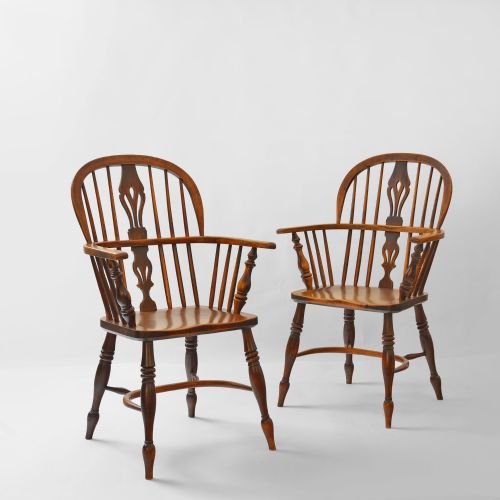


Ash Stick Back Chair
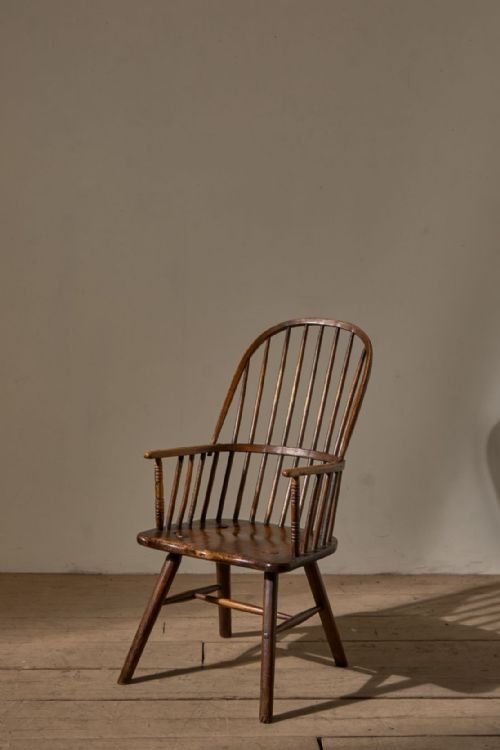
Ash stick back chair options range from eighteenth-century country armchairs to Victorian kitchen sets built for daily domestic utility.
Ash Stick Back Chair
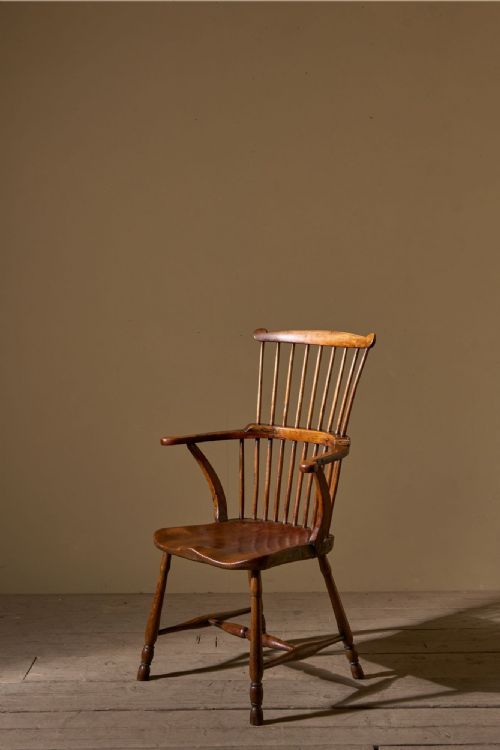
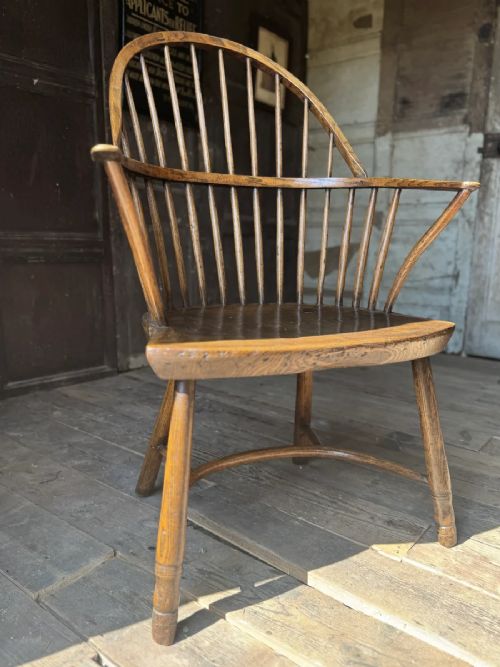
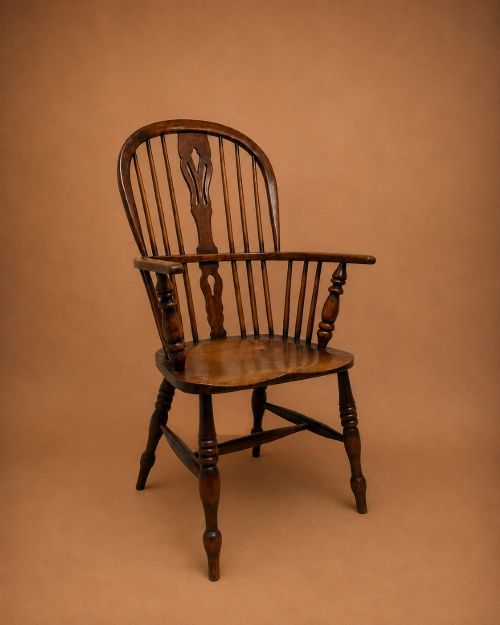
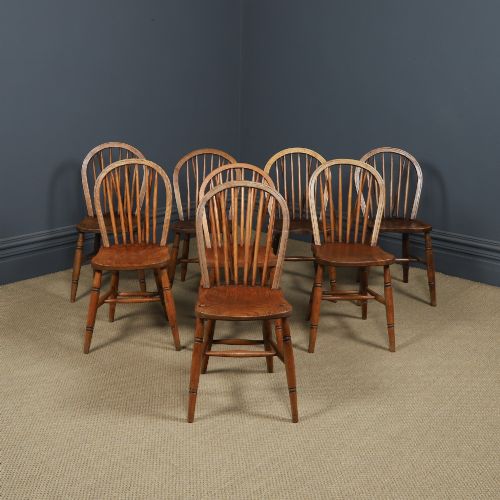
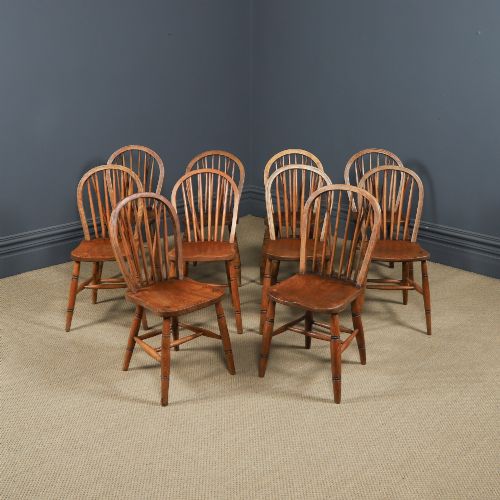
An ash stick back chair is a form of traditional Windsor seating defined by turned spindles inserted directly into a solid wooden seat. These pieces emerge from English country traditions, spanning Georgian periods through to the Victorian era and into the early twentieth century.
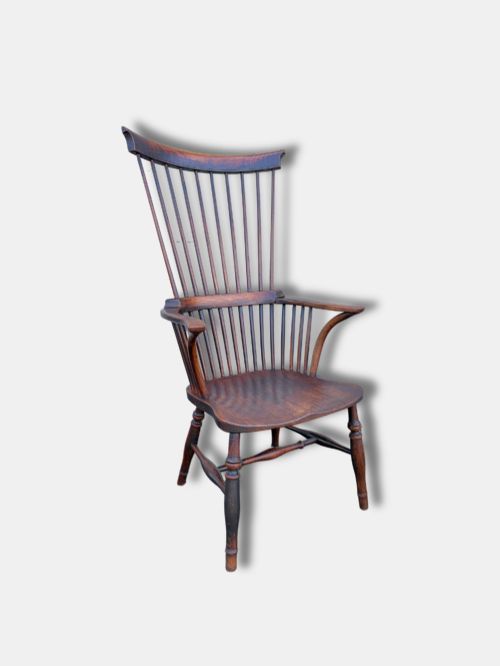
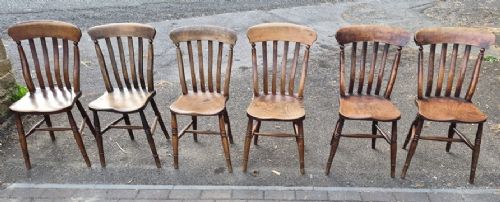
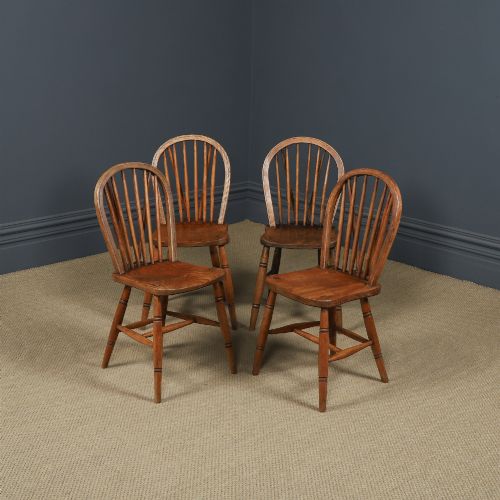
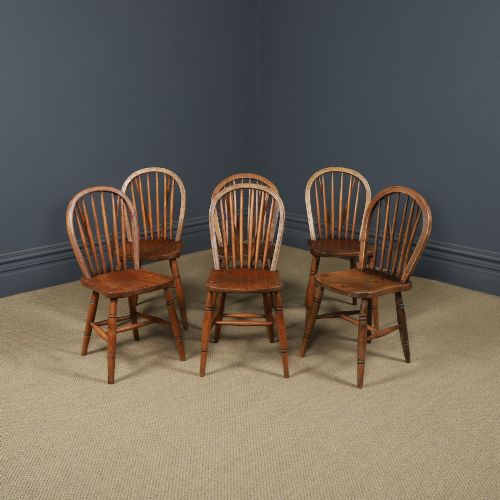
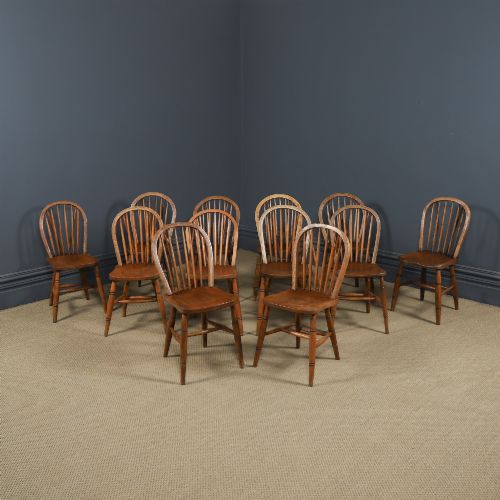
Buyers encounter single armchairs, matched pairs, and larger dining sets intended for kitchen or parlour use. Forms include low backs, high combs, hoop backs, and specialised children's high chairs or rocking versions originating from regional workshops.
How They Were Made
Maker-craftsmen paired resilient ash for spindles, legs, and bow frames with elm for the heavily sculpted, thick slab seats. Elm provided strong grain resistance against splitting when the leg tenons and vertical sticks were driven deep into the timber.
Additional timbers such as oak, beech, yew, fruitwood, and pine appear across regional variants, supporting steam-bent hoops and structural stretchers like the crinoline brace.
Ash Stick Back Chair Retail Price Guide 2026
Typical asking prices for ash stick back chair among the pieces listed under this phrase on Sellingantiques today, from the lower quarter to the upper quarter. They describe what is for sale here now, not the wider market.
Makers occasionally incorporated naive children's high chairs and tiny rocking versions with the exact same robust Windsor joinery as adult seats.
What Varies in Quality
Construction integrity depends on the tightness of the joinery where the spindles meet the seat and the upper bow. Uniformity across larger dining sets indicates careful workshop pairing, whereas subtle variations reveal individual regional production.
Surface patination and timber selection distinguish standard utility seating from refined examples utilising burr elm or diverse secondary woods like fruitwood and yew.
Liberty·Darvil
The Ash Stick Back Chair Glossary
- Comb back
- A Windsor chair variation where the vertical spindles extend upward to support a horizontal headrest piece resembling a traditional hair comb.
- Crinoline stretcher
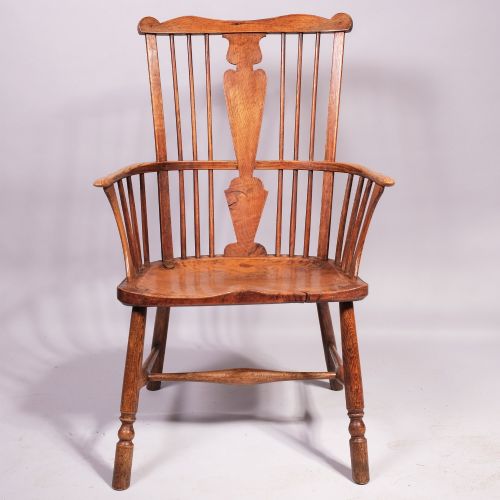
- An arched underframe linking the legs of a chair to provide rigidity and strength. This curved brace is frequently found on eighteenth-century regional armchairs.
- Hoop back
- A continuous steam-bent rail forming the upper back and armrests of a Windsor chair. The vertical sticks are tenoned directly into this curved member.
- Stick back
- A general term for Windsor chairs utilising simple turned or cleft spindles rather than solid splats. These uprights connect the seat to the top rail.
- Windsor chair
- A traditional seating form constructed with a solid wooden saddle-shaped seat into which the legs and back sticks are independently fastened. These chairs developed distinct regional variations across the British countryside.
Ash Stick Back Chair: Frequently Asked Questions
How do I date an ash stick back chair?
Dating relies on observing structural characteristics, tool marks, and wood combinations relative to known historical periods. Eighteenth-century examples often display primitive joinery and wider saddle seats compared to later Victorian production.
Changes in turning styles on the legs and spindles also help narrow the timeframe. Regional construction traits further assist in identifying whether a piece originates from the Georgian era or later nineteenth-century workshops.
Are these chairs suitable for daily dining use?
Many of these pieces were originally built as robust kitchen and dining furniture designed for heavy domestic utility. Their solid elm seats and ash frameworks offer sturdy support for regular seating.
Evaluating the stability of the leg joints and underframe stretchers ensures the piece remains structurally sound for contemporary use. Periodic checks of the wedge construction maintain their everyday reliability.
Why are elm and ash used together?
Elm provides exceptional resistance to splitting, making it the ideal timber for thick, sculpted saddle seats that must anchor multiple vertical legs and spindles. Its interlocking grain absorbs stress without cracking under pressure.
Ash offers high tensile strength and flexibility, allowing craftsmen to turn slender spindles and steam-bend curved structural components like hoops and bows. This combination maximises the functional durability of the seating.