



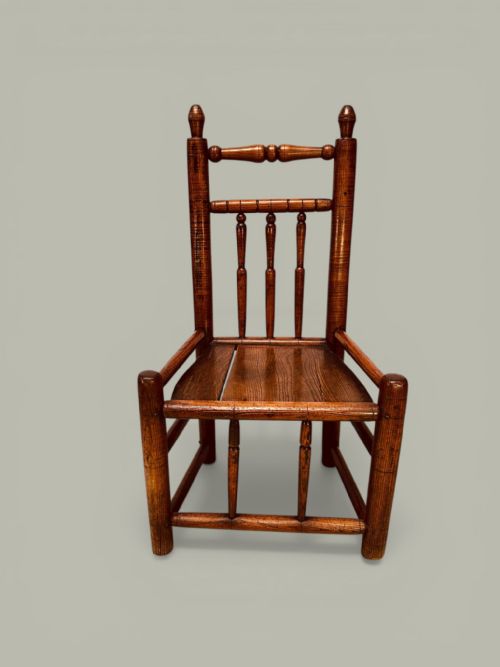

Ash Spindle Chair
When you search for an ash spindle chair, you are looking at English country seating rooted in centuries of vernacular craftsmanship.
Ash Spindle Chair
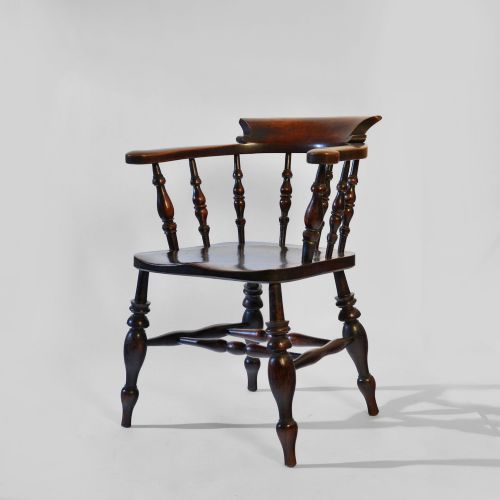
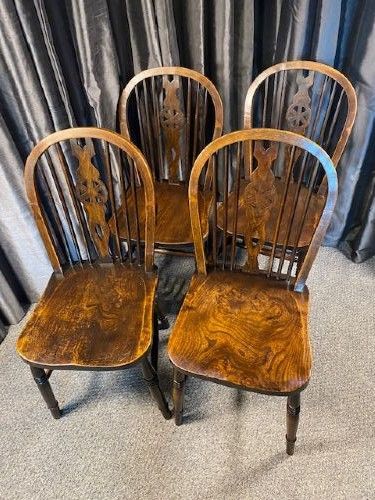
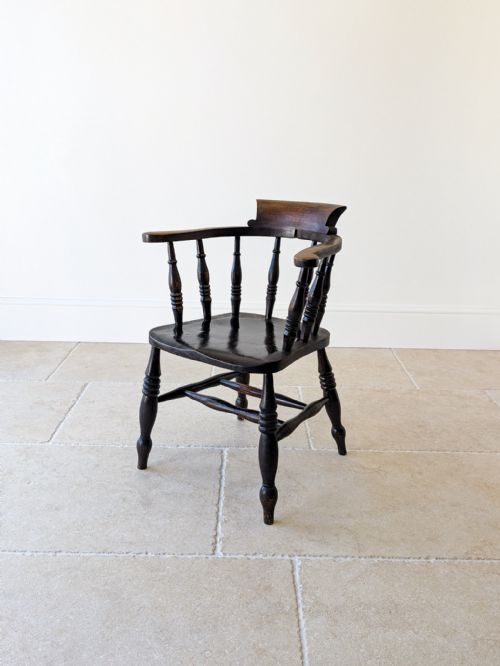
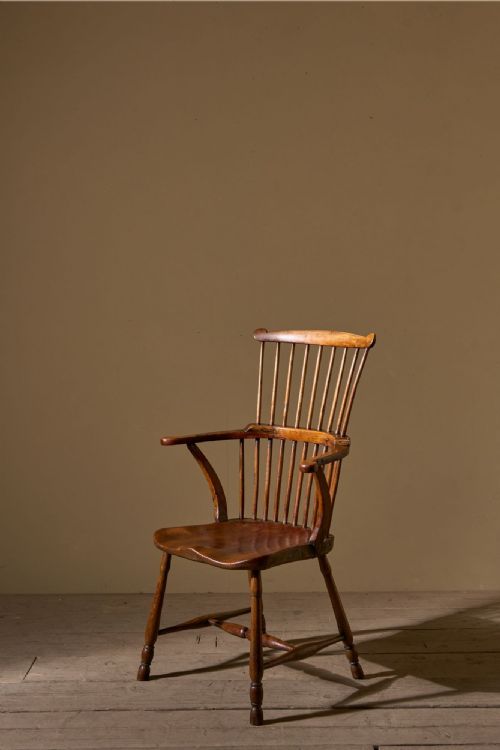
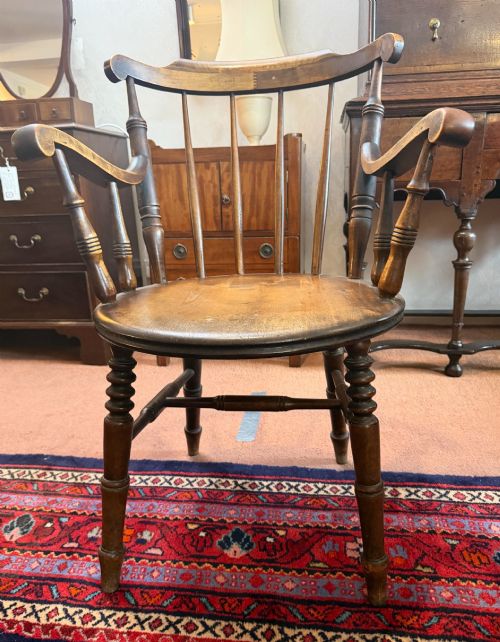
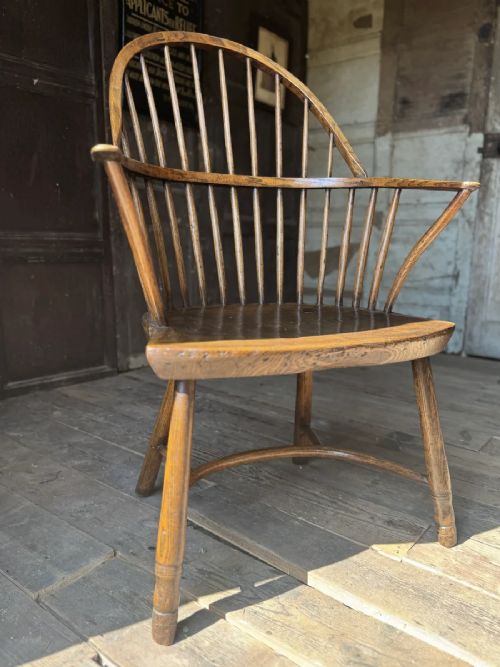
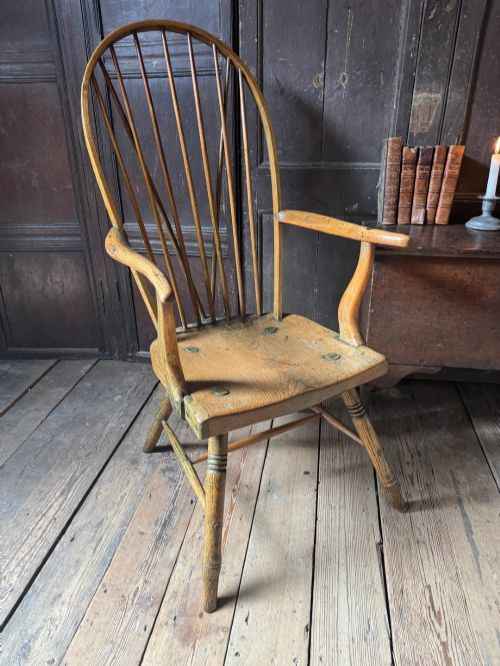
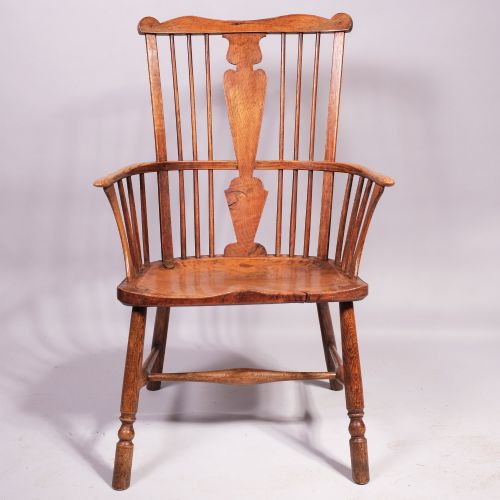
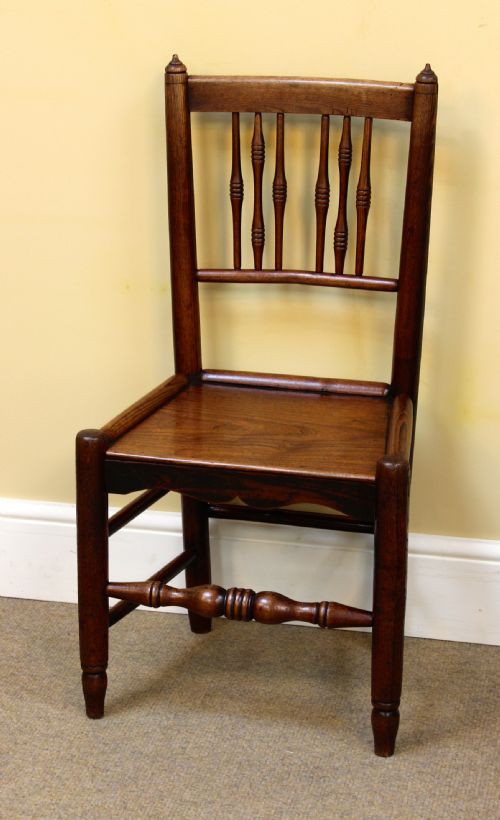
An ash spindle chair represents the practical domestic seating of English farmhouses, kitchens, and provincial workshops from the seventeenth century through to the Victorian era. The selection spans robust Windsor armchairs, high hoop-back forms, comb backs, and sets of dining or kitchen chairs.
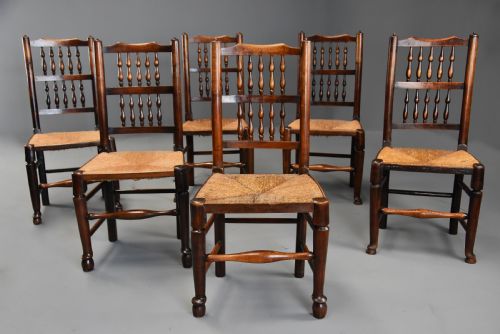
Buyers will most frequently encounter nineteenth-century vernacular pieces, including Lancashire spindle backs and Windsor elbow chairs in mixed woods. Regional variations such as West Country, Lancashire, and Scottish forms frequently appear alongside utilitarian desk chairs and child variants.
The category embraces both low-back smoker's bows and monumental sets designed for daily domestic utility. These chairs bridge the gap between simple provincial furniture and enduring functional design.
How They Were Made
Makers utilised ash primarily for its elasticity and strength, turning it on lathes for spindles, legs, and stretchers. Elm was selected for solid, carved saddle seats that resisted splitting under heavy use.
Secondary woods such as beech, oak, alder, and sycamore often supplemented the construction of frames and backs. Rush seating provided a flexible alternative to solid timber bases in regional variants.
Joinery relied heavily on traditional pegged and wedged mortise and tenon joints, accommodating the natural movement of unseasoned timbers. Steam-bending allowed makers to form continuous bows and crest rails from green wood.
Ash Spindle Chair Retail Price Guide 2026
Typical asking prices for ash spindle chair among the pieces listed under this phrase on Sellingantiques today, from the lower quarter to the upper quarter. They describe what is for sale here now, not the wider market.
Listings feature ash combined frequently with elm, rush, and beech across eighteenth and nineteenth-century English and Scottish forms.
What Varies in Quality
The distinction between ordinary utility seating and finer workshop production rests on the grace of the turning and the harmony of proportions. Thicker, clumsily replaced spindles or heavily sanded surfaces detract from the integrity of an early frame.
Duncan McKellar of Fenwick
The Ash Spindle Chair Glossary
- Spindle back
- A chair back constructed from a series of turned vertical wooden rods fitted between a top rail and seat. These rods provide flexible support.
- Windsor chair
- A chair built with a heavy solid wooden seat into which the legs, back, and arms are separately tenoned. They often incorporate bentwood bows.
- Crinoline stretcher
- An arched underframe connecting the legs of a Windsor chair that resembles the hoops of a crinoline skirt. It adds rigidity to the structure.
- Comb back
- A Windsor chair variation where the vertical spindles extend upward to support a horizontal headpiece resembling a hair comb. This style gained popularity in the eighteenth century.
- Vernacular
- Furniture designed by local craftsmen for everyday regional use rather than following metropolitan fashion. These pieces reflect local materials and traditions.
Ash Spindle Chair: Frequently Asked Questions
How do I date an ash spindle chair?
Dating relies on observing construction methods, tool marks, and timber shrinkage. Earlier examples from the seventeenth and eighteenth centuries often display hand-split components and deeper saddle wear.
Nineteenth-century iterations tend to show more uniform machine turning and standardised assembly techniques. Comparing the joinery against documented regional styles helps narrow the period.
What is a Lancashire spindle back?
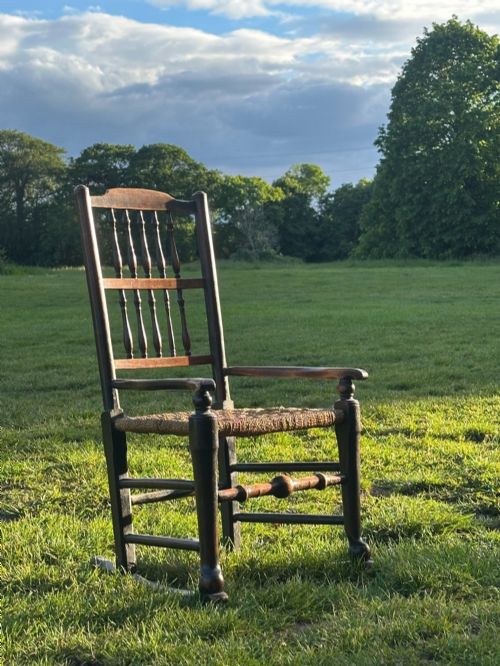
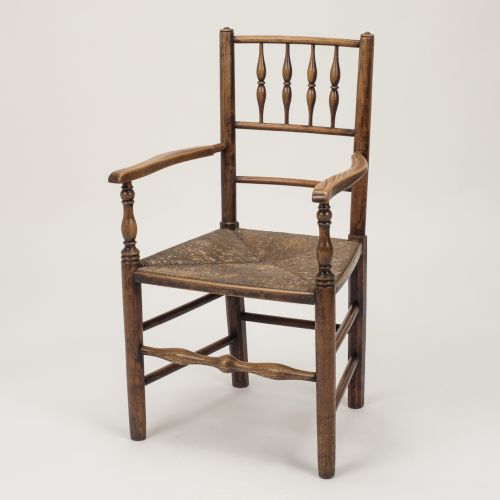
A Lancashire spindle back is a traditional regional chair type featuring multiple rows of turned spindles in the backrest. They were widely produced for domestic and tavern use across the North West of England.
These chairs frequently appear in sets and often feature rush seats or pad feet. Their sturdy construction made them enduring staples of farmhouse kitchens.
Are these chairs comfortable for daily use?
Most of these chairs were shaped for utility, but elm saddle seats offer surprising ergonomic contouring. The natural spring in ash spindles also provides gentle give when leaning back.
Adding a loose pad or cushion can improve comfort during extended periods of sitting at a desk or dining table. Their sturdy build ensures they easily withstand daily modern living.
How should I care for rush and wood seats?
Wood surfaces benefit from occasional applications of natural beeswax to nourish the grain and preserve the patina. Avoid placing them near direct heat sources or in extreme humidity to prevent timber splitting.
Rush seats should be kept dry and dusted gently with a soft brush rather than wiped with wet cloths. Proper atmospheric stability protects both the dried sedge and the underlying wood frames.