



Arts Crafts Copper Guard
These arts crafts copper guard pieces bring hammered metalwork and honest construction to the hearth, offering practical fire protection with distinct period character.
Arts Crafts Copper Guard
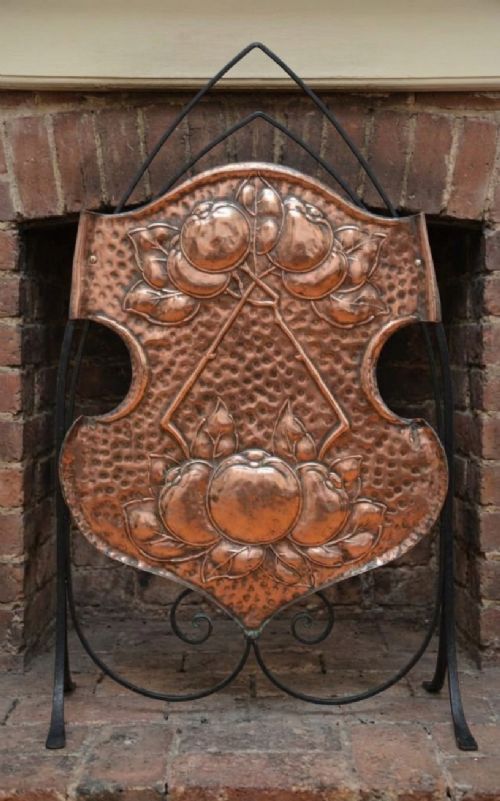
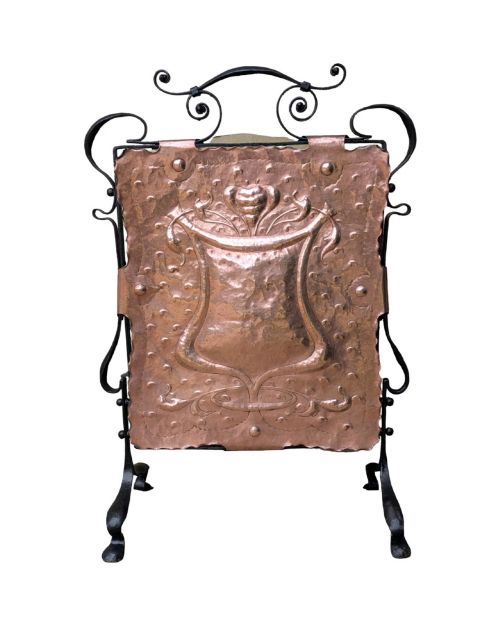
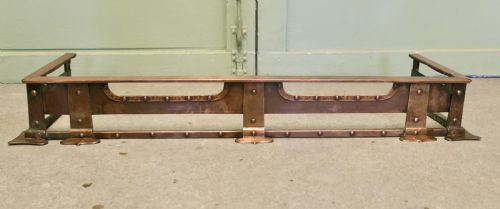
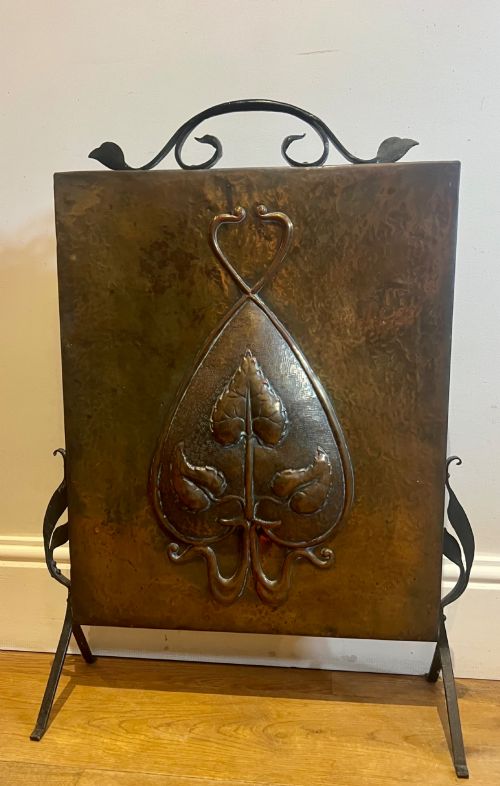
When you search for arts crafts copper guard, you encounter fireside furniture designed to shield a room from leaping sparks while displaying the hand-worked textures characteristic of the movement. These pieces primarily take the form of fire screens, spark screens, and fireplace fenders constructed during the late nineteenth and early twentieth centuries.
The versions you are most likely to meet on this page span the Victorian, Edwardian, and early twentieth-century periods, often combining sheet metal with wrought iron frames or oak surrounds. They bridge the gap between utilitarian hearth accessories and decorative metal art.
Makers of these items utilised distinct stylistic touches associated with Arts and Crafts and Art Nouveau ideals, ranging from simple riveted panels to curved spark screens and Newlyn-inspired designs. Each form serves to frame the fireplace opening while highlighting the natural warmth of the metal.
Materials and construction methods
The construction of an arts crafts copper guard relies on the combination of beaten sheet metal and robust support frames made from wrought iron, cast iron, or oak. Smiths and metalworkers hammered the copper panels by hand to create textured surfaces that caught the firelight.
Structural integrity was achieved through visible rivets, forged iron braces, and sturdy wooden framing, celebrating the honest assembly of materials rather than concealing joints. This approach ensured that the hearth guards could withstand daily use while maintaining their decorative presence.
Arts Crafts Copper Guard Retail Price Guide 2026
Typical asking prices for arts crafts copper guard among the pieces listed under this phrase on Sellingantiques today, from the lower quarter to the upper quarter. They describe what is for sale here now, not the wider market.
Some screens feature a cannon design, proving that late-Victorian metalworkers liked to occasionally point metaphorical artillery right at the hearthrug.
Distinguishing quality in period metalwork
Quality in these hearth furnishings rests upon the depth and regularity of the hand-beaten texture across the metal panel and the rigidity of the supporting frame. Superior examples demonstrate confident hammer work and secure integration between the copper insert and its iron or oak mount.
The distinction between standard production and finer craftsmanship also shows in the treatment of rivets, joints, and decorative motifs. Pieces showing thoughtful proportion and robust gauge metal stand apart from lighter, purely utilitarian items.
The Arts Crafts Copper Guard Glossary
- Copper
- A malleable reddish-brown metal prized for its warmth and suitability for hand-hammering. It forms the primary visual element in these hearth pieces.
- Wrought Iron
- A tough, fibrous iron alloy that can be heated and forged into strong structural frames and decorative scrollwork. It frequently supports the copper panels.
- Fire Screen
- A moveable barrier placed before an unlit or dying fireplace to block drafts or hide the grate. Many examples utilise copper panels for this purpose.
- Fireplace Fender
- A low metal or stone curb placed on the hearth around the fireplace opening. These often incorporate copper surrounds or kerbs in the Arts and Crafts style.
- Riveted
- Joined together using metal pins hammered flat at the ends. This technique provided a visible, industrial aesthetic valued by craft metalworkers.
Arts Crafts Copper Guard: Frequently Asked Questions
What is an arts crafts copper guard?
An arts crafts copper guard is a decorative and protective hearth accessory, usually taking the form of a fire screen or fender, made from hammered copper combined with iron or oak.
These pieces were produced during the late Victorian and Edwardian eras to shield rooms from fireplace sparks while celebrating handcrafted metalwork.
How were these screens used originally?
They were positioned directly in front of the fireplace opening to catch stray embers and sparks when a fire was burning down.
During warmer months when the hearth was unlit, they served to conceal the dark grate and add warmth to the room's interior.
How do I care for antique copper?
Antique copper requires minimal intervention, typically needing only gentle dusting with a soft, dry cloth to preserve its surface.
Aggressive metal polishes should be avoided because they strip away the aged patina accumulated over a century or more.
How do I tell Victorian from Edwardian pieces?
Victorian examples often feature heavier, more ornate detailing or stark Brutalist riveted construction typical of late nineteenth-century workshops.
Edwardian pieces tend to lean towards lighter frames and flowing Art Nouveau motifs that reflect changing aesthetic preferences after nineteen hundred.