




Arts and Crafts Side Desk
An arts and crafts side desk combines honest craftsmanship with everyday utility, offering a sturdy workspace built to last.
Arts and Crafts Side Desk
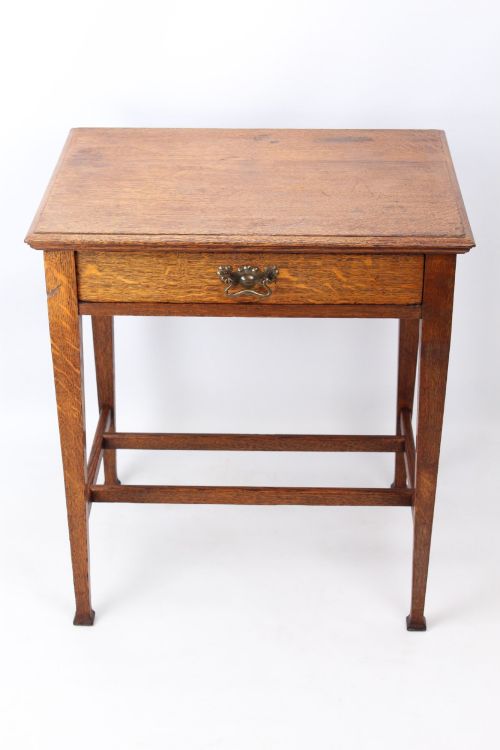
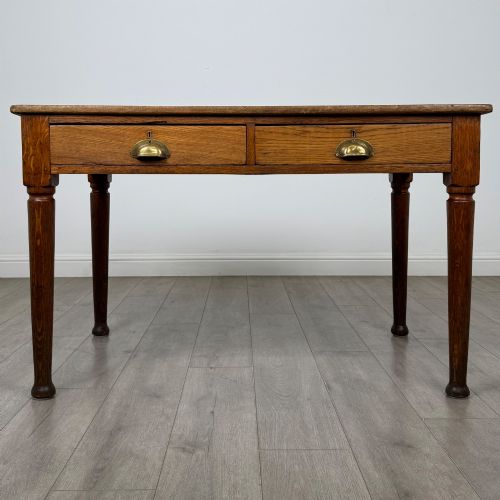
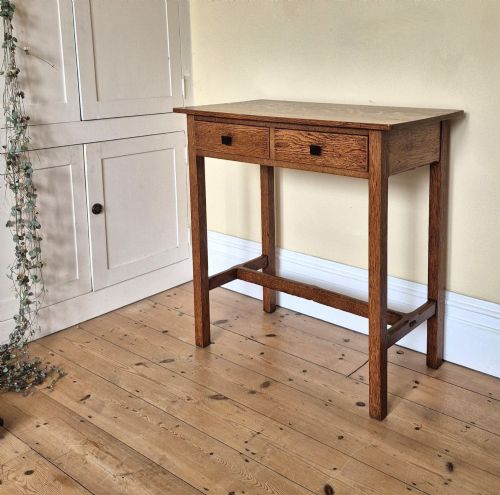
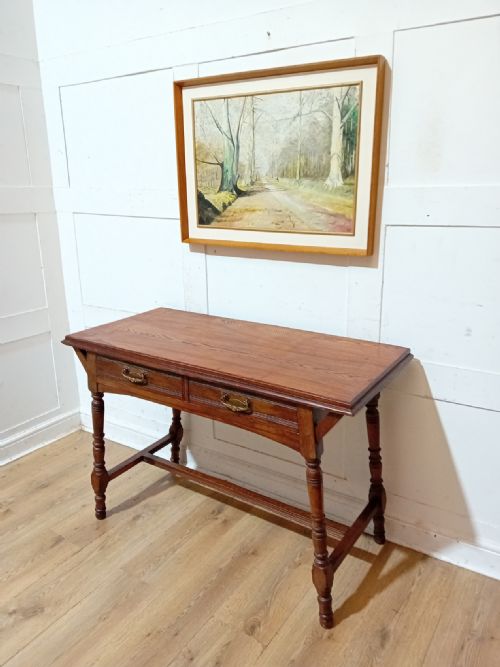
The arts and crafts side desk encompasses compact writing tables, side tables and writing desks produced during the late nineteenth and early twentieth centuries. These pieces reflect the movement's emphasis on utility and straightforward construction.
Oak forms the primary material for these desks, often accompanied by ash or mahogany depending on the specific regional workshop or maker. Buyers frequently encounter writing tables and small side desks dating from the Victorian and Edwardian periods.
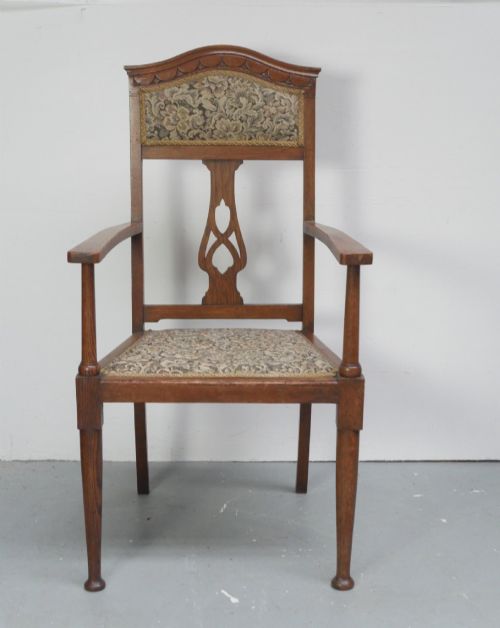
Design influences range from strict Arts and Crafts principles to Art Nouveau, Jugendstil and Gothic Revival aesthetics. Such desks suit studies, bedrooms and living spaces where a smaller writing surface is required.
Assessing the workmanship
Quality in these desks rests on the integrity of the timber selection and the precision of the joinery. Pieces associated with recognised makers or workshops typically display superior hand-carved detailing and thoughtful proportions.
The choice of secondary timbers and the stability of the frame differentiate standard utility pieces from finer examples. Patina accumulated on the oak surfaces over decades contributes significantly to the visual appeal of a desk.
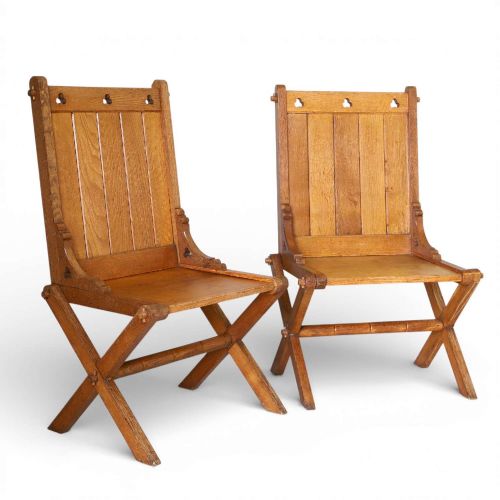
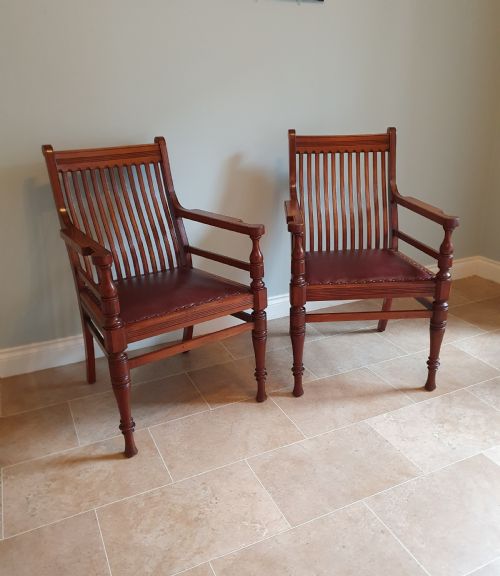
Gossip chairs and folding reading tables offer curious seating arrangements designed specifically for Victorian hallway chats and fireside reading.
Hubert Simpson of Kendal·Liberty·Wheeler Of Arncroach·Morris And Co·Philip Webb·Howard And Sons
The Arts and Crafts Side Desk Glossary
- Arts and Crafts
- A design movement advocating for traditional craftsmanship, simple forms and local materials. It emerged in reaction to mass production during the nineteenth century.
- Jugendstil
- The continental European counterpart to Art Nouveau, characterised by organic lines and stylized floral motifs. This style appears on tables and lamps from the early twentieth century.
- Gothic Revival
- An architectural and decorative style drawing inspiration from medieval forms, often seen in pointed arches and trefoil details. It influenced seating and table design during the Victorian era.
- Aesthetic Movement
- A late nineteenth-century movement promoting art for art's sake in interior decoration and furniture design. It prized decorative refinement and simple lines.
- Writing Table
- A freestanding desk with a flat top used for correspondence, typically fitted with one or more drawers beneath the surface.
Arts and Crafts Side Desk: Frequently Asked Questions
What defines an arts and crafts side desk?
These pieces are characterised by solid oak or ash construction, visible joinery, and a focus on utility without excessive ornamentation.
They reflect the design principles of the late nineteenth and early twentieth centuries, prioritizing honest materials and straightforward forms.
How do I care for an oak desk?
Keep wooden surfaces away from direct heat sources and strong sunlight to prevent the timber from drying out or splitting.
Apply natural beeswax periodically to nourish the grain and maintain the protective patina developed over generations.
Were these desks used for writing?
Writing tables and desks served as dedicated workspaces for correspondence and household administration before the digital age.
Their compact dimensions made them suitable for placement in bedrooms, small studies and reception rooms.
How are periods distinguished?
Victorian and Edwardian examples show subtle shifts in proportion, hardware styling and decorative motifs applied to the timber frame.
Earlier pieces often display heavier Gothic Revival influences, while later versions incorporate cleaner lines associated with the twentieth century.