
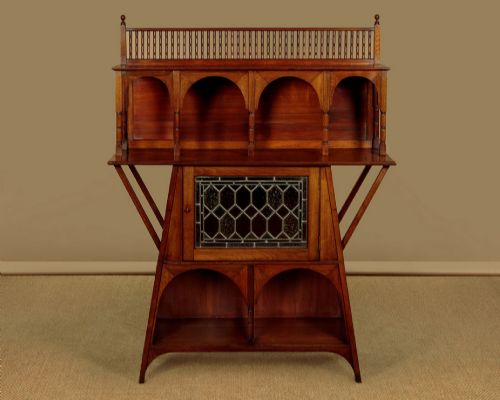
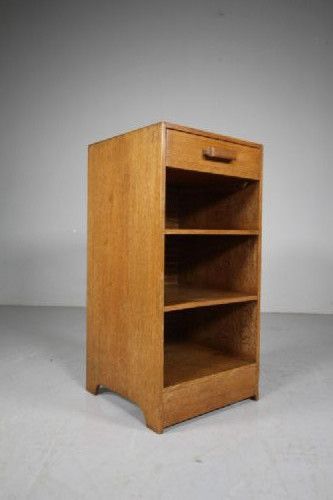
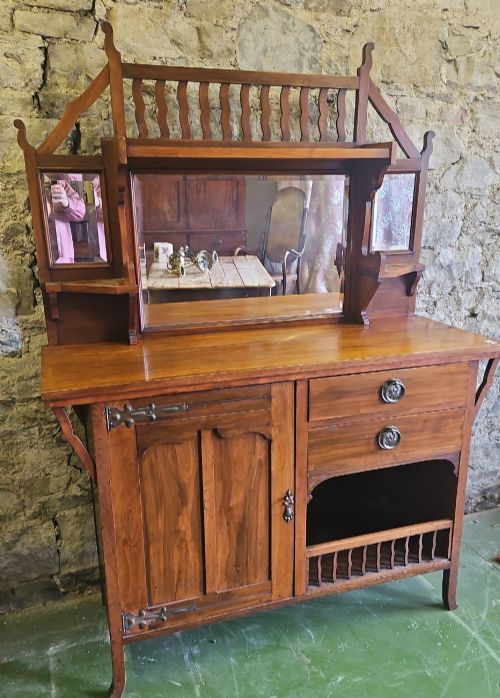
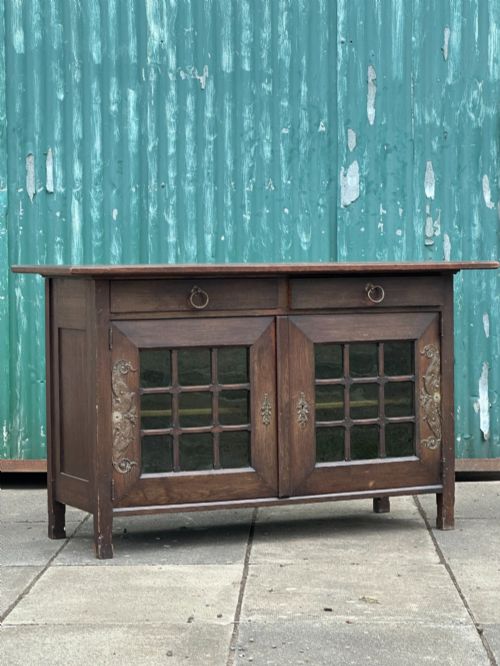


Arts and Crafts Side Cabinet
An arts and crafts side cabinet brings solid timber and honest construction into a room, offering practical storage with distinct period character.
Arts and Crafts Side Cabinet
When you search for an arts and crafts side cabinet, you are looking at practical storage pieces designed with simple lines and functional utility. These items range from compact bedside cupboards and lamp tables to larger display units and sideboards produced across the late nineteenth and early twentieth centuries.
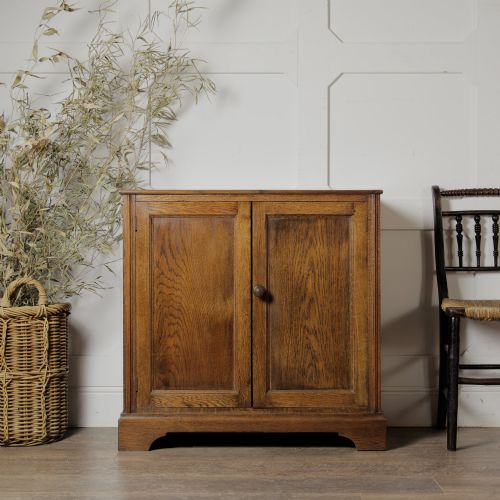
You are most likely to meet solid oak examples dating from around nineteen hundred on this page. Many pieces show influences from related design movements such as the Cotswold School, the Aesthetic Movement, and Art Nouveau.
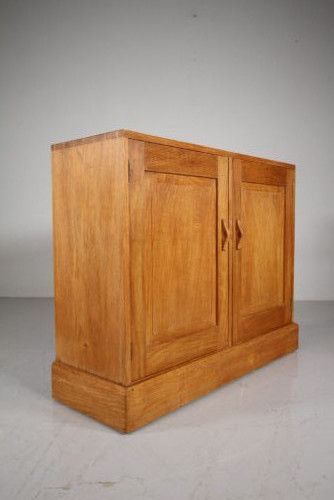
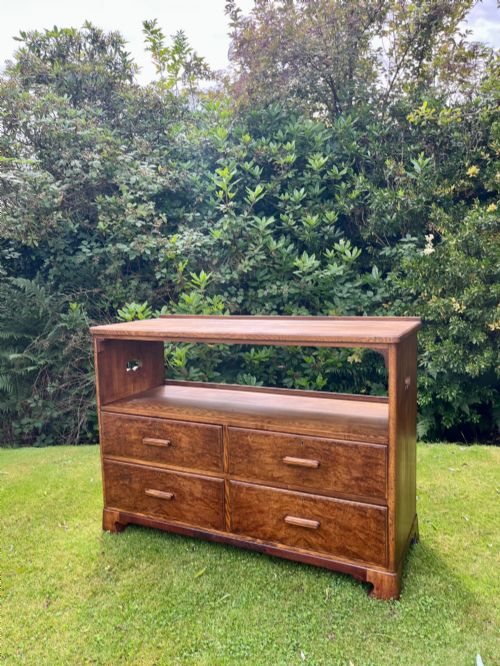
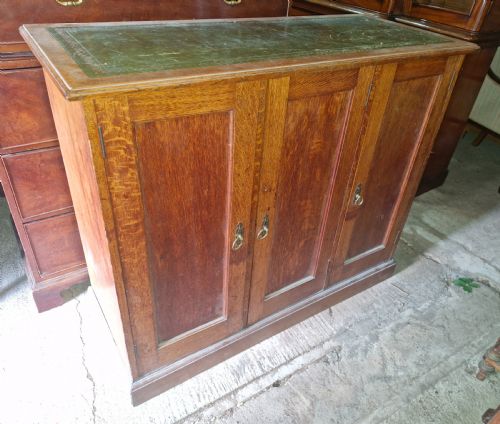
The form prioritises honest construction and utility over excessive ornamentation, often displaying straightforward panelled doors, open shelving, or useful drawers.
How they were made
Cabinet makers relied primarily on solid oak, alongside alternative timbers like mahogany, satinwood, and walnut, selecting materials for durability and distinct grain patterns. Construction frequently involved visible tenon joints and sturdy pegged frames that emphasised the structural integrity of the piece.
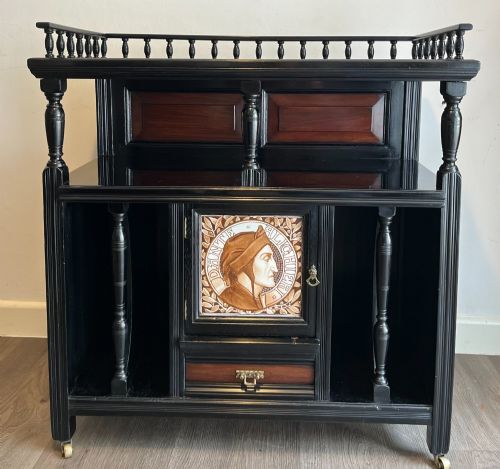
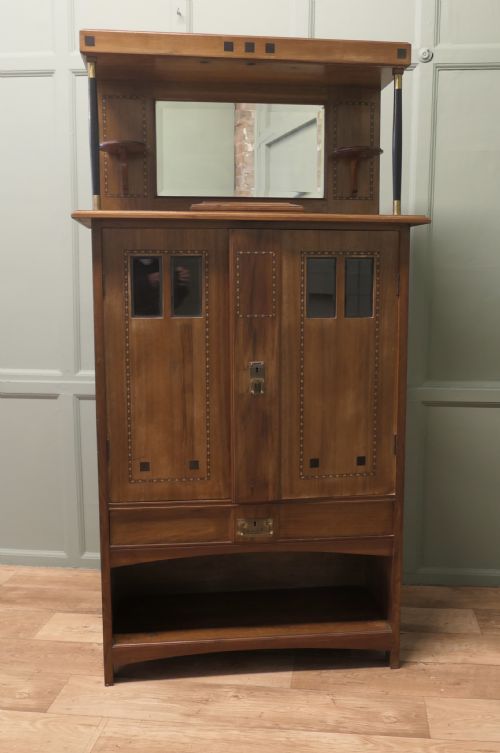
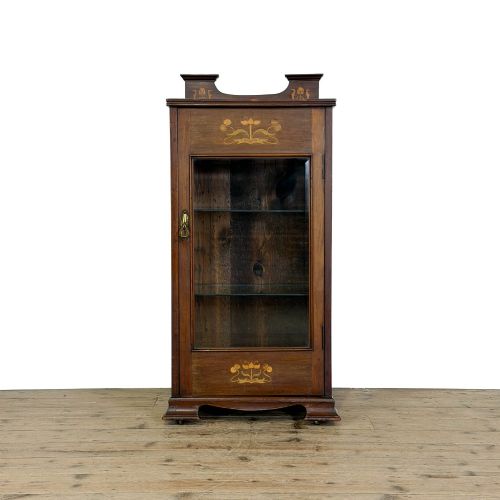
Metalwork played a key supporting role, with brass hinges, handles, and escutcheons often hand-hammered to complement the timber surfaces. Ceramic tile inserts and decorative wood inlay appeared regularly on select cupboard doors and tabletops, adding visual texture to the finished design.
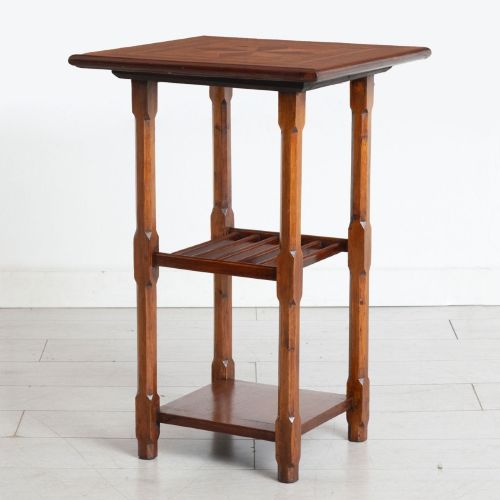
The inventory records diverse forms including bedside cupboards, display cabinets, occasional tables, and kitchen dressers.
What varies in quality
Quality rests upon the selection of timber and the precision of the joinery rather than surface decoration alone. Pieces produced by notable workshops exhibit superior timber preparation and more considered proportions.
The refinement of the hardware and the execution of hand-finished details, such as subtle wood inlay or carved fretwork, distinguish standard utility furniture from the finest output of the period.
Whytock and Reid·Liberty and Co.·Harris Lebus·Shapland and Petter·Bruce Talbert·Gillows·Henry Barker·W Snowdon Rochdale·Maple and Co
The Arts and Crafts Side Cabinet Glossary
- Cotswold School
- A twentieth-century design movement focused on traditional craftsmanship and local materials, particularly solid oak. Pieces from this circle emphasise hand-carved details and unpretentious utility.
- Aesthetic Movement
- A late nineteenth-century design current promoting art for art's sake, often featuring ebonised finishes and stylized natural motifs. It heavily influenced early cabinet design.
- Secessionist
- An early twentieth-century style characterised by geometric forms and stylized floral patterns, breaking away from historical revivalism. It appears on sophisticated display cabinets from this era.
- Fretwork
- Openwork ornamentation cut from wood using a fine scroll saw or coping saw. It adds delicate linear patterns to cabinet doors and table skirts.
- Escutcheon
- A protective plate surrounding a keyhole, often fashioned from brass or copper on period cabinet doors.
Arts and Crafts Side Cabinet: Frequently Asked Questions
What defines an arts and crafts side cabinet?
These cabinets are defined by their emphasis on honest construction, solid timber materials, and functional design. They discard excessive Victorian ornamentation in favour of simple lines and visible craftsmanship.
You will frequently encounter oak construction, hand-hammered brass hardware, and subtle decorative elements like tile tops or wood inlay.
How do I date an arts and crafts cabinet?
Dating relies on examining the timber, construction methods, and stylistic cues present in the piece. Pieces from the late nineteenth century often reflect Aesthetic Movement influences or incorporate ebonised details.
Items from nineteen hundred onwards typically display characteristic Cotswold School simplicity or Secessionist geometric motifs.
Where were these cabinets used?
These versatile pieces served various domestic functions throughout the home, from holding bedside essentials to storing tableware in living spaces. Smaller tables and cupboards were designed to fit neatly into hallways, bedrooms, or parlours.
Larger sideboards and display cabinets provided practical storage and surface space in dining rooms.
How should I care for an oak cabinet?
Solid oak furniture benefits from a stable indoor environment away from direct heat sources and strong sunlight. Regular dusting with a soft, dry cloth preserves the natural finish of the timber.
Occasional application of suitable wax helps nourish the wood and maintain its protective lustre over time.