
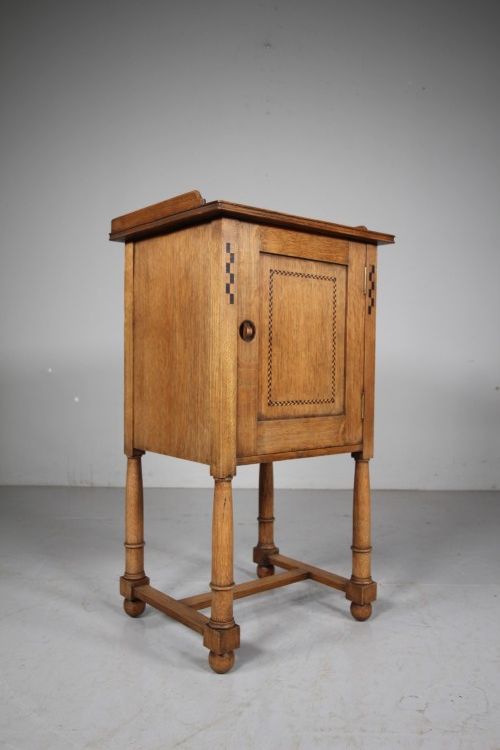
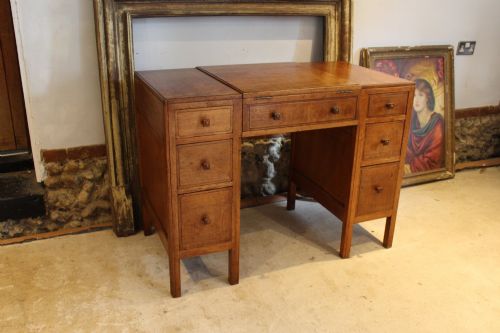


Arts and Crafts Oak Bedroom Table
These arts and crafts oak bedroom table designs offer honest timber construction and simple utility, bringing functional charm to period interiors.
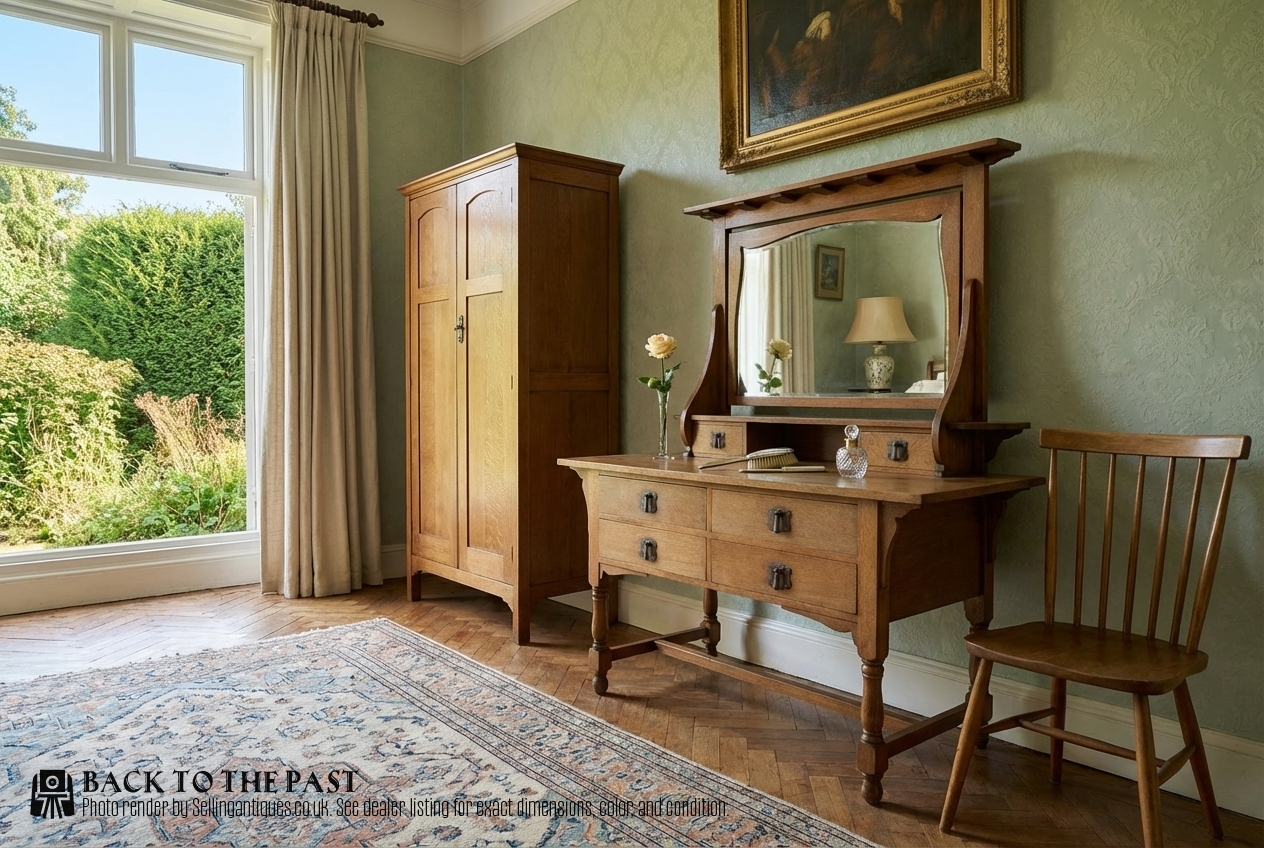
Arts and Crafts Oak Bedroom Table
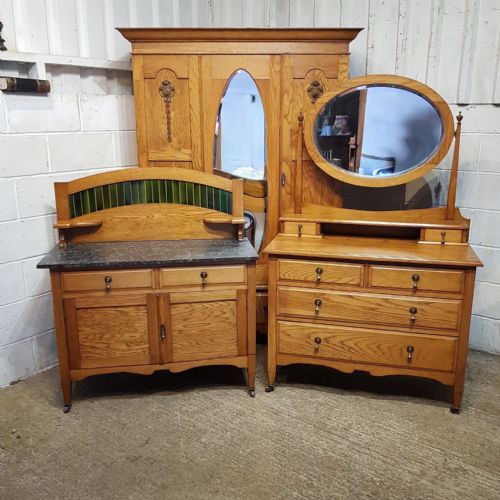
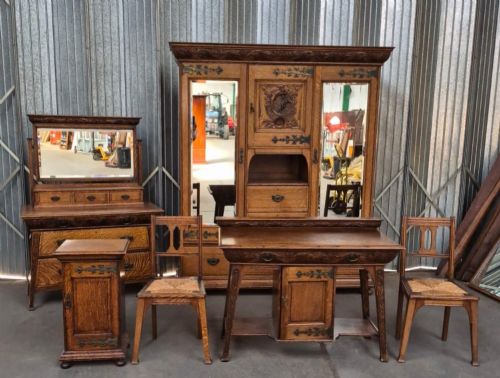
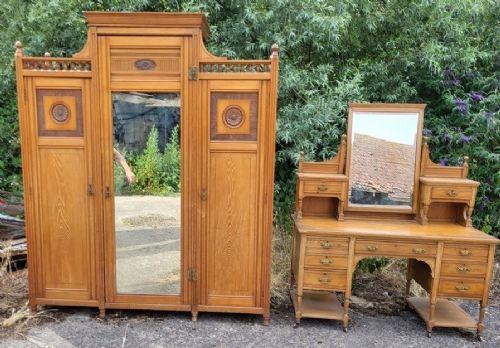
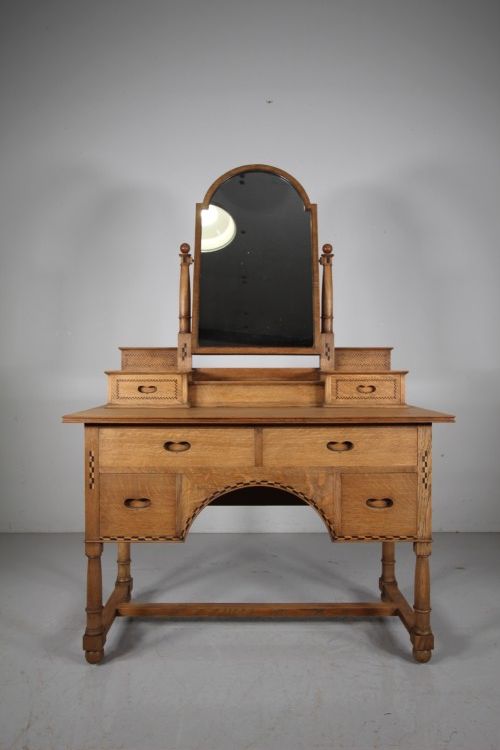
When searching for arts and crafts oak bedroom table examples, buyers encounter various forms including bedside cabinets, dressing chests, and complete bedroom suites dating from the late nineteenth century through to the nineteen-thirties. The pieces on this page span the Victorian and Edwardian eras up to nineteen-thirty, reflecting the longevity and evolution of the Arts and Crafts movement alongside Cotswold School and nineteen-thirties modern influences.
Dressing tables and chests dominate the available selection, often accompanied by mirrors and occasionally stools, constructed primarily to serve domestic bedroom requirements. These items range from simple utilitarian bedside units to substantial multi-piece suites, demonstrating how functional furniture was approached by various makers and regional schools across Britain.
Materials and construction
Oak serves as the primary structural timber across these items, complemented by secondary woods such as ash and enhanced through decorative wood inlay. Metalwork details commonly incorporate brass, copper, and iron for handles and hinges, while specific dressing tables integrate glass mirrors and occasionally ceramic or marble elements.
Makers utilised traditional joinery methods suited to the Arts and Crafts ethos, prioritising visible construction and structural integrity over superficial ornamentation. The integration of metal fittings and contrasting inlays highlights the handmade and considered approach characteristic of workshops from the late nineteenth century to the interwar period.
The inventory spans several decades, including Victorian, Edwardian, and nineteen-thirties periods alongside specific Cotswold School items.
Judging quality and provenance
Distinction across the range often rests upon maker attribution and workshop origin, with labelled pieces from established firms commanding particular attention from collectors. The complexity of the design, such as the inclusion of copper or brass hardware and refined wood inlay, separates standard utilitarian items from pieces attributed to notable designers or specific regional movements.
The degree of preservation in the timber finish and the retention of original fittings dictate the integrity of each piece. Superior examples exhibit cohesive proportion and thoughtful detailing, whereas simpler items focus strictly on practical storage and surface utility without decorative elaboration.
Heals of London·Shapland and Petter·George Walton·Harris Lebus·Wright and Hunter
The Arts and Crafts Oak Bedroom Table Glossary
- Arts and Crafts
- A design movement originating in the late nineteenth century that championed traditional craftsmanship, simple forms, and the use of natural materials. It rejected mass production in favour of visible construction and honest design.
- Cotswold School
- A regional offshoot of the Arts and Crafts movement associated with solid wood furniture making, hand-tool techniques, and unpretentious construction. Pieces from this tradition emphasise the natural grain and texture of oak.
- Dressing Chest
- A lower form of bedroom furniture combining a chest of drawers with an attached or integrated mirror and surface space for grooming. These items frequently served as precursors to larger dressing tables.
- Wood Inlay
- A decorative technique involving the insertion of contrasting pieces of wood into depressions within a solid timber surface to create patterns or motifs. This method adorned many late Victorian and Edwardian furniture pieces.
Arts and Crafts Oak Bedroom Table: Frequently Asked Questions
What defines an arts and crafts oak bedroom table?
These pieces are characterised by solid oak construction, visible joinery, and a focus on utility rather than excessive ornamentation. They reflect the design principles of the late nineteenth and early twentieth centuries.
Buyers will find items ranging from compact bedside cabinets to elaborate dressing chests with mirrors. Each piece embodies the practical requirements of period bedrooms combined with thoughtful craftsmanship.
Are these pieces suitable for modern bedrooms?
The compact proportions and neutral tones of oak furniture allow these items to integrate smoothly into contemporary living spaces. Their enduring utility makes them practical additions for modern storage and surface needs.
Placing a bedside cabinet or dressing chest in a modern room introduces textural warmth and historic character. The robust nature of the timber ensures they remain functional for daily use.
How do I tell an edwardian table from a thirties one?
Edwardian examples often incorporate traditional decorative elements such as inlaid wood or shaped brass hardware reflecting late nineteenth-century sensibilities. In contrast, nineteen-thirties pieces tend toward cleaner lines and simpler surfaces influenced by modernism.
Examining the overall silhouette and hardware helps differentiate the periods. Earlier pieces lean into ornate craftsmanship, while later items embrace starker geometric forms.