
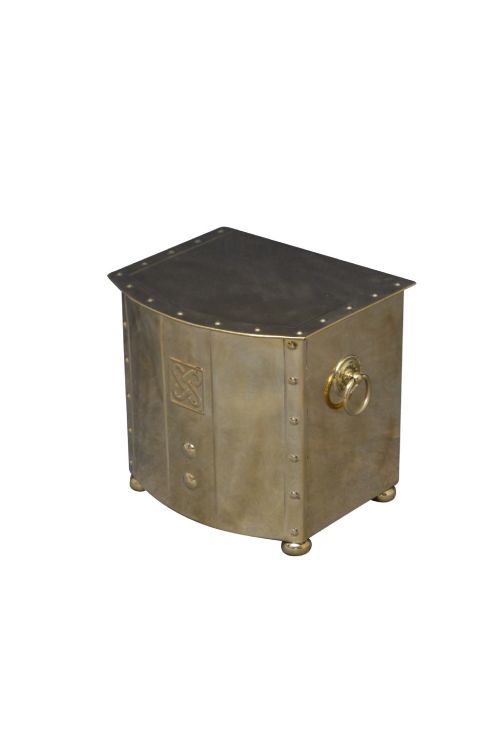


Arts and Crafts Log Box
These arts and crafts log boxes bring honest metalwork and timber to the hearth, offering a practical way to store fuel with distinct period style.
Arts and Crafts Log Box
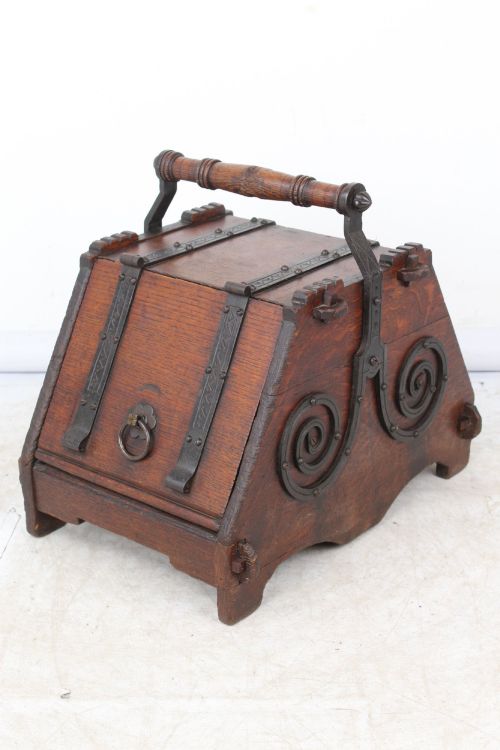
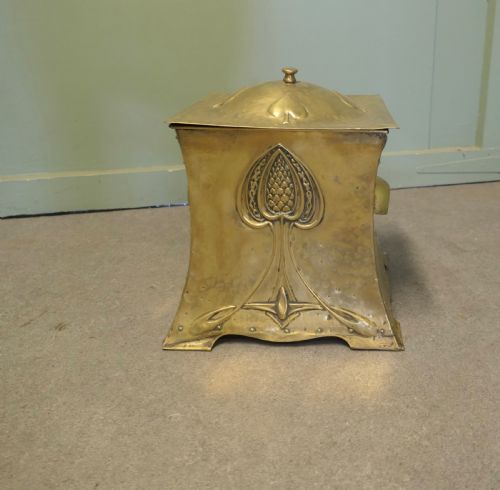
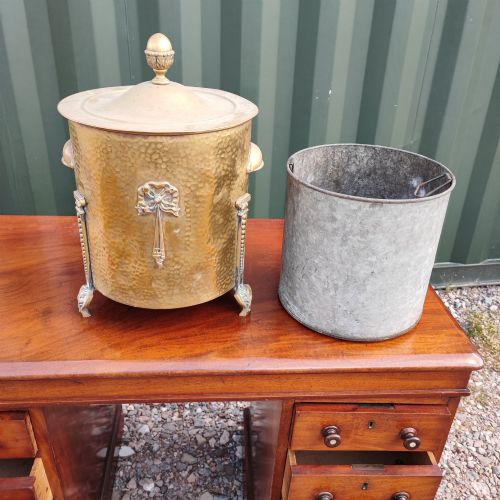
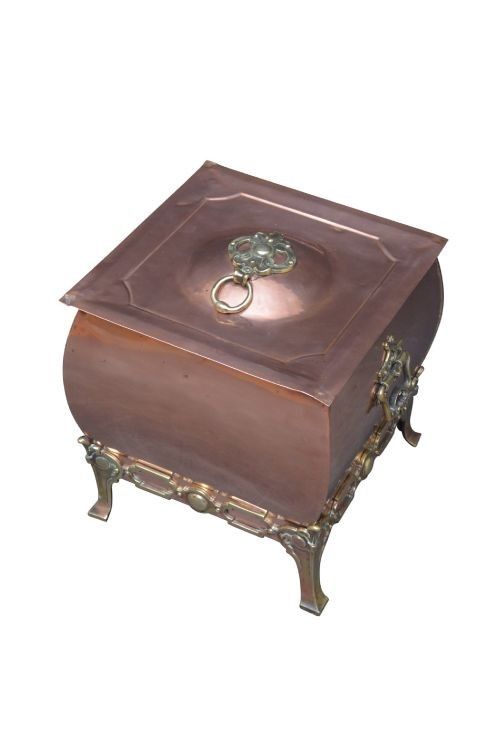
The most common forms merge timber frames with hammered metal panels, particularly copper and brass. You will encounter designs ranging from simple oak boxes to riveted steel and iron bins.
Originating during the late nineteenth century and continuing through the Edwardian era into the twentieth century, these items bridge the gap between functional fireside equipment and decorative metalwork.
Materials and Construction
Makers utilised contrasting materials, mounting beaten copper or brass sheets onto solid oak frames or pairing wrought iron with riveted steel. This combination of timber and metal gave the boxes structural strength while providing a surface for decorative repoussé work.
Surface treatment defines the construction, with hand-hammered textures, spade motifs, and galleon designs worked directly into the metal panels. Rivets are frequently left visible as a structural and decorative feature of the metalwork.
Keep an eye out for hidden galleon designs hammered into the copper lid, ready to sail across your hearth.
Evaluating Quality
Quality rests on the weight of the metal and the depth of the hand-working on the panels. Thicker gauge copper and solid oak construction separate substantial pieces from lighter, mass-produced alternatives.
Design integrity distinguishes superior examples, where details like riveted joints, wrought iron strapwork, and integrated handles are executed with clear intention rather than applied merely as superficial ornament.
Liberty London·Albert Edward Jones·Christopher Dresser
The Arts and Crafts Log Box Glossary
- Repoussé
- A metalworking technique where the artist hammers the metal from the reverse side to form a raised design on the front. This process creates the textured surfaces seen on many period panels.
- Purdonium
- A specific type of coal or log container, typically featuring a sloping front and a hinged lid designed for domestic hearth use. They often incorporate an inner metal liner to contain debris.
- Gothic Revival
- An architectural and decorative style that revives medieval forms, influencing early pieces with pointed arches and heavy hardware. It appears in several Victorian designs on this page.
- Art Nouveau
- A style characterised by flowing, organic lines and floral motifs that occasionally overlap with late arts and crafts metalwork. It brings a softer, plant-inspired geometry to fireside containers.
Arts and Crafts Log Box: Frequently Asked Questions
How do I clean a copper log box?
Wash the surface gently with warm soapy water and a soft cloth to remove soot and dust.
Avoid harsh commercial metal polishes that strip away the natural patination and character accumulated over decades of fireside use.
Are these boxes meant for coal or logs?
Many examples on this page served a dual purpose for both coal and wood storage, often referred to interchangeably in period descriptions.
Larger bins and carriers handle logs comfortably, while smaller scuttles with internal compartments were originally tailored for coal.
How do I date an arts and crafts log box?
Examine the construction methods, materials, and any maker marks or retailer stamps present on the metal or timber.
Victorian and Edwardian pieces often display heavier riveted ironwork and hand-beaten copper panels, whereas later twentieth-century examples lean towards industrial or streamlined finishes.
Can I use an antique log box daily?
These pieces were built for robust domestic utility and remain fully functional for modern firesides.
Ensure any original inner metal liner is intact and clean if you plan to store dry logs or peat inside the wooden frame.