


Arts and Crafts Dining Furniture
Arts and crafts dining furniture brings honest timber and solid utility into the modern dining room, prioritising straightforward joinery over ornate veneer.
Arts and Crafts Dining Furniture
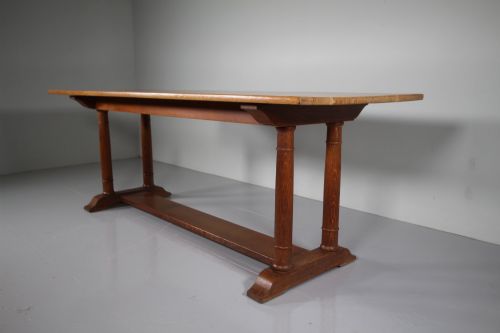
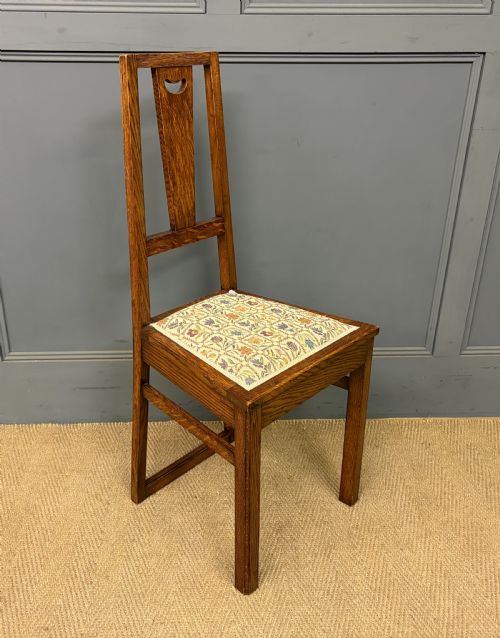
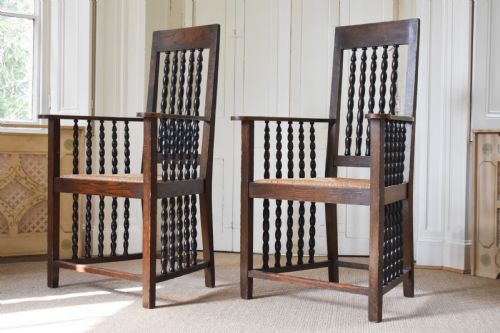
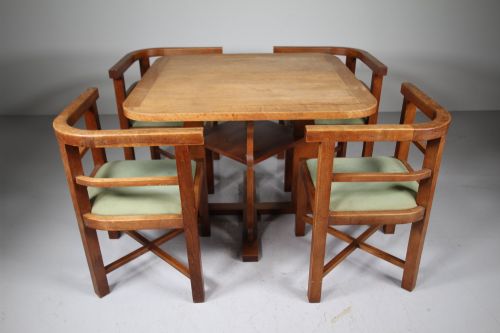
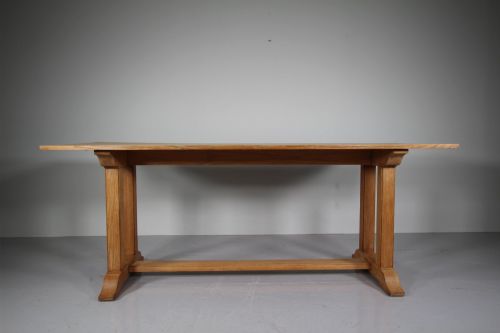
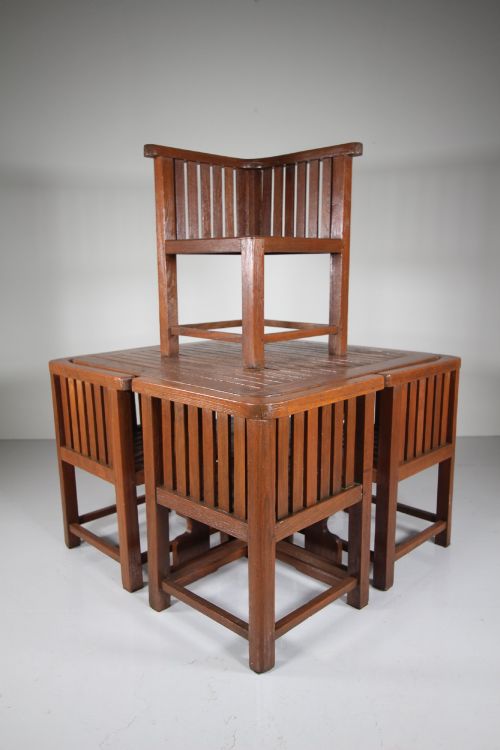
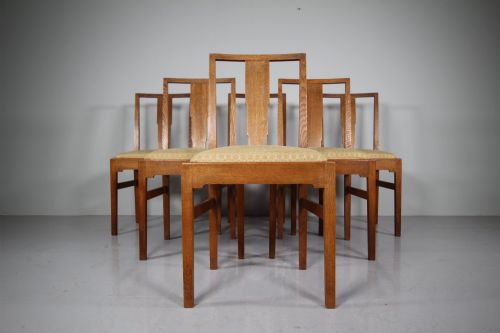
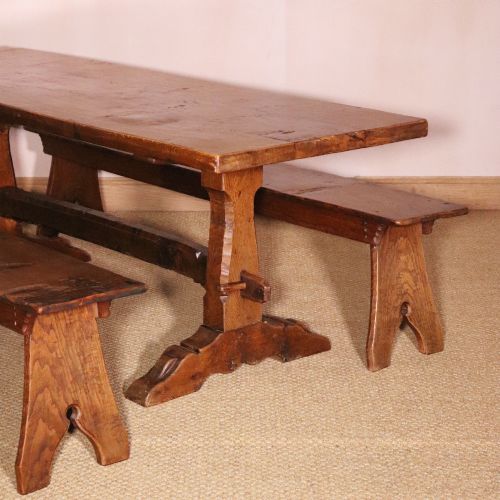
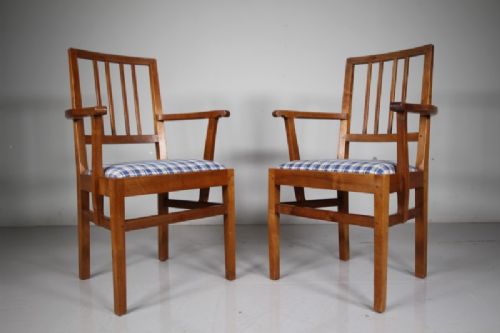
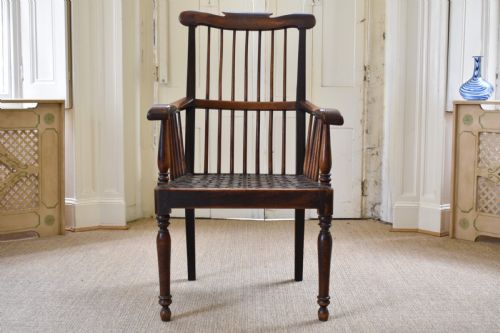
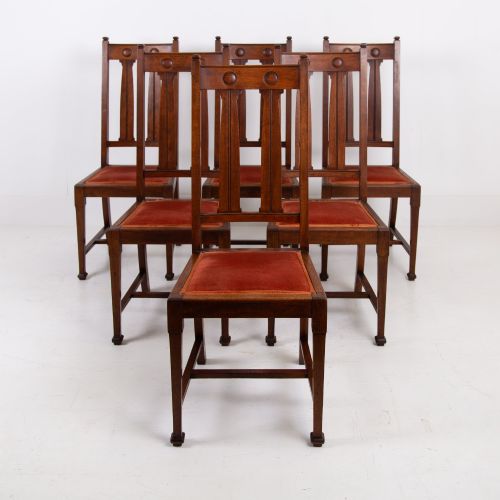
When you search for arts and crafts dining furniture, you encounter sturdy tables, high-back chairs, and substantial sideboards produced from the late nineteenth century through the interwar decades. The selection relies heavily on oak dining sets, refectory tables, and rush or leather seated chairs originating from English workshops and Scottish designers.
You are most likely to meet oak dining chairs and refectory tables bearing the marks of major London retailers and provincial makers. These pieces span the Edwardian period and the early decades of the twentieth century, reflecting a sustained domestic interest in vernacular design and regional craftsmanship.
The objects serve the same practical function today as they did a century ago, offering robust surfaces for meals and supportive seating built to handle daily use. Their enduring appeal lies in the visible grain of the timber and the straightforward proportions that suit both period homes and contemporary interiors.
Materials and Technique
Makers relied principally on solid oak, supplemented by elm, laburnum, and walnut, selecting timber for its strong grain pattern rather than hidden uniformity. Construction techniques favoured pegged mortise and tenon joints, visible dowels, and structural framing that exposed how each component locked together.
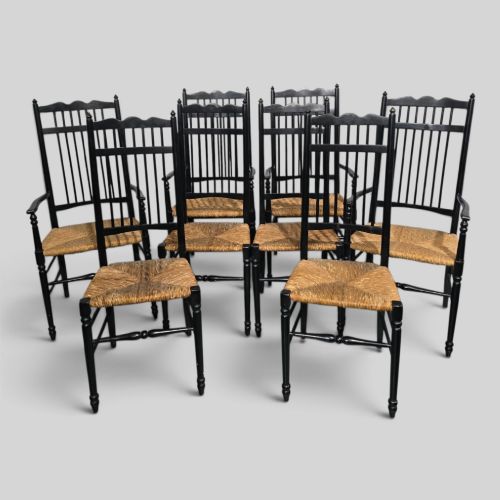
Seating relied on natural rush, woven leather, or padded upholstery secured with brass studs to provide texture and comfort without concealing the wooden framework. Metalwork remained functional, utilising copper and brass for hinges, strapwork, and drawer pulls that patinated naturally with handling.
Arts and Crafts Dining Furniture Retail Price Guide 2026
Typical asking prices for arts and crafts dining furniture among the pieces listed under this phrase on Sellingantiques today, from the lower quarter to the upper quarter. They describe what is for sale here now, not the wider market.
The inventory spans the late nineteenth century through the 1940s, highlighting the enduring output of the Cotswold School and major London firms.
The Measure of Quality
Quality rests in the integrity of the timber selection and the precision of the hand-cut joinery. Pieces that retain their original patinated finish and bear maker stamps or retailer labels distinguish workshop production from standard commercial output.
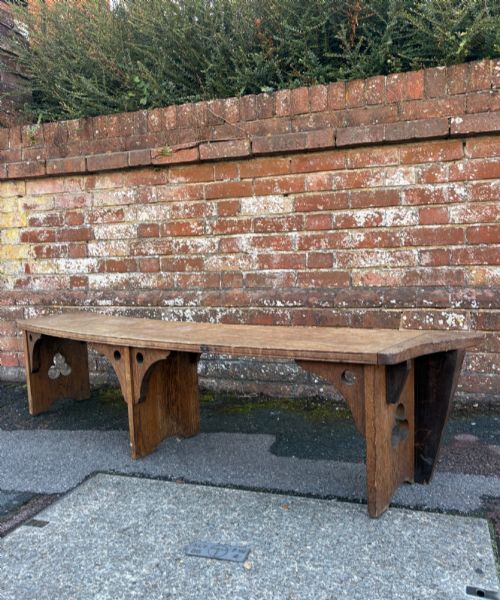
The weight of the timber and the thickness of tabletops or chair rails dictate durability and presence. Subtle carved details, such as trefoil supports or chamfered edges, separate standard utilitarian items from bespoke commissions designed by leading architects of the movement.
Heals of London·Jack Grimble·Edward Barnsley·Liberty and Co·Shapland and Petter·Sir Robert Lorimer·George Henry Walton
The Arts and Crafts Dining Furniture Glossary
- Refectory table
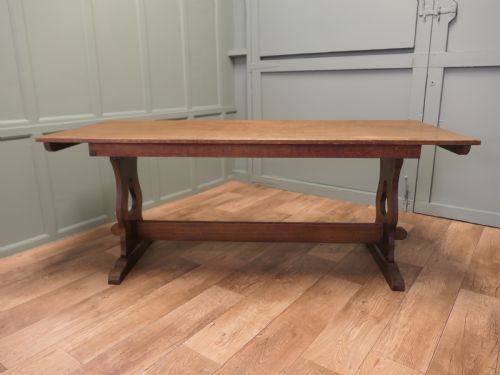
- A long, narrow dining table traditionally built with substantial timber legs and a central stretcher for rigidity. These forms dominated early twentieth-century dining spaces.
- Ladder back
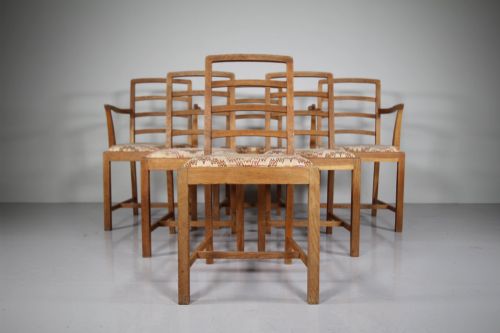
- A chair back featuring horizontal wooden slats between the upright stiles. This traditional vernacular design was widely adopted by Cotswold and London makers.
- Quartered oak
- Timber sawn radially across the growth rings to produce a distinctive silver grain figure. This method provided superior stability for large dining table tops.
- Stile
- The upright vertical side member of a chair back or furniture frame. Master craftsmen shaped these structural elements for ergonomic support.
- Mortise and tenon
- A woodworking joint where a pegged projection fits tightly into a corresponding cavity. It forms the structural backbone of solid oak dining sets.
Arts and Crafts Dining Furniture: Frequently Asked Questions
How do I care for solid oak dining tables?
Clean the surface with a damp cloth and dry it immediately, avoiding silicone sprays that damage the antique finish. Feed the timber periodically with natural beeswax to preserve the moisture and grain.
Keep tables away from direct heat sources and strong sunlight to prevent the solid wood from splitting or warping over decades of daily use.
Are these dining chairs comfortable for long meals?
High-back chairs and armchairs from this period were designed with ergonomic support in mind, offering upright posture and supportive upholstered or rush seats. The generous proportions accommodate modern sitters comfortably.
Adding loose cushions is straightforward if extra padding is desired, though original leather and rush weaves remain surprisingly supportive on their own.
How do I distinguish regional styles from London work?
Provincial workshops in the Cotswolds and Scotland often utilised local timbers like elm alongside oak, favouring simpler vernacular lines and exposed peg construction. London retailers such as Liberty and Heals tended towards refined commercial designs with deliberate branding.
Examining the underside for stamps, retailer tags, or distinctive chisel marks helps attribute pieces to specific regional movements or metropolitan firms.
Will an arts and crafts table suit a modern kitchen?
The honest timber and clean structural lines of these tables pair effortlessly with contemporary minimalist interiors or eclectic modern spaces. Their warm oak tones introduce natural texture to neutral rooms.
Pairing antique oak tables with either matching vintage chairs or modern seating creates a balanced dining area that anchors the entire room.