



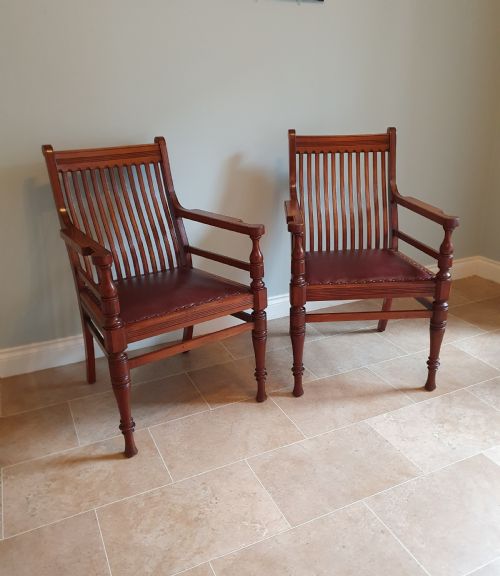


Arts and Crafts Desk Armchair
An arts and crafts desk armchair combines sturdy utilitarian construction with thoughtful detail, offering a supportive seat for daily study or work.
Arts and Crafts Desk Armchair
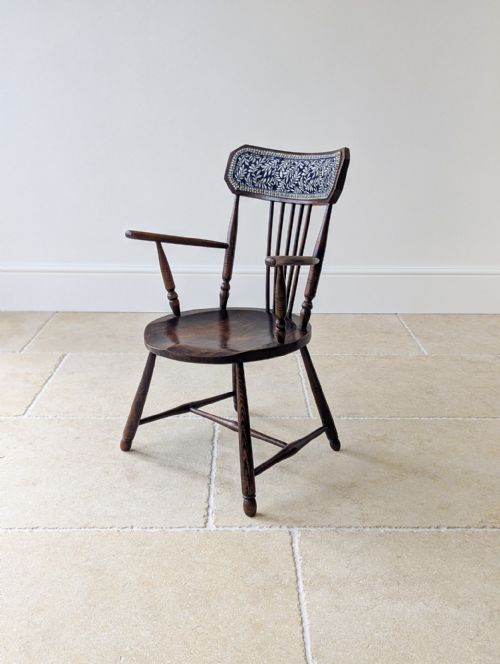
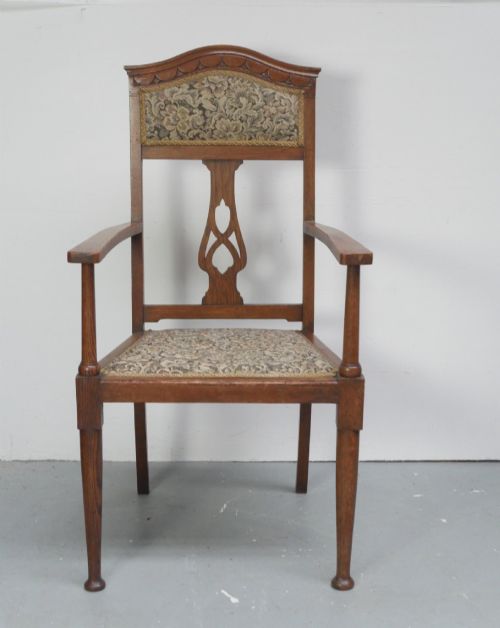
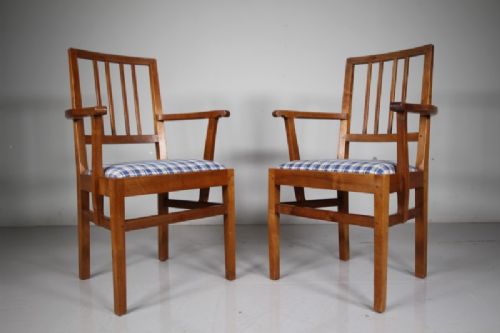
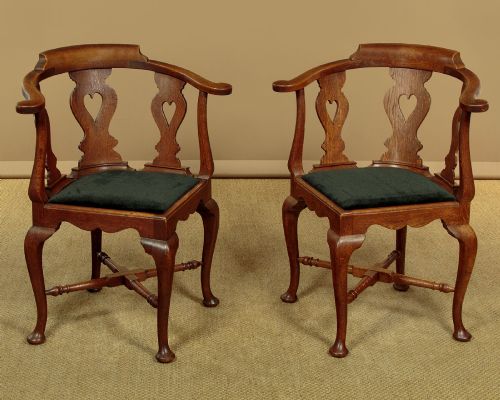
When you search for an arts and crafts desk armchair, you encounter seating designed around structural honesty and comfortable proportions. These pieces range from simple open elbow chairs to swivel office models and highback designs.
Oak dominates the selection, accompanied by walnut, mahogany, fruitwood, elm, and beech. The forms bridge late Victorian, Edwardian, and early twentieth-century domestic or office spaces.
Many examples incorporate leather or fabric upholstery, rush seats, and carved slat backs. You also find specialised pieces like schoolmaster chairs and library armchairs.
Materials and Technique
Cabinetmakers utilised solid timbers, primarily oak and walnut, joined through traditional mortise and tenon methods to withstand regular daily use. Frame construction often relies on exposed framing and four-stretcher supports for rigidity.
Surface detailing involves carved slots, subtle inlay, and turned elements rather than heavy ornamentation. Metal fittings in brass and iron appear on structural braces or swivel mechanisms.
Upholstered variants utilise drop-in seats covered in leather or fabric, sometimes complemented by rush seating. Timber surfaces receive wax or polish finishes that highlight the natural grain.
Arts and Crafts Desk Armchair Retail Price Guide 2026
Typical asking prices for arts and crafts desk armchair among the pieces listed under this phrase on Sellingantiques today, from the lower quarter to the upper quarter. They describe what is for sale here now, not the wider market.
Listings feature oak, walnut, mahogany, elm, beech, fruitwood, leather, fabric, brass, iron, and rush across multiple decades.
Craftsmanship and Distinction
The distinction between standard commercial production and finer pieces lies in the selection of timber and the precision of the joinery. Workshop attribution and maker stamps elevate certain examples significantly.
Proportion and comfort dictate the success of a desk chair, with better specimens offering balanced arm heights and supportive backrests. The integrity of original upholstery platforms and swivel actions also separates ordinary chairs from superior ones.
Edward Barnsley·Gillows·Shapland & Petter·Kendrick & Jefferson·Wheelers of Arncroach
The Arts and Crafts Desk Armchair Glossary
- Carver armchair
- An armchair with solid wooden arms, often styled to match a set of dining chairs. These chairs frequently serve as desk or elbow seating.
- Rush seat
- A seating surface woven from dried marsh grasses. This traditional technique appears on various regional and vernacular chairs.
- Elbow chair
- A seating piece with low arms designed to support the user's elbows. Such chairs provide compact comfort for writing desks.
- Drop-in seat
- A removable upholstered frame that fits into a recess in the chair rails. This construction method simplifies recovering.
- Stretcher
- A horizontal support connecting the legs of a chair to increase stability. Frames often feature four stretchers for enhanced rigidity.
Arts and Crafts Desk Armchair: Frequently Asked Questions
What defines an arts and crafts desk armchair?
These chairs combine functional workspace design with the straightforward construction values of the movement. They prioritize exposed timber, durable joinery, and comfortable proportions over excessive ornamentation.
You will find forms ranging from simple open armchairs to swivel desk seats and library chairs, mostly executed in oak or walnut.
How do I date an arts and crafts armchair?
Dating relies on combining stylistic markers with construction evidence, such as timber choice and hardware. Pieces span from the late nineteenth century through the Edwardian era up to the 1930s and 1940s.
Earlier examples often display Aesthetic Movement or Victorian Gothic influences, while later pieces adopt cleaner modernist lines.
Are these chairs suitable for daily computer work?
Most of these historic chairs provide sturdy support, though seat heights and depths vary compared to modern office seating. Selecting models with supportive arms and correct desk clearance ensures comfortable daily use.
Many buyers pair them with a supportive cushion if they sit for extended periods.
How should I care for the wood and leather?
Maintaining the timber requires occasional application of quality wax to nourish the grain and prevent drying. Leather elements benefit from specialised conditioners to keep the hide supple.
Keeping the chairs away from direct heat sources and strong sunlight protects both the wood and the upholstery.