
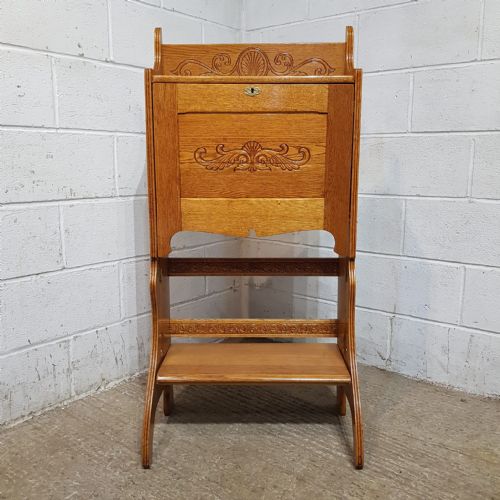
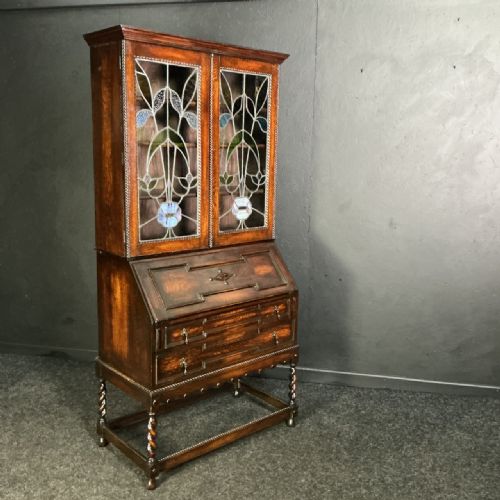
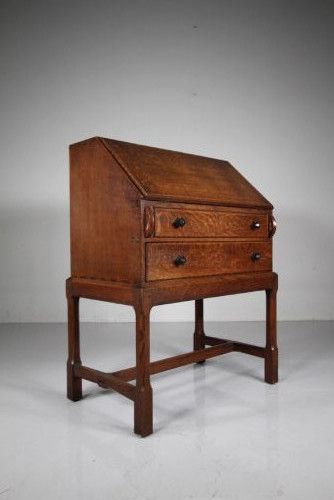
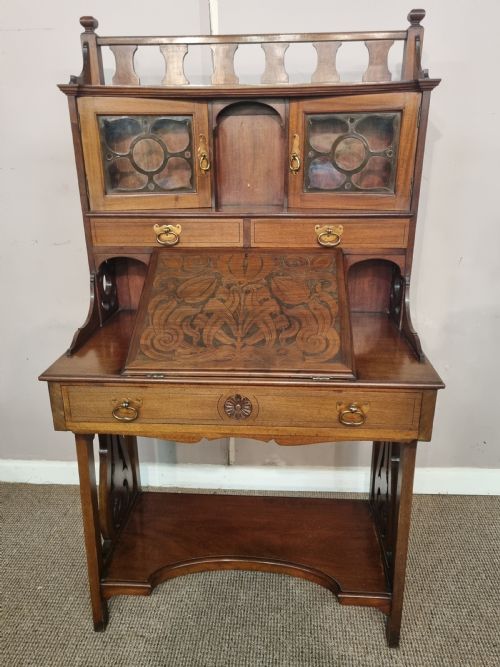


Arts and Crafts Cabinet Desk
These arts and crafts cabinet desks combine practical writing surfaces with fitted storage, offering the robust simplicity that collectors seek today.
Arts and Crafts Cabinet Desk
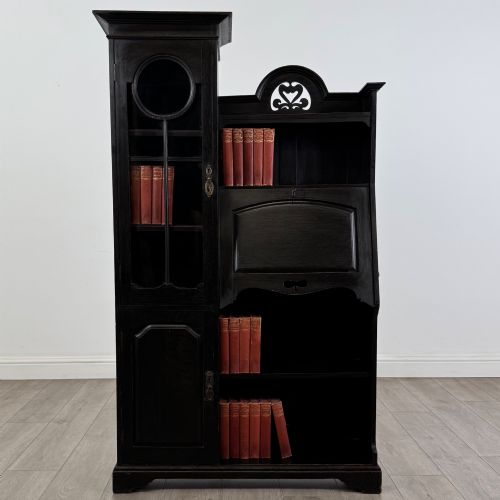
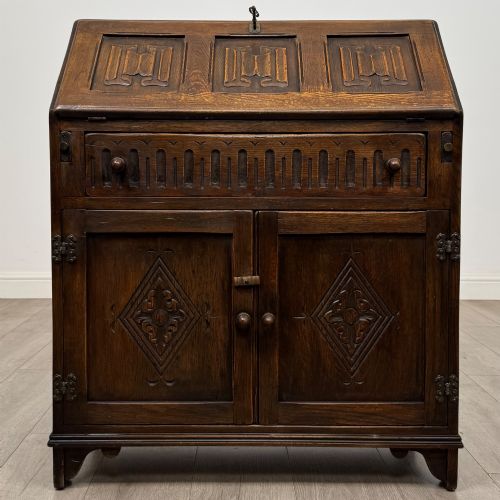
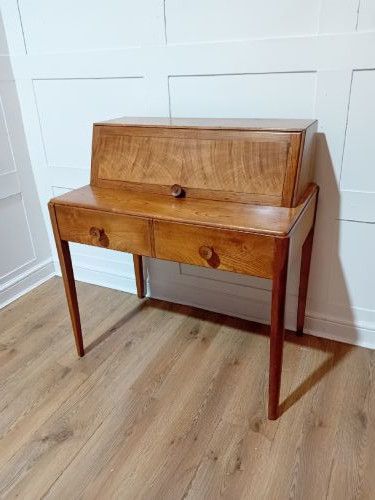
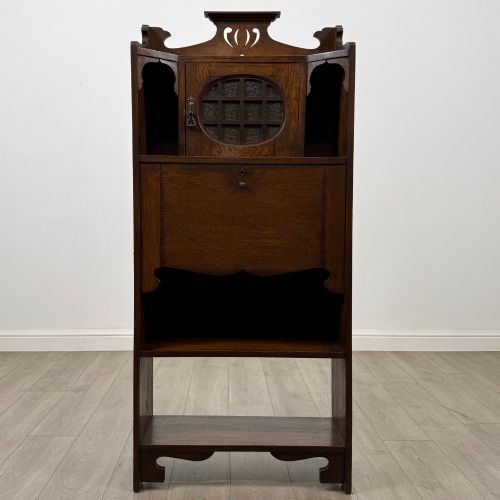
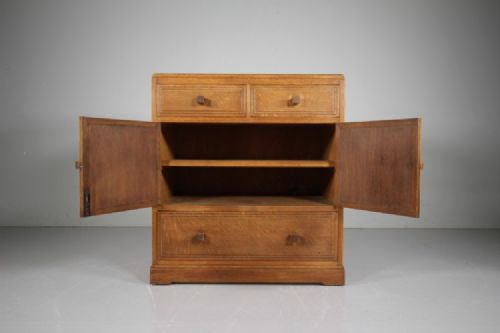
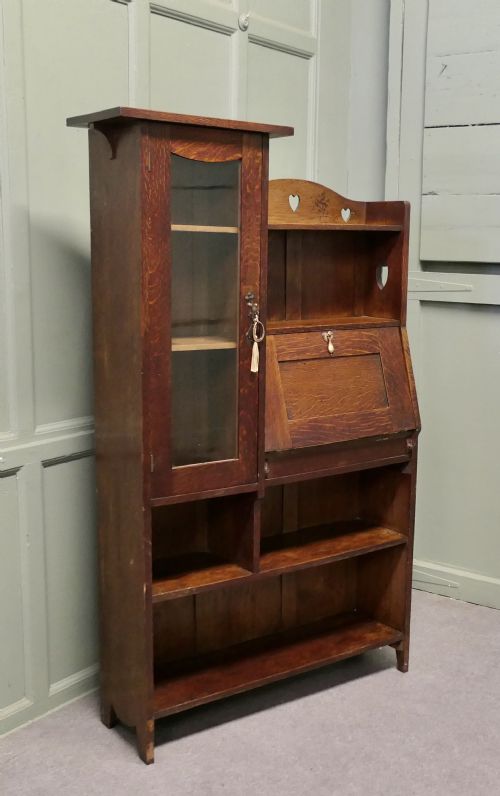
When searching for an arts and crafts cabinet desk, buyers encounter forms that merge the compact writing bureau with the stationary bookcase or display cabinet. These pieces frequently appear in oak, varying from students' desks to larger bureau bookcases spanning periods from the Victorian era through the Edwardian years and into the 1930s.
The aesthetic embraces regional British craftsmanship and revival styles, drawing on Tudor and Jacobean motifs alongside cleaner lines. Many examples integrate drop-front writing slopes with internal pigeonholes and drawers, occasionally featuring glazed upper sections for books or display.
Materials and Construction Methods
Solid oak serves as the primary timber, complemented by occasional uses of mahogany, soft wood, and specialised veneers. Construction relies on traditional joinery methods that emphasise the natural grain and structural honesty of the wood.
Listings feature oak as the dominant material, accompanied by brass, copper, and glass across various revival styles.
Distinctions in Quality and Origin
The distinction between standard commercial pieces and superior items often rests on the presence of documented workshop attribution or maker signatures. Pieces associated with notable designers or London retailers command particular attention for their refined proportions and considered detailing.
Execution of carved enrichment and the selection of figured timber further divide the range. Superior examples display thoughtful integration of hardware, such as patinated copper or brass, alongside precise joinery that survives intact.
Arthur Basil Reynolds·Stanley Webb Davies·Bryn Mawr·Morris & Co·George W Jack·Robert Mouseman Thompson·Harris Lebus·Liberty of London·Gregory & Co·James Shoolbred & Co
The Arts and Crafts Cabinet Desk Glossary
- Bureau
- A writing desk featuring a sloping flap that opens to reveal a fitted interior of small drawers and pigeonholes. This form often sits atop a chest of drawers or a cabinet base.
- Escritoire
- A small writing cabinet or desk, typically fitted with a fall-front writing surface. The term denotes a refined piece designed for polite correspondence.
- Linenfold
- A style of carved wooden panelling used to resemble folded cloth. It appears frequently on vertical surfaces in revival and arts and crafts furniture.
- Pigeonhole
- A small, open compartment within a desk interior used for sorting letters and documents. These compartments form an integral part of the fitted writing space.
Arts and Crafts Cabinet Desk: Frequently Asked Questions
What is an arts and crafts cabinet desk?
These pieces combine a functional writing slope with cabinetry such as bookshelves or display sections. They provide enclosed storage alongside a dedicated surface for correspondence.
They represent the late Victorian and early twentieth-century shift towards honest construction and utility. The design prioritises straightforward timber use and practical interior layouts over excessive surface ornament.
How do I date an arts and crafts desk?
Dating relies on examining the timber selection, construction techniques, and stylistic markers present in the piece. Pieces spanning the Victorian period through the Edwardian era and into the 1930s often show distinct revival influences or Cotswold School traditions.
Hardware styles and secondary woods also offer clues to the period of manufacture. Documented maker labels or stamped signatures provide the most reliable chronological anchor.
Where were these desks made?
Many pieces originated in British workshops, ranging from large London retailers to regional craft communities. Makers worked in various locations, including Wales and the Cotswolds, producing both commercial lines and bespoke items.
Local timber choices, such as Welsh oak, often point to the specific regional origin of unmarked workshop furniture. Retailers in the capital commissioned works from prominent designers and distributed them widely.
How do I care for an oak bureau?
Maintenance involves keeping the timber away from direct heat sources and sudden humidity changes to prevent warping. Regular dusting with a dry, soft cloth preserves the natural finish without building up heavy wax residues.
Treating the brass or copper hardware with care ensures the patination remains undisturbed. Allowing the wood to breathe naturally maintains its structural stability over time.