


Arts and Crafts Basket
An arts and crafts basket brings sturdy metalwork and honest construction directly to the fireside.
Arts and Crafts Basket
When you search for an arts and crafts basket, you encounter robust fireside accessories designed to hold coal, logs, or kindling. These utilitarian objects combine practical metal containers with sturdy frames, often originating from the late nineteenth and early twentieth centuries.
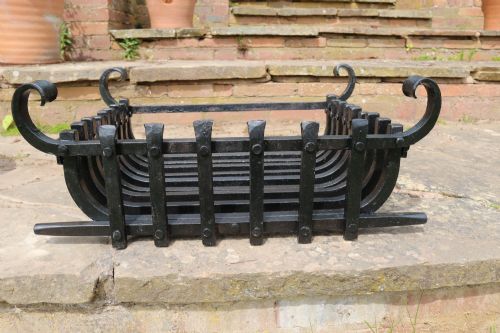
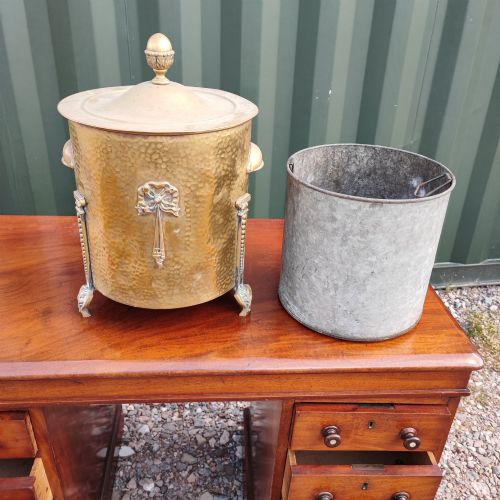
The most common examples on this page are copper and brass log buckets paired with wrought iron or galvanised metal frames. Pieces display distinct aesthetic movement and arts and crafts influences, sometimes taking the form of fire baskets or coal scuttles.
Form follows function closely within this category, prioritising durable materials such as iron, copper, and oak over superficial ornament. The selection also includes related serving vessels and dishes created by prominent designers of the period.
Materials and construction
Makers utilised hammered copper, sheet brass, and heavy wrought iron to build vessels capable of withstanding daily fireside use. Riveted joints, exposed fixings, and original iron frames demonstrate the hand-worked techniques characteristic of the movement.
Organic materials like oak and cane also appear alongside metals, providing textural contrast in log carriers and baskets. Metal surfaces frequently retain their original patination and tool marks from the manufacturing process.
Listings feature copper, brass, wrought iron, and oak across Victorian, Edwardian, and 1930s periods.
Assessing quality and design
Quality rests in the heaviness of the gauge, the integrity of the original frame, and the presence of documented maker attributions. Pieces bearing traceable designs by renowned figures command greater interest than anonymous workshop output.
Superior examples display crisp hand-beating on copper bodies and secure riveting that has survived decades of heavy use without modern repair. Simplicity of form combined with robust structural engineering separates standard utilitarian items from exceptional pieces.
Roberts and Belk·Liberty and Co·Archibold Knox
The Arts and Crafts Basket Glossary
- Wrought iron
- Iron that has been heated and worked with tools by a blacksmith rather than cast in a mould. This material provides the rigid structural frames for many copper and brass log bins.
- Coal scuttle
- A container specifically shaped with a wide mouth and handle for carrying and pouring coal onto a fire. These often feature hinged lids and shovel attachments.
- Tudric
- A brand name used by Liberty and Co for pewter ware during the early twentieth century. Designers such as Archibald Knox created distinctive pieces under this line.
- Log bin
- A deep cylindrical or bucket-shaped vessel designed to store firewood beside the hearth. They frequently combine heavy metal bodies with iron stands.
- Sweetmeat dish
- A small serving vessel intended for sweetmeats, confectionery, or bon-bons. These items occasionally share the aesthetic vocabulary of larger metalwork pieces.
Arts and Crafts Basket: Frequently Asked Questions
What is an arts and crafts basket?
An arts and crafts basket is a utilitarian fireside container or carrier made from metals like copper and brass, often supported by a wrought iron frame. These pieces reflect the design philosophies of the late nineteenth and early twentieth centuries.
They were built for holding coal, logs, or kindling beside the fireplace while exhibiting honest craftsmanship and visible construction methods.
How were these metal baskets used?
These vessels served everyday domestic functions in Victorian and Edwardian homes, primarily for storing and transporting solid fuel to the hearth. Coal buckets and log bins kept fuel tidy and accessible near the fire grate.
Some lighter forms, such as oak carriers or pewter dishes, served different household purposes including carrying kindling or presenting food.
How do I clean a copper log bucket?
Cleaning requires a careful approach to preserve the historic patination that collectors value on antique metalwork. Harsh abrasive polishes should be avoided so that the original surface texture remains intact.
Gentle dusting with a soft cloth removes everyday debris without stripping away the character accumulated over decades of use.
How do I identify the period?
Period identification relies on examining material choices, manufacturing techniques, and stylistic markers consistent with the Victorian and Edwardian eras. Hand-riveted construction and specific metalworking styles point towards the late nineteenth or early twentieth century.
Design hallmarks and manufacturer stamps, where present, provide further confirmation of a piece's age and origin.