


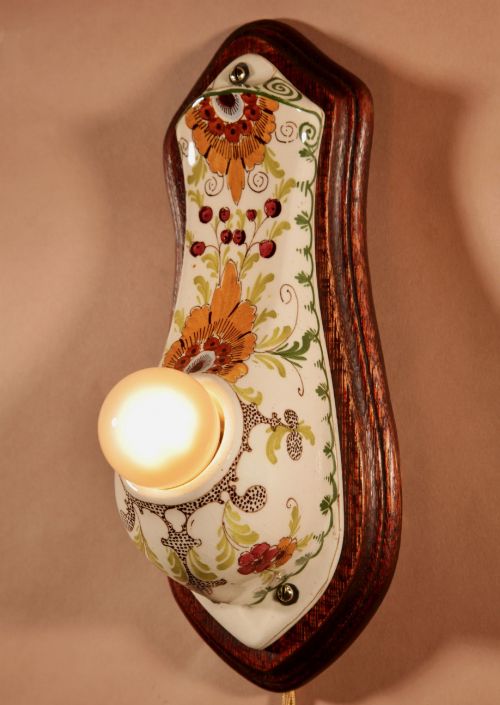


Art Pottery Wall Art
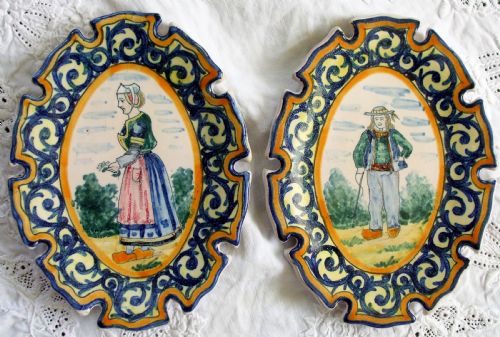
Art pottery wall art brings together decorative ceramic plaques, painted tiles and chargers designed to be hung or mounted.
Art Pottery Wall Art
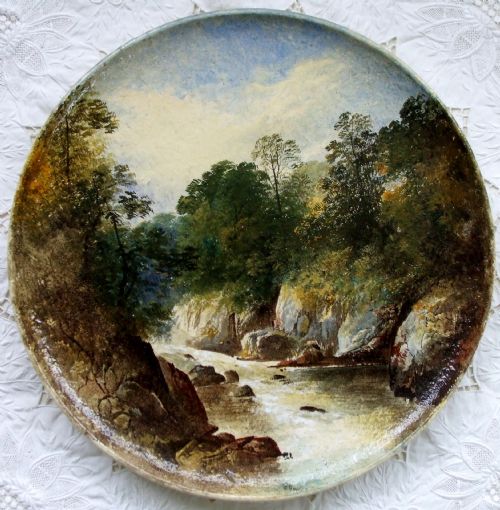
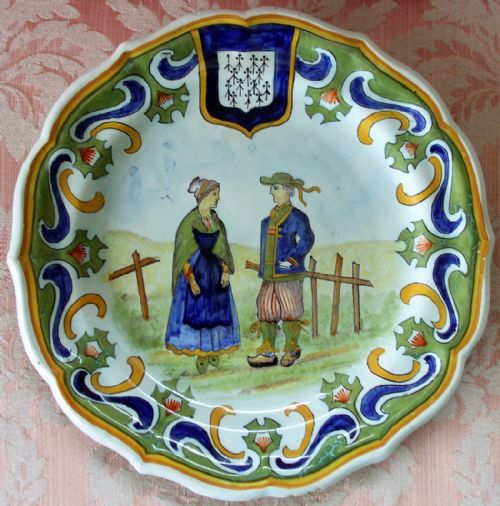
Art pottery wall art encompasses ceramic plaques, decorative plates, framed tiles and wall pockets produced across the nineteenth and twentieth centuries. Buyers searching for art pottery wall art will encounter pieces ranging from Victorian painted earthenware plaques to Art Deco tubelined chargers and French faience dishes.
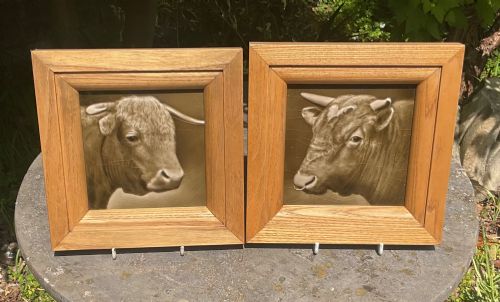
The selection includes British architectural tiles, Dutch Delft panels, and continental majolica pottery depicting landscapes, figures and floral motifs. Formats vary from individual framed items to pairs of decorative tiles and large chargers designed for display.
Materials and techniques
These pieces utilise earthenware, ceramic, and faience bodies finished with glazes, tin glazing, and high-fired techniques. Decoration is applied through hand-painting, polychrome pigments, and raised tubelined designs.
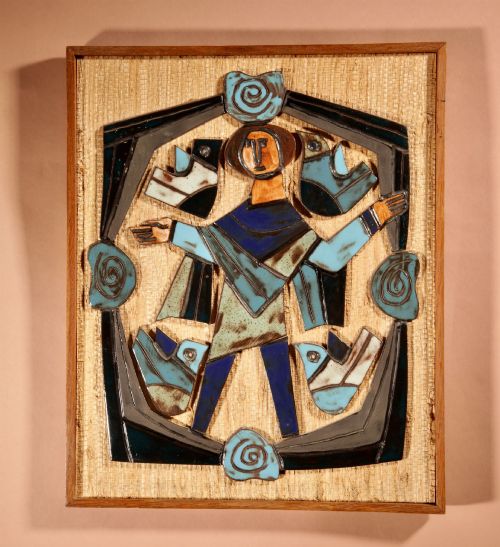
Makers employ wooden frames for tiles and wooden backing elements to support heavier ceramic panels. Some works combine pottery forms with carved oak or fitted surrounds for wall hanging.
Art Pottery Wall Art Retail Price Guide 2026
Typical asking prices for art pottery wall art among the pieces listed under this phrase on Sellingantiques today, from the lower quarter to the upper quarter. They describe what is for sale here now, not the wider market.
The inventory includes works from British, French, Dutch, Austrian, and Italian makers.
Quality factors
Quality rests in the precision of the hand-painted detail, the depth of the glaze, and the clarity of the design work, whether in an Art Deco tubelined charger or a Victorian landscape plaque. Signed works by noted artists and established potteries demonstrate superior execution in firing and pigment control.
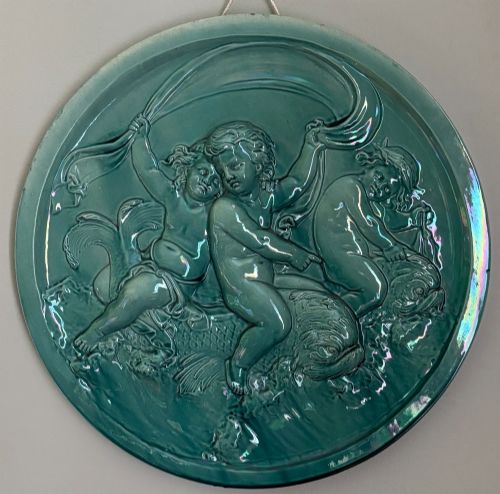
The sophistication of the modelling, the richness of the polychrome or turquoise relief surfaces, and the crispness of transfer or painted lines distinguish finer examples from standard production pieces.
William Yale·Lauder Pottery·Sherwin & Cotton·Charlotte Rhead·Clarice Cliff·Gio Ponti·William de Morgan
The Art Pottery Wall Art Glossary
- Faience
- Tin-glazed earthenware produced in France and other European regions, often featuring hand-painted motifs and rich colour palettes. It provides a smooth white ground for detailed pictorial scenes.
- Charger
- A large decorative plate intended for display on a wall or dresser rather than for practical dining use. These often showcase elaborate artistic designs across a wide surface.
- Tubelining
- A ceramic decoration technique where liquid clay is piped onto the surface to outline a pattern before glazing. This creates raised barriers that hold distinct coloured glazes in place during firing.
- Majolica
- Pottery glazed with an opaque tin-lead glaze and painted with metallic oxide colours. It is known for vibrant hues and pictorial or sculptural relief decoration.
- Wall Pocket
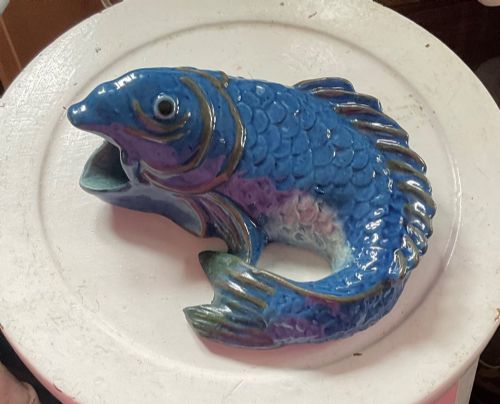
- A moulded ceramic vessel with a flat back designed to hang on a wall and hold dried flowers or small items. These combine sculptural form with functional display capabilities.
Art Pottery Wall Art: Frequently Asked Questions
How do I hang heavy ceramic wall art?
Most ceramic plaques and chargers require secure wire fixings or dedicated picture hooks rated for the weight of the piece. Wooden frames often include integrated hanging hardware on the reverse.
Ensure the wall anchor matches the plaster or brick construction to support denser earthenware and framed tile assemblies safely.
What is the difference between a tile and a plaque?
Tiles are typically flat, square or rectangular ceramic units produced for architectural installation or framing. Plaques are standalone decorative panels designed specifically for display as independent artwork.
Plaques often feature painted pictorial subjects or relief modelling intended to be viewed without surrounding tiles.
How should I clean glazed ceramic wall pieces?
Dust gently with a soft, dry cloth to remove surface particles without disturbing the glaze or painted details. Avoid harsh chemical cleaners or abrasive scouring pads.
If moisture is necessary, use a barely damp cloth and dry immediately to protect any wooden backing or aged mortar.
How do I identify Art Deco ceramic pieces?
Art Deco pieces from the 1930s often feature geometric patterns, stylised florals, and vibrant tubelined colours. Look for maker signatures and pattern names associated with that period.
The forms tend toward bold stylisation, stark contrasts, and symmetrical or streamline motifs characteristic of the era.