



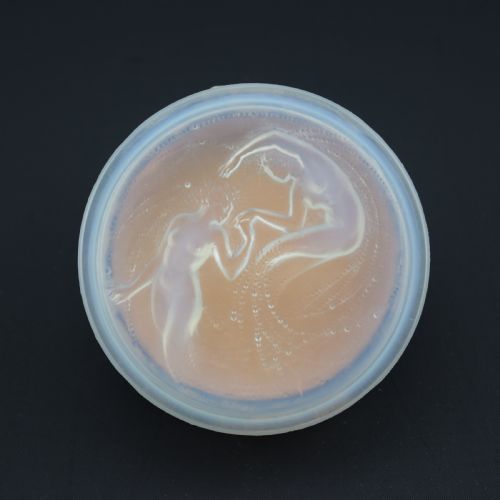


Art Nouveau Trinket Dish
These art nouveau trinket dish examples are tactile dressing table accessories and small trays, prized for their flowing organic lines.
Art Nouveau Trinket Dish
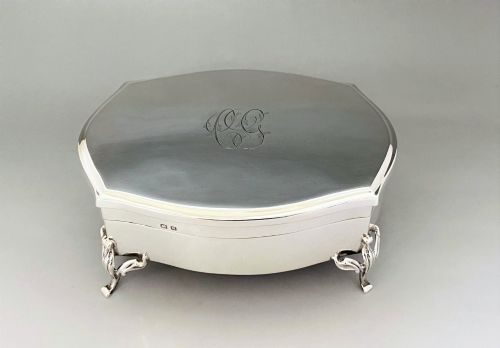
When you search for an art nouveau trinket dish, you enter a field defined by fluid vegetal motifs, stylised maidens and asymmetrical forms. The pieces available range from silver pin dishes and porcelain bowls to pewter card trays spanning the Victorian, Edwardian and later periods.
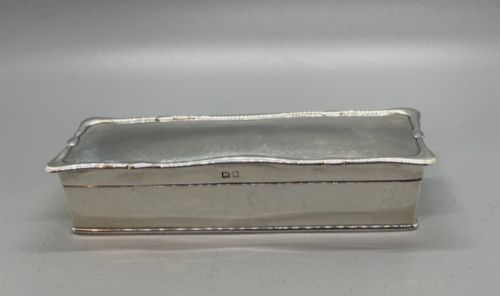
You will most commonly encounter small sterling silver trays stamped with Birmingham hallmarks alongside plated metal vessels. Makers produced these items for domestic dressing tables to hold pins, jewellery and small keepsakes.
The selection extends to porcelain figures acting as vide poche alongside glass boxes and pewter bowls. Each item carries the characteristic whiplash lines and naturalistic curves defining the turn of the twentieth century.
Materials and methods
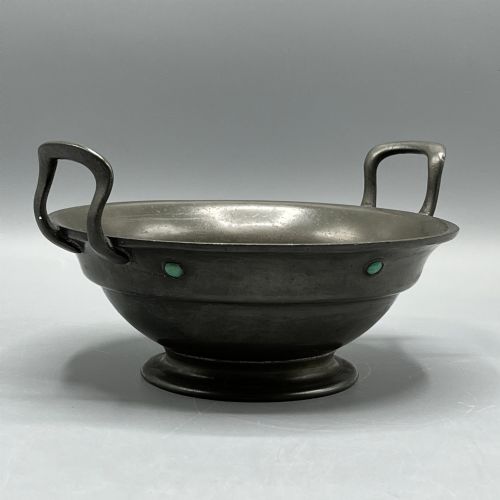
Silversmiths utilised stamping, chasing and repoussé techniques to raise dynamic floral patterns from sterling silver and silver plate. Pewter production involved casting via Britannia metal and Tudric alloys, often finished with applied cabochons.
Potteries employed moulding and hand-painting for porcelain bowls, lustre wares and figural vide poche. Glass makers utilised press-moulding and acid-etching to achieve deep relief on boxes and small dishes.
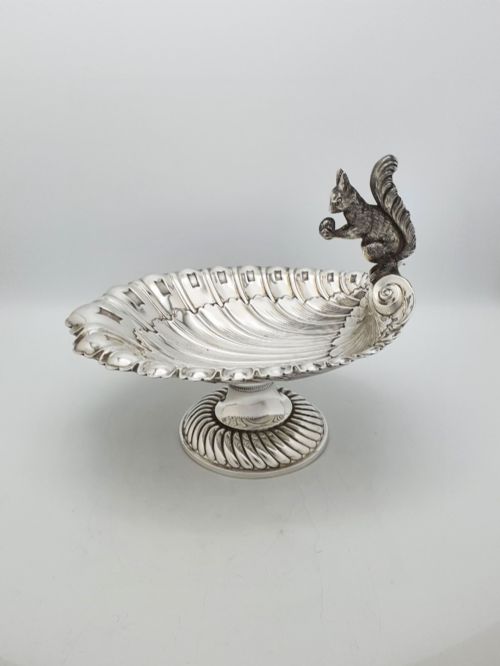
Squirrels and kneeling maidens regularly share shelf space, holding out nuts and seashells to guard your cufflink collection.
Assessing quality
Maker attribution and firm marks elevate a piece, as seen in items bearing stamps for recognised houses like Liberty & Co or WMF. The preservation of original surface finishes, whether silver gilt, enamel or porcelain lustre, dictates the standing of an example.
Liberty & Co·WMF·Daisy Makeig-Jones Wedgwood·Royal Dux·Rene Lalique·Josef Margold·Henry Matthews
The Art Nouveau Trinket Dish Glossary
- Cabochon
- A polished, convex gem or glass insert set without facets into metalwork. These are frequently found on pewter pieces to add contrasting colour.
- Vide poche
- French for empty pocket, this is a small tray or dish placed in a hallway or dressing table for daily pocket items. Figures often lean over the edge of these porcelain and metal forms.
- Repoussé
- A metalworking technique where the artisan hammers the design from the reverse side to form a raised relief on the front. This creates the undulating floral surfaces seen on silver trays.
- Tudric
- The trade name used by Liberty & Co for their range of pewter wares. These items often display stylised botanical motifs and cabochons.
- Whiplash
- The curved, asymmetrical line resembling a snapping whip that forms the basis of decorative movement in this design period. It directs the eye across the rim of a dish or tray.
Art Nouveau Trinket Dish: Frequently Asked Questions
What is an art nouveau trinket dish used for?
These small vessels were designed for dressing tables to hold pins, rings, and small daily accessories.
They also functioned as card trays and vide poche in hallways for coins and keys.
How do I identify the period?
Look for hallmarks on silver pieces which provide exact assay office letters and date ciphers.
Stylistic cues such as maiden figures, flowing hair, and whiplash plant stems typically point towards the late Victorian and Edwardian eras.
What metals were used?
Pewter, sterling silver, and silver plate form the majority of the metal items.
Manufacturers also utilised Britannia metal and specialised alloys alongside gold leaf accents.
Are these items marked by makers?
Many pieces carry manufacturer stamps, model numbers, or silversmith hallmarks on the base or rim.
Prominent firms and independent designers often impressed their specific ciphers into the metal or stamped them onto the ceramic underside.