





Art Nouveau Style Lamp
An art nouveau style lamp brings organic curves and floral motifs into a room, combining naturalistic forms with period illumination.
Art Nouveau Style Lamp
When you search for an art nouveau style lamp, you encounter lighting fixtures and related stands dating from the late nineteenth century through the early decades of the twentieth century. The selection spans table lamps, standard lamps, and pendant lights that reflect the fluid lines and natural inspiration of the movement.
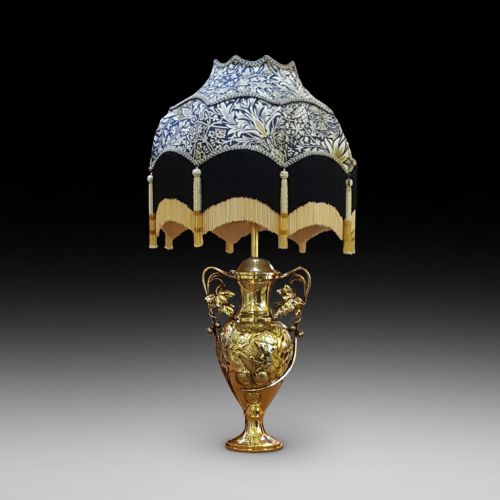
You are most likely to meet pieces produced in brass, spelter, and glass, alongside occasional wooden forms associated with the style. These items capture the aesthetic developments of the period, ranging from French figurative works to geometric Amsterdam School designs and Edwardian interpretations.
How they were made
Makers utilised metalworking techniques such as casting spelter and twisting brass to create structural bases and figural supports. Spelter figures often received silvered or bronzed finishes to mimic higher-value bronzes.
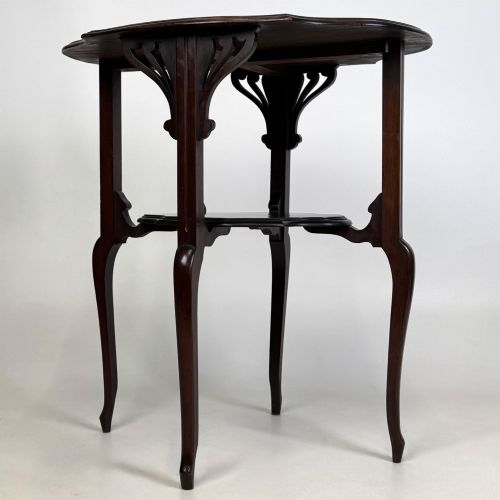
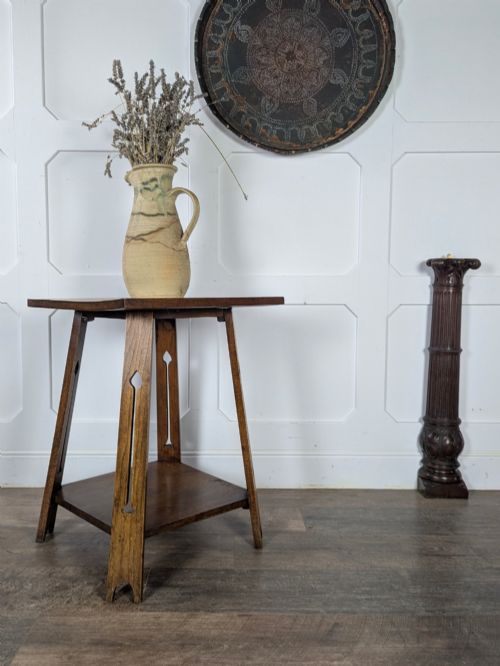
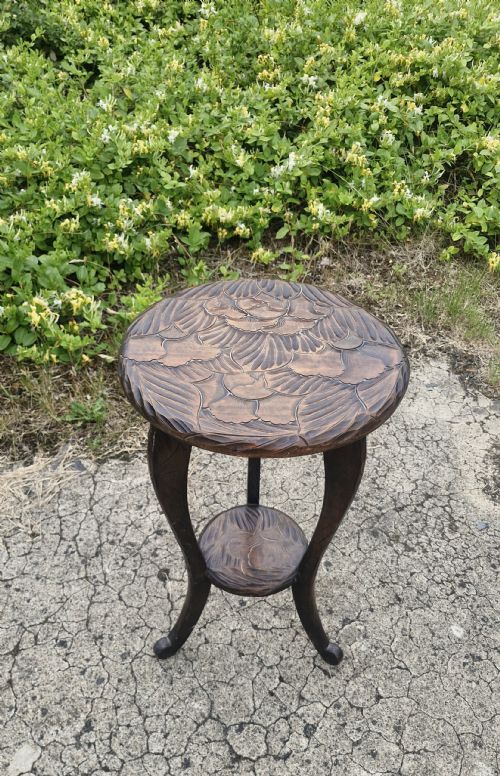
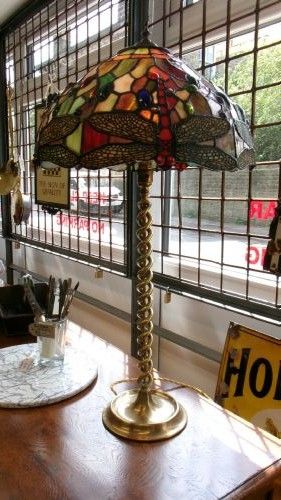
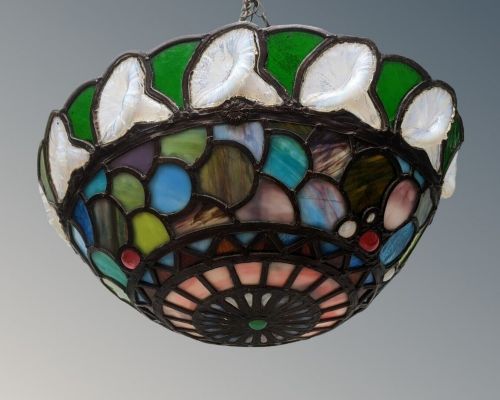
Glass elements incorporate leaded construction and stained glass techniques, assembling coloured panes and crystal components into shades and bowls. Wooden items employ solid oak and mahogany with carved or fretwork detailing.
Dating spans from the nineteenth century through the Edwardian era, incorporating Arts and Crafts and Amsterdam School aesthetics.
What varies in quality
The complexity of glass assembly marks another division, where leaded glass shades with nuanced cobalt blue or varied slag panels demand greater skill than simpler pressed glass variants. Artisanal craftsmanship in carved wooden tables and fretwork lamp bases similarly separates standard output from superior examples.
Auguste Moreau·Moreau
The Art Nouveau Style Lamp Glossary
- Spelter
- A zinc alloy commonly utilised as a substitute for bronze in nineteenth and twentieth-century figurative lamp sculptures. It accepts metallic finishes such as silvering or bronzing.
- Amsterdam School
- An architectural and design style originating in the Netherlands around nineteen hundred, characterised by brickwork expressionism, rounded organic forms, and elaborate woodwork. Pieces often combine brass and marble elements.
- Leaded Glass
- A method of joining cut glass panes using strips of lead cames, soldered at the joints to form decorative window or lampshade panels. Cobalt blue glass is frequently seen in these constructions.
- Standard Lamp
- A tall floor-standing lamp designed to illuminate a room from a vertical post, frequently adjustable in height through telescopic brass mechanisms.
- Cameo Glass
- An art glass technique involving the acid-etching of layered glass to reveal contrasting colours beneath, often associated with French manufacturing traditions.
Art Nouveau Style Lamp: Frequently Asked Questions
How do I identify an art nouveau style lamp?
Look for whipped-curve lines, whiplash tendrils, and motifs drawn from stems, flowers, and the natural world. Materials typically include cast brass, spelter, and coloured or leaded glass.
Construction methods from the period often involve patinated metal finishes and hand-assembled glass panels rather than mass-produced uniformity.
Are these lamps safe for modern electrical use?
Many older lamps feature wiring and lampholders from past decades that may not meet current safety standards. It is standard practice to have antique lighting inspected and rewired by a qualified professional before use.
Retaining original brass components and switches is usually possible while updating the internal flex and plug.
What is the difference between a table lamp and a standard lamp?
Table lamps are proportioned for placement on side tables, occasional tables, or desks, providing localized illumination. Standard lamps are tall floor-standing fixtures designed to stand directly on the floor.
Both categories utilise the same decorative vocabulary, including twisted brass stems and botanical shades.
How should I clean a brass and glass lamp?
Dust metal and glass surfaces gently with a soft, dry cloth to prevent the accumulation of grime. Avoid abrasive polishes on patinated brass or spelter, as harsh chemicals can strip the original finish.
Glass shades can sometimes be removed and washed in warm soapy water if they are free from fragile soldered lead lines.