



Art Nouveau Pewter Dish
An art nouveau pewter dish brings sinuous plant stems, stylized maidens and hammered metalwork straight into a room.
Art Nouveau Pewter Dish
When you search for an art nouveau pewter dish, you are looking at domestic tablewares and desk accessories produced around the turn of the twentieth century. These pieces take the form of open bowls, card trays, tazzas, and centrepieces decorated with characteristic organic motifs. Most examples encountered here belong to the Edwardian period or the year nineteen hundred, though occasional Victorian and later pieces appear.
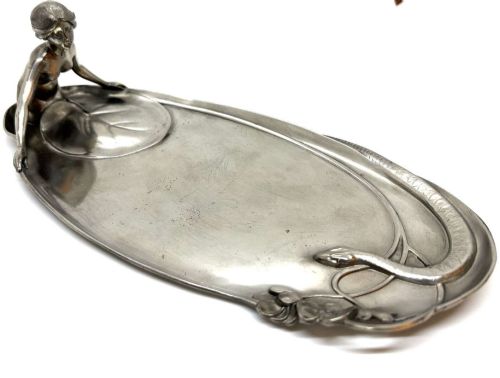
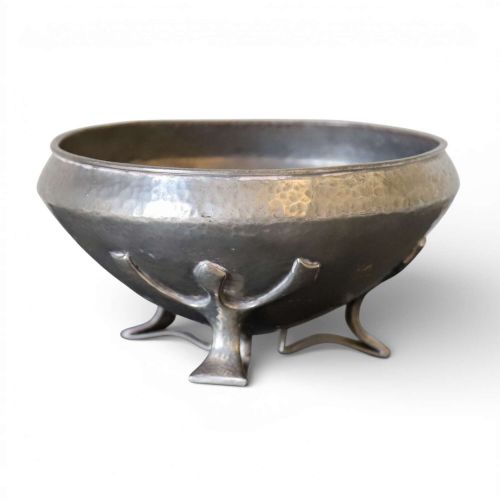
Makers ranged from large German metalwork factories to London retail houses and Scandinavian workshops. Forms vary from simple hammered dishes with clover flowers to elaborate figural compositions featuring maidens, serpents, or peacocks. Glass inserts in ruby or cameo hues often accompany the metal frames to hold fruit, sweets, or flowers.
Assessing quality in the metalwork
Quality depends on the crispness of the casting and the depth of the figural relief. Pieces designed by named architects and artists display more intentional composition in their plant stems and human figures than generic factory output.
The integration of materials also marks the tier of a piece, particularly where original glass liners fit precisely into sculpted metal frames. Maker marks and model numbers stamped into the base indicate standard production control.
Art Nouveau Pewter Dish Retail Price Guide 2026
Typical asking prices for art nouveau pewter dish among the pieces listed under this phrase on Sellingantiques today, from the lower quarter to the upper quarter. They describe what is for sale here now, not the wider market.
Listings feature items from the Edwardian period, nineteen hundred, and the Arts and Crafts movement, utilising pewter, ruby glass, and silvered metal.
Oliver Baker·Archibold Knox·Olof Ahlberg
The Art Nouveau Pewter Dish Glossary
- Tudric
- The trade name used by Liberty & Co for their range of pewter wares. It represents some of the most notable British designs of the period.
- Tazza
- A shallow bowl or dish raised on a stem and foot. These served as centrepieces or decorative dishes on dining tables.
- Jugendstil
- The German variant of the Art Nouveau movement. It heavily influenced continental metalwork manufacturers like WMF and Orivit.
- Cabochon
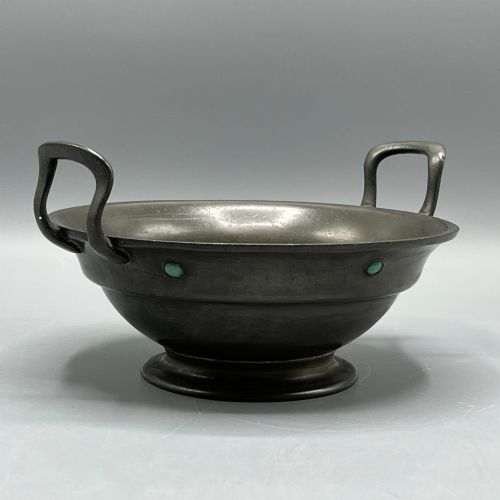
- A polished, convex gem or coloured glass stone without facets. They often embellish the rims and handles of bowls.
- Britannia metal
- A tin-based alloy used as a base metal for silver plating or finished directly as pewter. It provided a stable surface for detailed casting.
Art Nouveau Pewter Dish: Frequently Asked Questions
How do I clean an art nouveau pewter dish?
Pewter develops a darker patina over decades, which many collectors prefer to leave undisturbed. Gentle washing with mild soap and warm water removes dust, followed by thorough drying with a soft cloth.
Avoid abrasive metal polishes that strip away the surface texture or damage applied silvering and gilding. If the piece includes a glass liner, wash and dry it separately before placing it back into the metal frame.
Are these dishes safe for food use?
Most antique pewter contains lead or other components unsuited for modern culinary standards. These dishes are intended for decorative display, holding business cards, desk items, or dry sweets rather than serving moist foods.
Glass inserts can hold fruit or flowers, but the metal portions function best as ornamental tablewares. Enjoy them as historic decorative art pieces in your home.
How do I identify a Liberty Tudric piece?
Liberty & Co stamped their Tudric pewter wares with specific model numbers, often beginning with a zero. Look for stamped marks on the underside of the base alongside designer names.
Designs by figures like Oliver Baker or Archibold Knox feature distinct British Arts and Crafts aesthetics, such as hammered surfaces and stylized clover or floral motifs.
What is the difference between WMF and Orivit?
WMF produced a large volume of domestic metalware and figural centrepieces in Germany, often utilising Britannia metal and integrating ruby or clear glass bowls. Their work frequently incorporates dramatic figures like maidens and serpents.
Orivit specialised in Jugendstil designs with distinct flora and fauna reliefs, producing divided serving dishes and tazzas with cameo glass or gilded highlights.