


Art Nouveau Pearl Drop Necklace
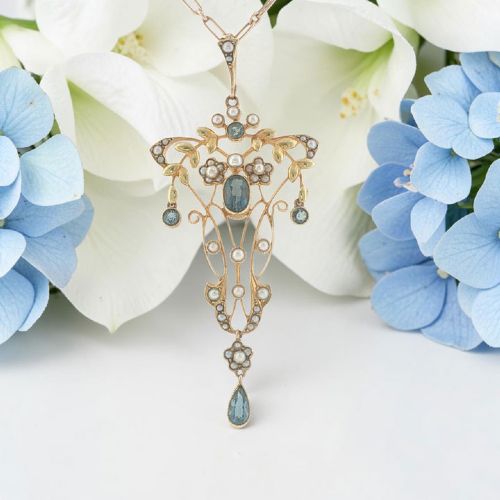
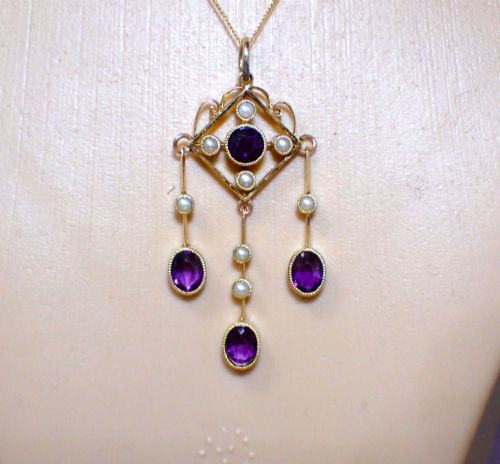
An art nouveau pearl drop necklace brings organic curves and delicate gemstone pendants together in pieces defined by Victorian, Edwardian and early twentieth century craftsmanship.
Art Nouveau Pearl Drop Necklace
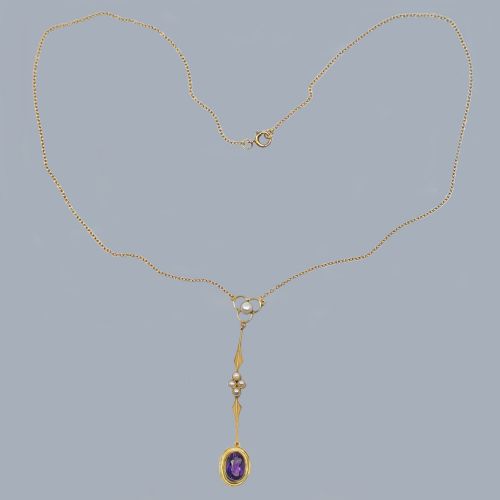
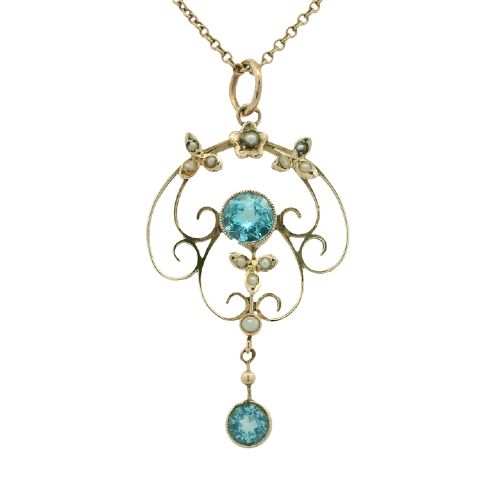
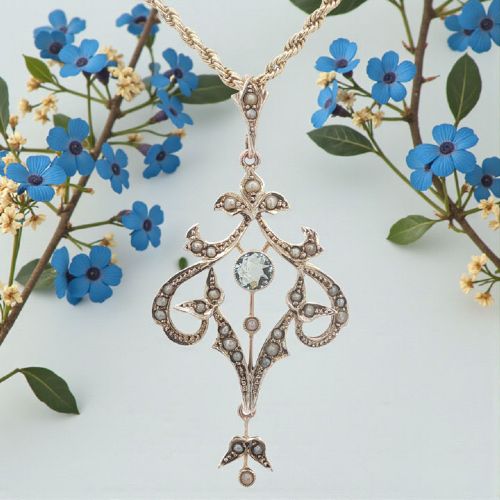
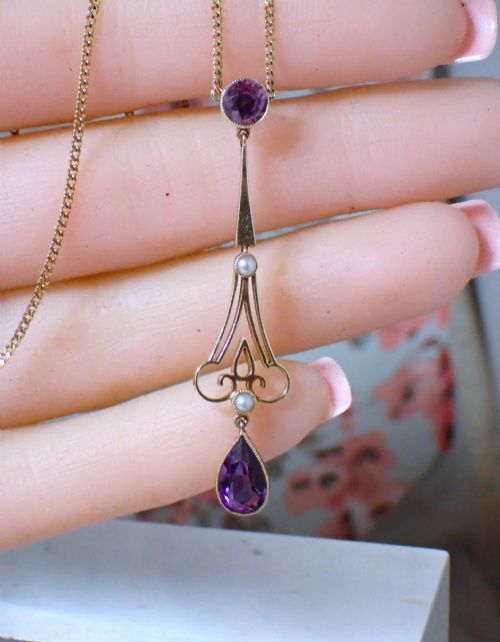
An art nouveau pearl drop necklace presents fluid natural lines, incorporating pendants and lavalier necklaces that showcase pearls alongside amethyst, aquamarine, turquoise and blue topaz. These jewels span the Victorian and Edwardian eras, with many pieces originating around nineteen hundred.
The common form on this page pairs silver or gold with seed pearls suspended beneath coloured stones or enamelwork. Makers working within the Art Nouveau and Arts and Crafts styles shaped these pendants to reflect botanical and symmetrical motifs.
Pieces range from simple nine carat gold mountings to elaborate silver gilt creations set with plique-à-jour enamel. Each necklace balances metalwork with the quiet lustre of a pearl drop.
Materials and construction
Goldsmiths and silversmiths utilised nine carat gold, fifteen carat gold, silver and silver gilt to construct these pendants and chains. Seed pearls and blister pearls were drilled and hung as focal drops from central gemstone settings.
Enamel work, particularly translucent plique-à-jour which resembles stained glass without a backing, defines the colourful panels of the period. Stones such as amethyst, aquamarine and peridot were secured alongside diamonds, rock crystal and turquoise in hand-worked mounts.
Listings span periods from eighteen ninety through to nineteen thirty, encompassing Victorian, Edwardian, Art Nouveau and Arts and Crafts aesthetics.
Distinctions in craftsmanship
Quality rests upon the delicacy of the metal wirework and the precision of the enamel cells. Superior pieces display even plique-à-jour chambers and secure, integrated settings for every pearl and gemstone.
The refinement of the casting and the presence of signed maker work separate standard commercial items from distinguished studio output. Original matching chains and intact enamel surfaces elevate the integrity of a surviving necklace.
Archibald Knox·Liberty and Co·Murrle Bennett·Wilhelm Fuhner·Levinger and Bissinger·Eduard Loss·Meyle and Meyer·Theodor Fahrner
The Art Nouveau Pearl Drop Necklace Glossary
- Plique-a-jour
- An enamelling technique where enamel is applied to open cells without a backing, allowing light to shine through the transparent colours. This method creates a stained glass effect in metal pendants.
- Seed pearl
- A very small natural or cultured pearl, often half-drilled and threaded in groups or used as decorative fringe. These tiny pearls form delicate accents in Edwardian and Victorian jewellery.
- Lavalier
- A pendant necklace featuring a central gemstone with one or more dangling drops suspended below. This style gained immense popularity during the Edwardian period.
- Silver gilt
- Sterling silver that has been coated with a thin layer of gold. This treatment provided the warmth of gold combined with the working properties of silver.
Art Nouveau Pearl Drop Necklace: Frequently Asked Questions
How do I care for my pearl necklace?
Pearls are organic gems that require gentle handling, so keep them away from harsh chemicals, perfumes and ultrasonic cleaners.
Wipe the pearls with a soft cloth after wearing and store them flat to prevent stretching the original silk thread.
Are these necklaces made of solid gold?
The gold components on this page are typically nine carat or fifteen carat gold, reflecting the standard fineness used during the Victorian and Edwardian eras.
Silver and silver gilt were also widely utilised, particularly for enamelled Art Nouveau and Arts and Crafts designs.
What distinguishes Art Nouveau from Arts and Crafts?
Art Nouveau embraces flowing, asymmetrical lines inspired by natural plant stems and whipcord curves.
The Arts and Crafts movement leans towards hand-wrought simplicity, visible construction marks and medieval or vernacular motifs.
How can I date my pendant necklace?
Dating relies on stylistic markers such as plique-à-jour enamel, specific gemstone combinations and the presence of maker marks or metal purity stamps.
Most pieces on this page date from the late nineteenth century through to the nineteen tens and nineteen twenties.