

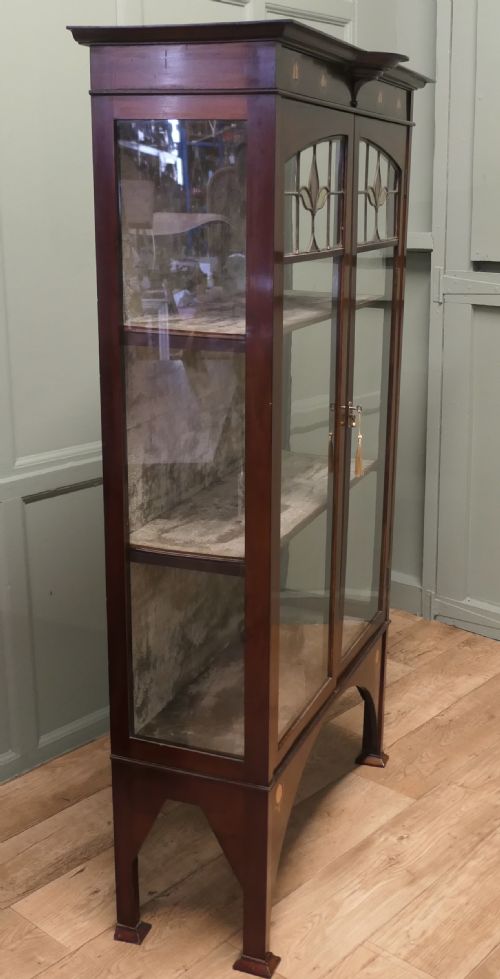
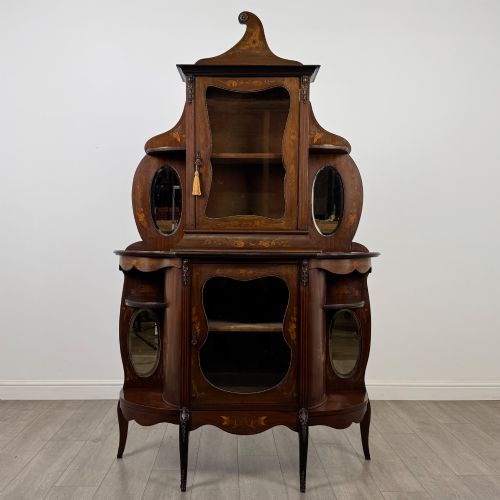
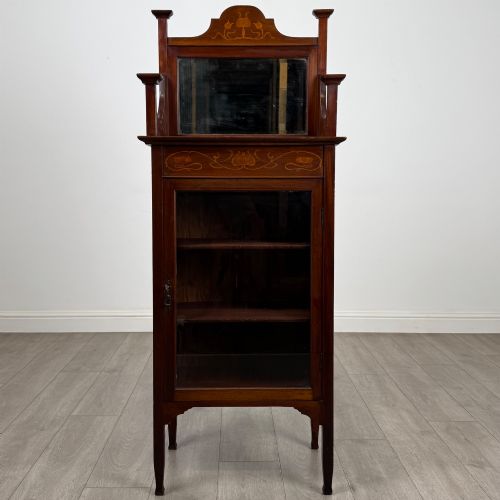
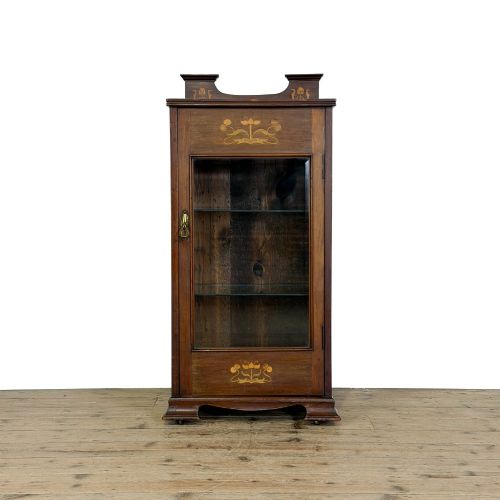
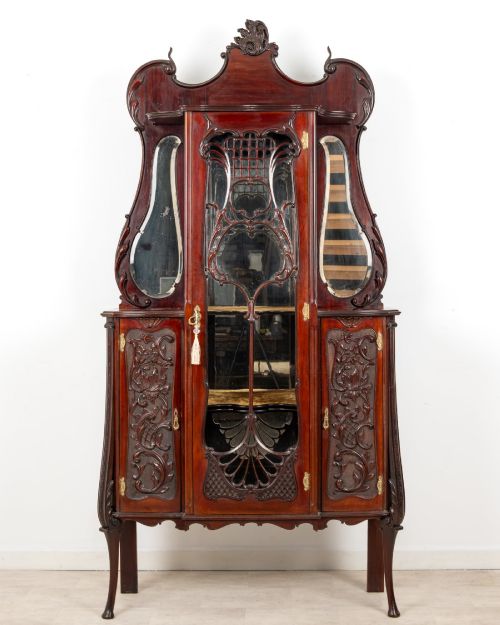
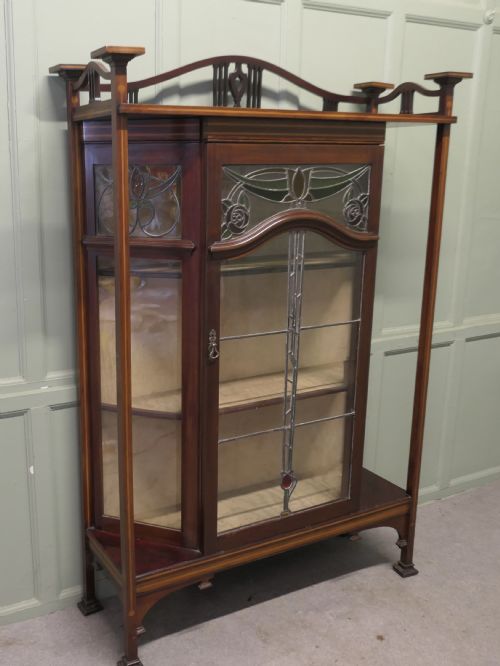
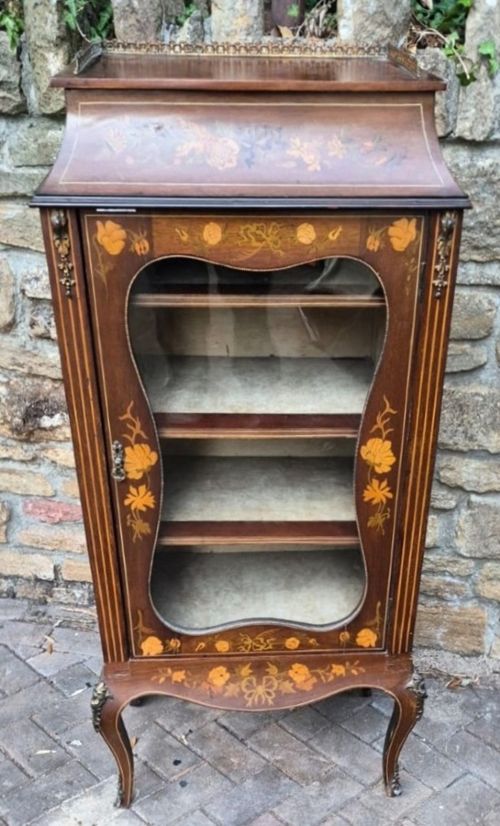
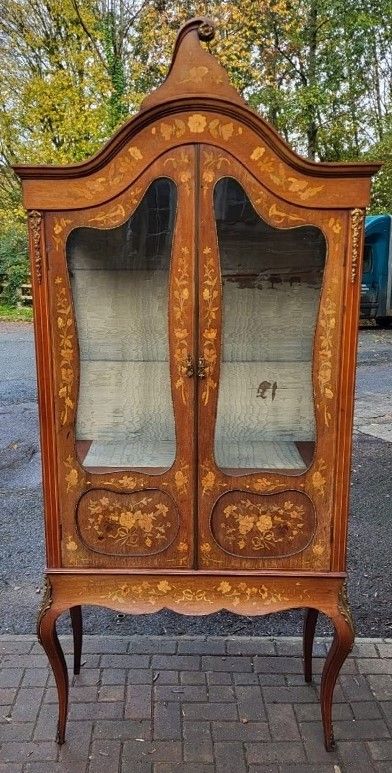


Art Nouveau Mahogany Vitrine
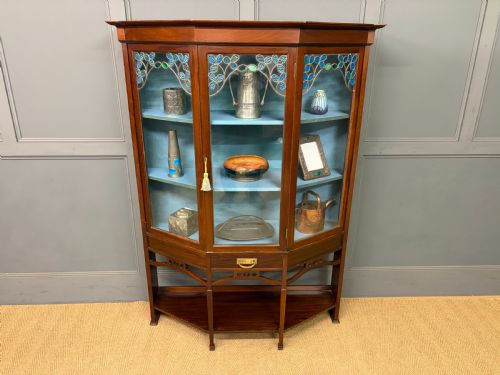
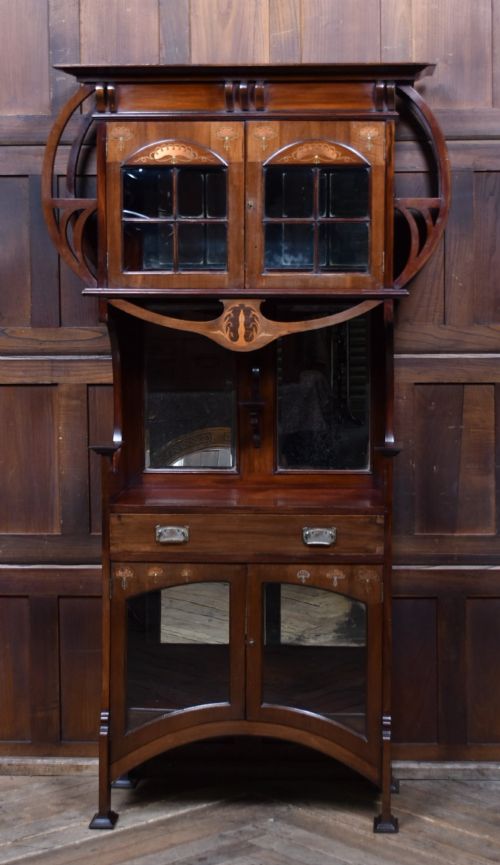
An art nouveau mahogany vitrine brings fluid line and rich timber together to hold your collection.
Art Nouveau Mahogany Vitrine
An art nouveau mahogany vitrine is a display cabinet designed to showcase precious objects behind glass. These pieces span the late nineteenth century, the Edwardian era, and the early twentieth century.
You will encounter side cabinets, bow front cabinets, and mirror back display cabinets on this page. They emerge from the Art Nouveau, Arts and Crafts, and Victorian styles.
Makers adapted these forms for domestic interiors as china cabinets, cocktail chests, and bijouterie cabinets. The underlying mahogany structure provides a dark, dependable framework for delicate glazing.
How they were made
Cabinet makers constructed these pieces primarily from solid and veneered mahogany, frequently accented with satinwood and wood inlay. Marquetry panels introduce floral motifs and sweeping organic lines characteristic of the period.
Brass hardware and mirrors supplement the timber and glass framework. Certain examples incorporate stained glass or fabric linings to enhance the interior display space.
Art Nouveau Mahogany Vitrine Retail Price Guide 2026
Typical asking prices for art nouveau mahogany vitrine among the pieces listed under this phrase on Sellingantiques today, from the lower quarter to the upper quarter. They describe what is for sale here now, not the wider market.
Some cabinets hid your evening drinks behind innocent floral marquetry.
What varies in quality
The sophistication of the marquetry and inlay work distinguishes standard production from finer cabinet work. Sharp execution in floral motifs and well-figured mahogany veneers separate superior examples from simpler utilitarian pieces.
Design pedigree alters the standing of a cabinet, particularly when pieces follow known workshop patterns such as those by Shapland and Petter. Structural integrity in the glazing bars and original brass mounts also defines the upper tiers of the range.
Shapland and Petter
The Art Nouveau Mahogany Vitrine Glossary
- Vitrine
- A glass-fronted cabinet used for displaying fine objects or porcelain. These display pieces protect contents from dust while offering maximum visibility.
- Marquetry
- Decorative patterns formed by small pieces of wood veneer fitted into a backing material. This technique creates the floral and organic designs seen across these cabinets.
- Satinwood
- A durable, yellowish timber utilised for contrasting inlay work and banding. Makers paired it with mahogany to highlight linear details.
- Bijouterie cabinet
- A shallow glass-topped or glass-fronted case designed for jewellery and small trinkets. These specialised display pieces elevate everyday storage into an exhibition.
- Jugendstil
- The continental European manifestation of the Art Nouveau movement. This style shares the organic curves and naturalistic motifs found in British pieces.
Art Nouveau Mahogany Vitrine: Frequently Asked Questions
How do I date an art nouveau cabinet?
Dating relies on observing stylistic markers, construction techniques, and materials recorded across the Victorian and Edwardian periods. Pieces from the 1890s and 1900s often display distinct marquetry and Arts and Crafts influences.
Comparing the specific inlay patterns, brass hardware, and glass types helps place a cabinet within its chronological bracket. Documentation or design attributions further refine the date of origin.
How were these cabinets used originally?
Original usage centred on the display and protection of treasured domestic possessions in the drawing room or parlour. Cabinets held fine porcelain, glassware, and personal collections behind glass doors.
Some variants functioned as cocktail chests or dedicated bijouterie cases for small valuables. The mirrored backs in certain models amplified natural light within the room.
Where should I place a vitrine at home?
A vitrine requires a stable location away from direct sunlight to protect both the mahogany timber and the objects inside. Placing the cabinet in a principal room allows the glass panels and inlay work to catch ambient light.
Ensure adequate floor space so the doors can open fully for arranging your display. Keep the interior balanced with items that complement the scale of the cabinet.