



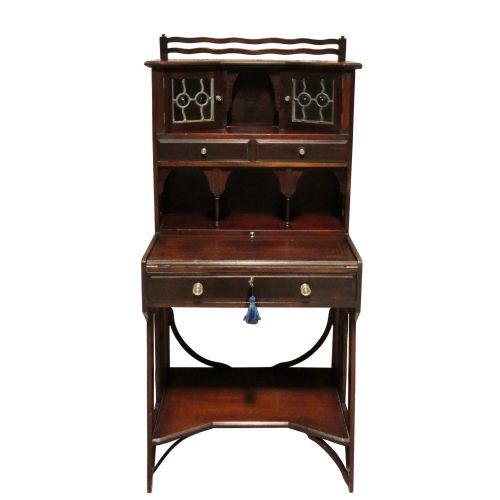


Art Nouveau Leaded Cabinet
An art nouveau leaded cabinet brings organic line and jewel-toned glass together, offering the perfect focal point for displaying cherished collections.
Art Nouveau Leaded Cabinet
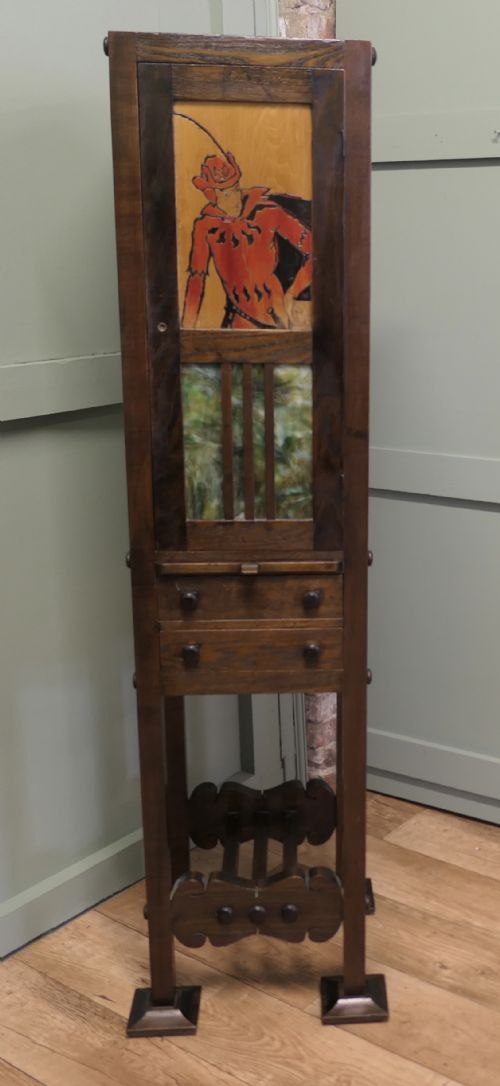
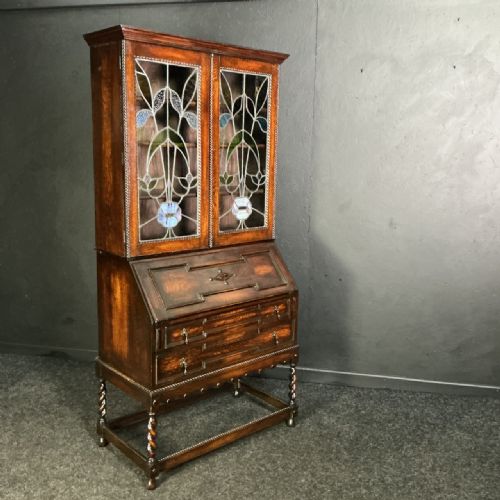
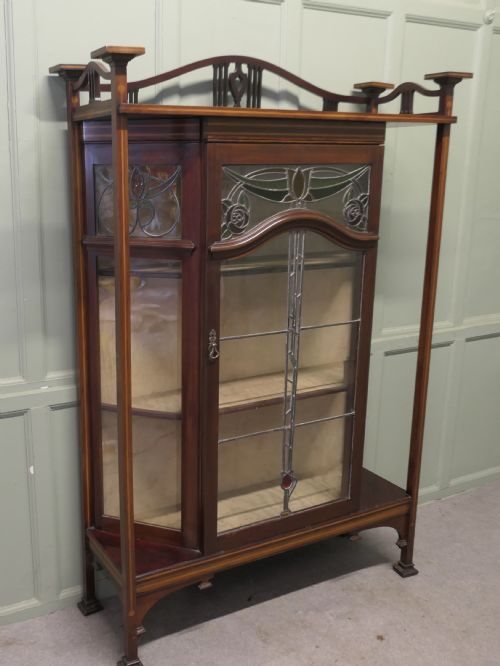
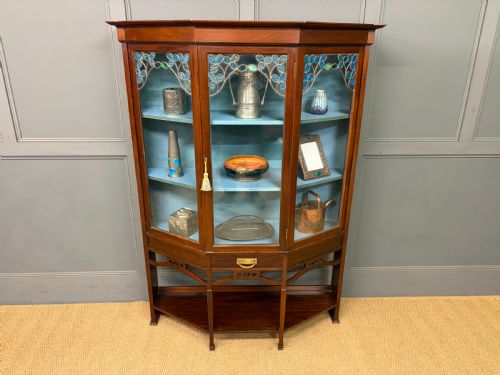
When you search for an art nouveau leaded cabinet, you are looking at upright storage furniture designed to display china, books, or writing materials behind glazed doors. The examples meeting this search phrase range from display cabinets and bureau bookcases to writing desks, spanning the late nineteenth century through to the nineteen-twenties.
The pieces most frequently met on this page combine mahogany or oak carcases with leaded glass panels and delicate inlay work. Makers embraced both Edwardian elegance and robust Arts and Crafts utility, producing practical furniture that foregrounds decorative botanical motifs and linear craftsmanship.
Materials and construction methods
Construction relies heavily on solid timber foundations of mahogany and oak, occasionally featuring maple, shaped and joined to support heavy glazed doors. Cabinet makers utilised brass for hardware and handles, anchoring the structural composition with durable metalwork.
The characteristic leaded and stained glass panels were assembled using channelled lead cames to hold small panes firmly in place. Artisans applied intricate marquetry and inlay techniques directly onto the timber surfaces to trace flowing, organic floral motifs.
The listings span from Victorian origins through Edwardian production up to nineteen-twenty, predominantly utilising mahogany, oak, and leaded glass.
Distinguishing quality across pieces
Quality separates ordinary utilitarian storage from exceptional decorative work through the ambition of the timber selection and the crispness of the inlay. Pieces featuring detailed marquetry and fine brass details sit at the upper end of the range.
The artistry of the leaded glass work and the integration of the design influence the overall standard. Pieces carrying attributed workshop designs demonstrate a superior level of finish in both joinery and decorative elements.
Shapland and Petter·Maple and Co·Liberty
The Art Nouveau Leaded Cabinet Glossary
- Came
- A slender grooved strip of lead used to hold pieces of glass together in a leaded window or cabinet door. These flexible strips allow artisans to create intricate geometric or organic patterns across the front of the furniture.
- Marquetry
- The art and craft of applying decorative veneer pieces of different colours and woods to a structure to form intricate designs. This technique defines the surface ornamentation seen on many period display pieces.
- Secretaire
- A piece of furniture containing a built-in writing drawer or fold-down writing flap concealing pigeonholes and small drawers. It combines the utility of a desk with the vertical storage of a bookcase.
- Arts and Crafts
- A design movement championing traditional craftsmanship, simple forms, and local materials in reaction to machine production. The style heavily influenced the cabinet makers who produced these glazed storage pieces.
Art Nouveau Leaded Cabinet: Frequently Asked Questions
What is an art nouveau leaded cabinet?
An art nouveau leaded cabinet is a piece of storage furniture featuring stylized organic lines and leaded glass doors designed for display.
These cabinets span the late nineteenth century to the early twentieth century, combining practical shelving with decorative aesthetic movement styling.
How do I date an art nouveau cabinet?
Dating relies on examining the primary timber, construction methods, and stylistic cues present in the marquetry and hardware. Pieces span from the late Victorian era through Edwardian production up to the nineteen-twenties.
Comparing the specific floral inlay patterns and handle designs helps place the piece within this broader transitional period.
Where were these cabinets placed in a home?
These cabinets served primarily as principal display furniture in formal reception rooms, parlours, or libraries. Their glazed doors protected delicate porcelain or fine book collections from dust.
Bureau variations also provided a private writing surface for correspondence within the same room.
What woods were commonly used?
Makers favoured rich timbers like mahogany and oak for their structural strength and polished finishes. Maple also appears on select Edwardian pieces to create lighter interior tones.
Timber choice often aligns with the specific stylistic branch, where oak suits sturdy designs and mahogany supports fine marquetry.