


Art Nouveau Inlaid Chair
An art nouveau inlaid chair brings flowing floral lines and precise timber craftsmanship into a room.
Art Nouveau Inlaid Chair
When you examine an art nouveau inlaid chair, you encounter seating built primarily around the turn of the twentieth century, drawing on Edwardian, late Victorian, and Arts and Crafts traditions. The forms span side chairs, armchairs, occasional chairs, and larger settees, reflecting the domestic seating requirements of the period.
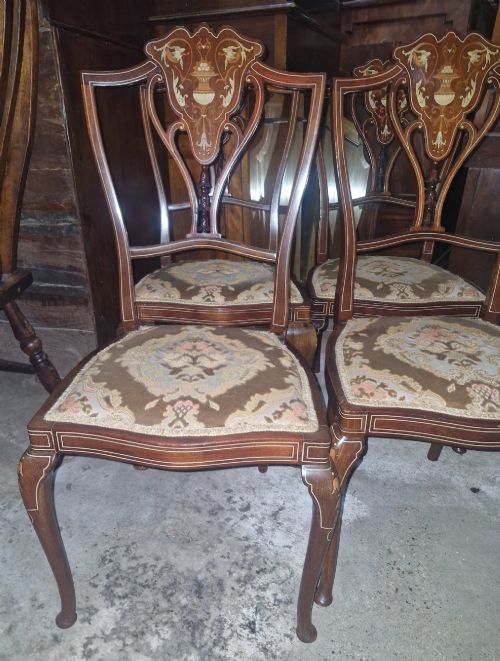
The version you are most likely to meet on this page is the mahogany salon chair or armchair, decorated with contrasting wood inlays. These pieces were made for the parlour, drawing room, or bedroom, combining structural timber frames with decorative botanical motifs.
Makers produced these chairs in single items, pairs, and larger dining or salon sets. Their designs bridge the transition from nineteenth-century ornamentation to the organic curves defining the new artistic movement.
How they were made
Carpenters constructed the primary frames of these chairs from solid mahogany, walnut, and beech. Timber selection dictated the strength of the slender, curving uprights and cabriole or tapered legs typical of the period.
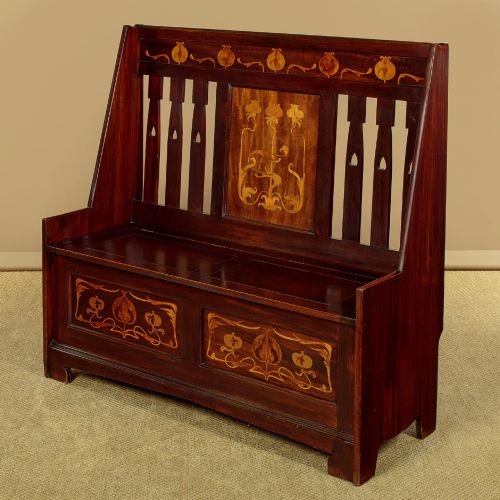
Workers applied contrasting wood inlay, satinwood inlay, and marquetry inlay to the splats, crest rails, and back panels. These decorative elements were cut from thin veneers and fitted into recesses carved into the primary wood surface.
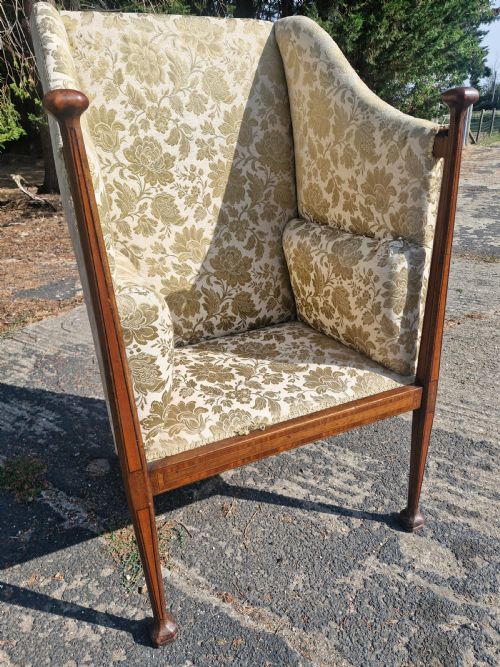
Upholstery completed the seating, utilising fabric, textile, and fabric upholstery secured over webbing and stuffing. The textile components soften the rigid timber framework while introducing complementary colour and texture.
Listings feature mahogany predominantly, paired with satinwood inlay and fabric upholstery across Edwardian and 1900 periods.
What varies in quality
Quality in these chairs rests upon the precision of the timber joinery and the execution of the inlay work. Finer examples display tightly fitted joints and clean, sharp contrasting cuts in the marquetry rather than superficial surface decoration.
The complexity and depth of the wood inlay distinguish superior pieces from simpler utilitarian seating. Master craftspeople selected satinwood and varied grain patterns to create shaded, dimensional botanical motifs that integrated seamlessly with the mahogany background.
James Shoolbred and Co
The Art Nouveau Inlaid Chair Glossary
- Marquetry inlay
- The practice of forming decorative patterns from pieces of wood veneer applied to a structural backing. This technique allowed makers to compose complex floral and whiplash curves across the chair back.
- Satinwood
- A durable, yellowish timber prized for its lustrous sheen and used extensively for contrasting inlay details. It provides the bright highlights against darker mahogany frames.
- Salon carver
- An open-armed chair designed for parlour or drawing room use, lighter than a dining carver. These pieces often feature decorative pierced splats and inlaid motifs.
- Box settle
- A high-backed wooden bench with enclosed seating storage below, combining Arts and Crafts utility with decorative styling. These items offer substantial seating capacity for hallways or living spaces.
Art Nouveau Inlaid Chair: Frequently Asked Questions
Where were these chairs used in the home?
These seating items found their primary placement in formal reception rooms, parlours, and bedrooms. Parlour suites and occasional chairs were chosen to demonstrate taste and provide comfortable seating for guests.
Armchairs and salon carvers served specific conversational or reading functions within the domestic interior. Their decorative backs made them suitable for placement where the rear of the chair remained visible.
Are these chairs suitable for daily seating?
Many examples remain robust enough for regular use, provided the timber frame and internal joinery are sound. The structural integrity of mahogany frames generally supports modern domestic requirements.
Consideration must be given to the condition of the upholstery and webbing, which may require professional restoration to ensure comfort and support. Lighter occasional and side chairs are better suited to occasional sitting rather than heavy lounging.
How do I care for inlaid wood surfaces?
Maintenance involves protecting the mahogany and satinwood surfaces from direct sunlight and extreme humidity fluctuations. Regular dusting with a soft cloth preserves the polish without abrasive buildup.
Application of appropriate furniture wax helps nourish the timber and protects the delicate veneer of the inlay work. Moisture should be kept away from both the polished wood and the upholstered textiles.