




Art Nouveau Floral Earthenware
Art nouveau floral earthenware pieces bring sweeping organic plant forms and rich coloured glazes straight into your room.
Art Nouveau Floral Earthenware
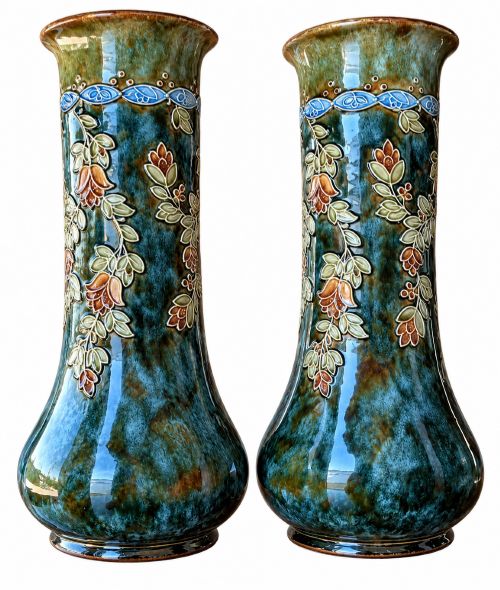
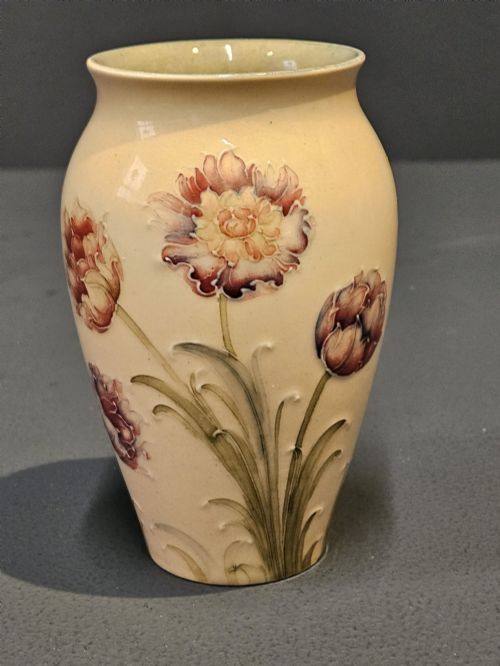
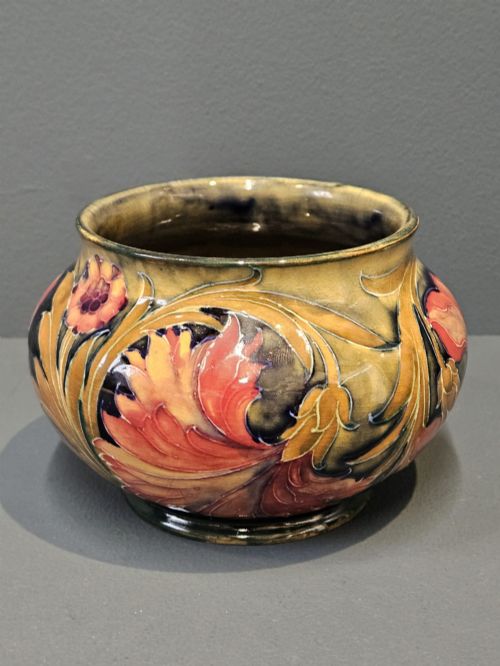
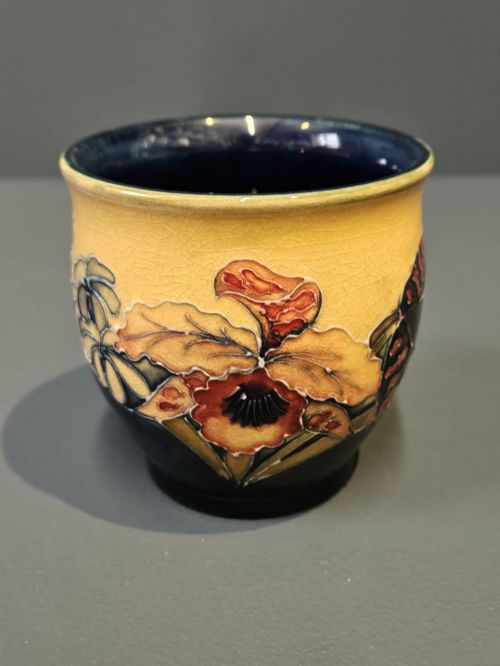
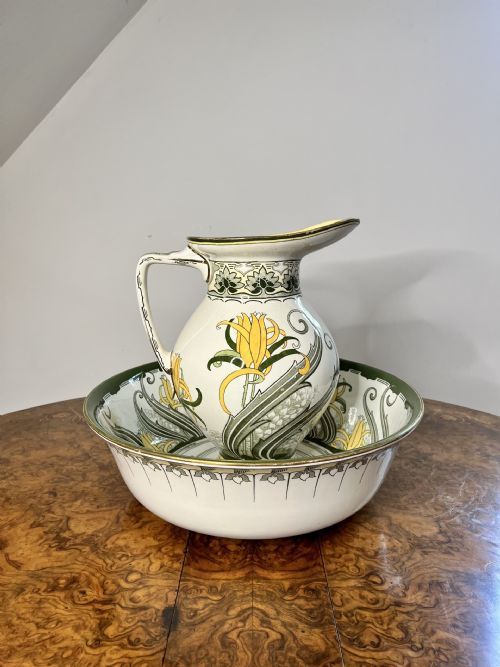
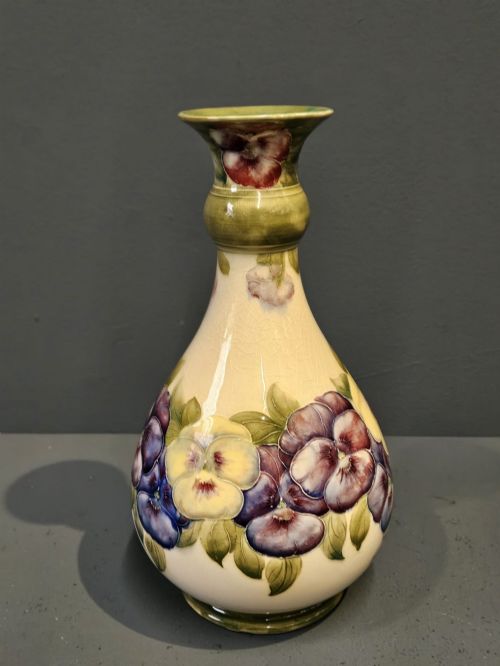
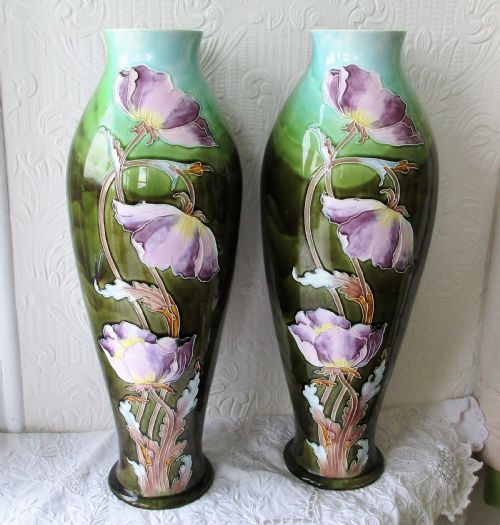
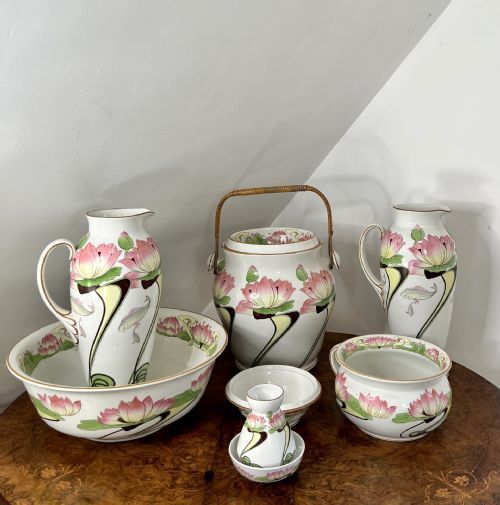
When you search for art nouveau floral earthenware, you encounter ceramic vessels and large display items shaped by the flowing plant motifs characteristic of the turn of the twentieth century. The selection ranges from cabinet vases and cabinet plates to substantial jardinieres and wash sets.
Vases and jardinieres dominate the inventory, carrying motifs of pansies, orchids, and sunflowers across their glazed ceramic surfaces. You will frequently meet pieces from the Edwardian era and the wider decades spanning the late nineteenth and early twentieth centuries.
Makers from English potteries, French faience workshops, and Austrian kilns populate the selection. The forms lean towards bulbous bodies, three-handled vessels, and tall pedestals that showcase fluid botanical decoration.
How they were made
Potters shaped these vessels from earthenware clay, often building up the surface using slipware techniques or moulding intricate plant reliefs before firing. The raw clay received a porous biscuit firing before artisans applied liquid glazes.
Complex glazes, including majolica and specialist studio finishes, were brushed or dipped onto the earthenware body. A high-temperature second kiln firing then fused the liquid mineral colours into a glossy or semi-matt finish.
Art Nouveau Floral Earthenware Retail Price Guide 2026
Typical asking prices for art nouveau floral earthenware among the pieces listed under this phrase on Sellingantiques today, from the lower quarter to the upper quarter. They describe what is for sale here now, not the wider market.
Potters captured unruly sunflowers and delicate pansies on clay, freezing botanical growth in permanent coloured glazes.
What varies in quality
Quality rests upon the crispness of the modelled floral relief and the depth of the glaze application. Stronger pieces display confident brushwork and rich, unblemished colour pooling naturally in the botanical recesses.
The distinction between standard production wares and superior studio pieces lies in the individuality of the form and the complexity of the firing. Finer examples maintain sharp botanical contours without glaze running or pooling awkwardly.
Doulon Burslem·Moorcroft McIntyre·Minton Secessionist·Wileman Intarsio·Sir Edmund Harry Elton·Royal Doulton·J R Mally Co
The Art Nouveau Floral Earthenware Glossary
- Earthenware
- Porous pottery fired at lower temperatures than stoneware or porcelain. It requires a vitreous glaze to hold liquids.
- Majolica
- A colourful tin-glazed earthenware developed with bright opaque metal oxide colours. This technique produces vibrant greens, yellows, and blues on botanical forms.
- Faience
- European tin-glazed earthenware originating from French and continental kilns. It provides a smooth white background for painted floral decoration.
- Jardiniere
- An ornamental ceramic pot or stand designed to hold a large growing plant. These pieces often sit upon matching ceramic pedestals.
- Secessionist
- A stylistic movement associated with avant-garde European design of the early twentieth century. It manifests in these ceramics through geometric floral abstraction and bold tube-lined patterns.
Art Nouveau Floral Earthenware: Frequently Asked Questions
How do I clean my art nouveau earthenware vase?
Dust the surface gently with a soft dry cloth to protect the historic glaze layers.
Avoid submerging older earthenware in water, as moisture can penetrate through tiny crazing lines in the glaze.
Can I use a jardiniere for live plants?
These ceramic vessels were originally designed to hold potted plants within domestic interiors. Modern use benefits from placing a plastic liner inside to prevent damp soil touching the historic interior glaze.
What is the difference between a vase and a jardiniere?
Vases are narrow vessels intended for displaying cut flower stems. Jardinieres are wider, heavier pots built to house entire potted plants.
Both formats share the same sweeping botanical motifs characteristic of the period.
How do I identify the period of these ceramics?
Examine the base for impressed factory marks, handwritten signatures, and pattern numbers. Stylistic clues such as asymmetric plant stems and flowing typography point directly to the turn of the twentieth century.