



Art Nouveau Display Table
An art nouveau display table brings organic lines and fine cabinetwork into a room, offering a surface that holds objects as gracefully as it stands.
Art Nouveau Display Table
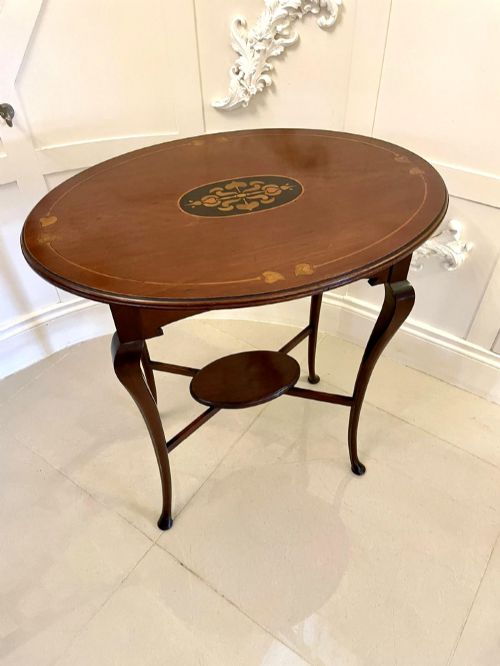
An art nouveau display table typically takes the form of an occasional table, plant stand, or low side table created around the turn of the twentieth century. These pieces emerge from periods such as the Edwardian era and 1900, carrying the distinct fluid lines and plant-inspired motifs of the movement.
The versions most commonly met on this page are fashioned from mahogany and other hardwoods, frequently enhanced with contrasting wood inlays. Alongside these wooden surfaces, makers utilised brass and ebonised wood to achieve the characteristic contrast of the style.
Forms range from tall jardiniere stands to low occasional tables designed to exhibit decorative objects. They reflect a period when domestic furniture shifted away from heavy Victorian gloom toward lighter, more sinuous designs inspired by natural forms.
Materials and construction methods
Cabinetmakers built these tables primarily using mahogany and satinwood, applying careful marquetry and inlay work to create delicate floral and tendril patterns across the tops. Hardwoods and ebonised wood served as structural bases, providing the strength required for slender, curving legs.
Metal elements such as brass appeared in structural mounts and decorative highlights, often shaped by hand as seen in planished metalwork. Where glass and crystal were incorporated into related display pieces, workers employed enamelling and etching to mirror the organic themes of the timber work.
Art Nouveau Display Table Retail Price Guide 2026
Typical asking prices for art nouveau display table among the pieces listed under this phrase on Sellingantiques today, from the lower quarter to the upper quarter. They describe what is for sale here now, not the wider market.
Some tables were built narrow enough simply to hold a single trailing fern in a porcelain pot.
Distinctions in quality
The finer examples of an art nouveau display table reveal themselves through the precision of their wood inlay and the crispness of any carved detailing. Cabinetmakers who achieved smooth, flowing junctions between the legs and the tabletop created pieces that endure better structurally and visually.
Simpler versions rely solely on straightforward timber forms without the intricate marquetry or considered grain selection found at the upper end. The choice of materials also dictates the tier, with figured satinwood and heavy brass mounts marking out superior workshops from standard commercial production.
Liberty and Co·St Louis glassworks
The Art Nouveau Display Table Glossary
- Marquetry
- The art of applying pieces of veneer to a structure to form decorative patterns. Craftsmen used different coloured woods to depict natural stems and flowers.
- Ebonised wood
- Timber treated with a chemical stain or dark finish to resemble ebony. This dark surface provided a stark contrast against inlaid brass or lighter woods.
- Planished
- Metal beaten with a rounded hammer to produce a textured, faceted surface. This technique leaves subtle hammer marks that catch the light.
- Bijouterie cabinet
- A glazed display case designed to hold small precious objects and curiosities. These pieces elevate the display function of standard occasional tables.
- Jardiniere stand
- A tall pedestal or table designed specifically to hold a plant pot or floral arrangement. They bring vertical lines to interior spaces.
Art Nouveau Display Table: Frequently Asked Questions
What is an art nouveau display table used for?
These tables serve primarily to hold small decorative objects, lamps, or potted plants in a living space. Their elevated surfaces allow collections of ceramics or silver to be viewed comfortably.
They also function as striking standalone furniture pieces that bring distinct period character to a corner or hallway without dominating the room.
How can I tell an Edwardian piece from earlier work?
Edwardian furniture often shares design traits with items from 1900, as the styles overlapped significantly around the turn of the century. Examination of the construction techniques and timber preparation usually helps determine the approximate decade.
Makers working in this period blended traditional cabinetmaking with the emerging floral motifs characteristic of the new century.
Are brass and marble stands typical of this period?
Metal and stone combinations appear frequently in continental interpretations of the style, particularly through Amsterdam School designs. These materials offered a sturdier structure for plant stands and heavy lamps.
The cool touch of marble paired with warm brass created the striking contrasts favoured by designers of the era.