
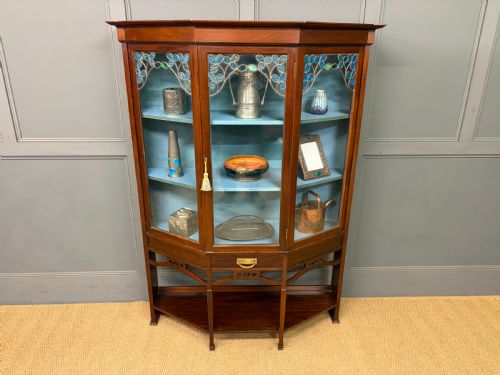


Art Nouveau China
These art nouveau china pieces combine flowing organic lines with fine ceramic glazes and rich cabinet woods, bringing distinctive period character to any room.
Art Nouveau China
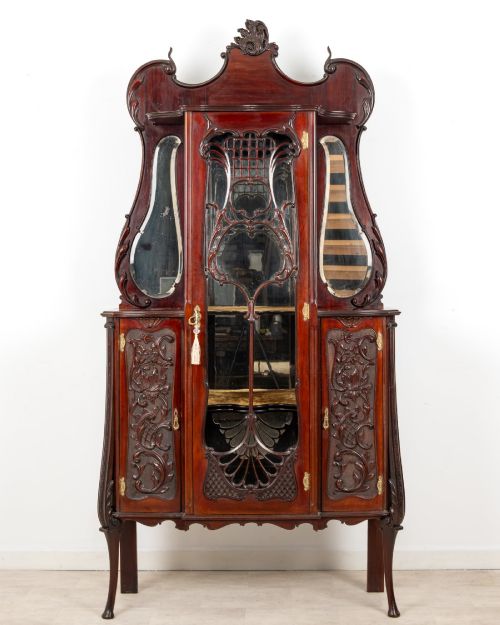
When you search for art nouveau china, you encounter a selection spanning delicate ceramic vessels alongside the large mahogany cabinets built to display them. The ceramic works range from lustre bowls and handpainted vases to miniature pieces decorated with intricate motifs.
On this page, the selection leans heavily toward substantial mahogany furniture alongside highly decorative porcelain vessels. Buyers find items originating from British and continental makers, capturing the international reach of the design movement.
How they were made
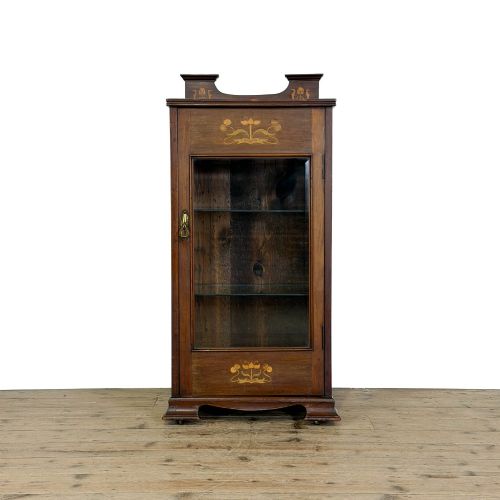
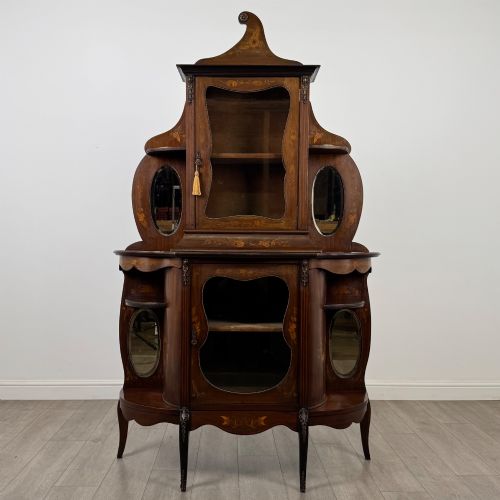
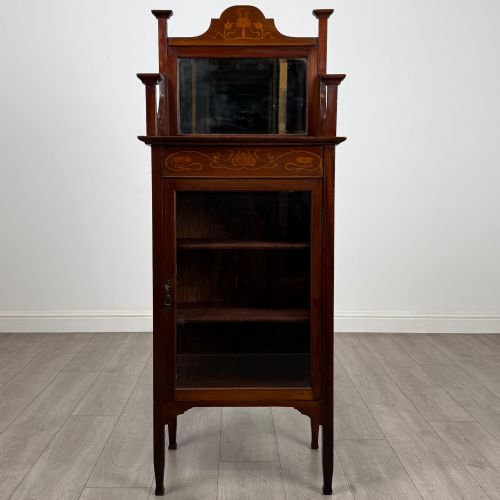
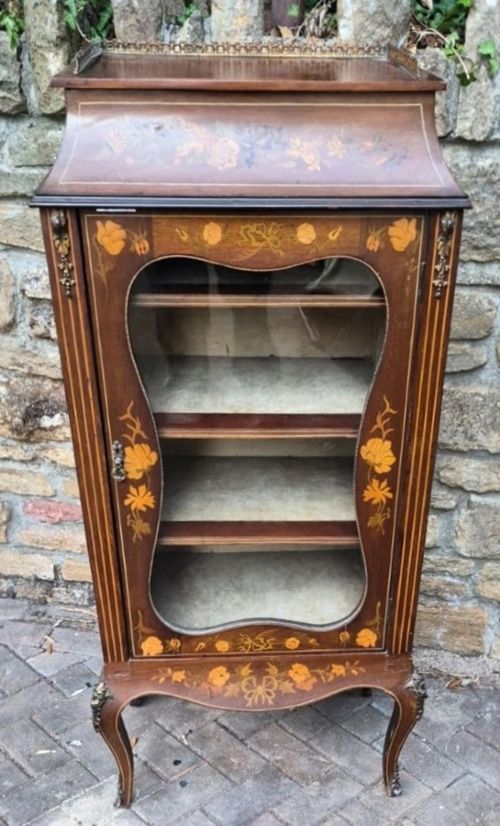
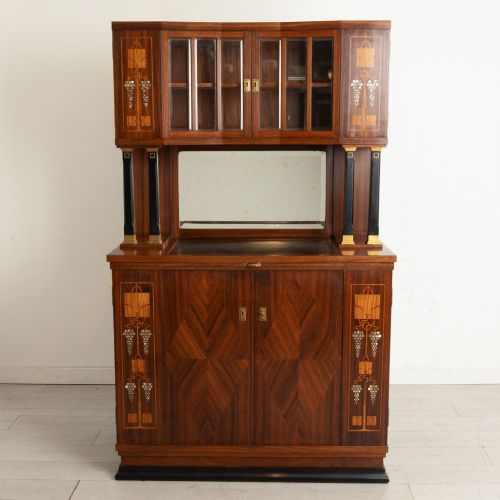
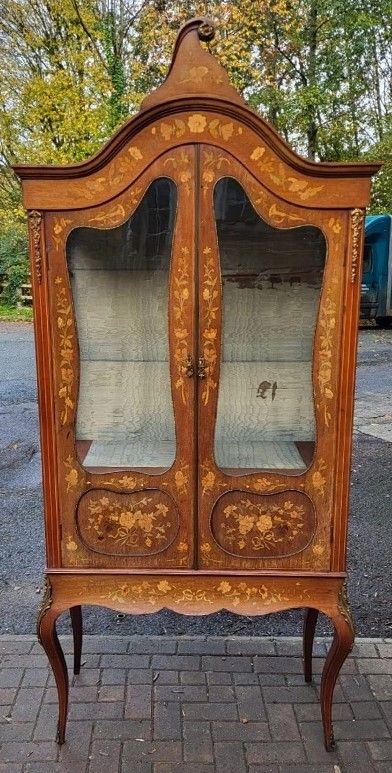
The furniture pieces rely upon solid mahogany, often enhanced with intricate wood inlay, marquetry, and mirror backs. Cabinetmakers utilised traditional joinery techniques to construct bow-front and display cabinets designed to showcase fragile ceramics.
The ceramic works depend upon specialised lustre glazes, gold leaf applications, and handpainted detailing. Potteries employed complex firing processes to achieve the iridescent surfaces seen on bowls and vases from this era.
Periods represented span from late Victorian production through the Edwardian era into the nineteen-twenties.
What varies in quality
Quality reveals itself in the precision of the marquetry and the depth of the timber grain on cabinets. Superior examples demonstrate meticulous hand-cut wood inlay and balanced proportions.
For ceramic pieces, the richness of the lustre glaze and the complexity of handpainted subjects set the finest examples apart. Works bearing documented designer attributions show greater artistic ambition.
Shapland and Petter·August Ungethüm·Royal Doulton·Wedgwood
The Art Nouveau China Glossary
- Marquetry
- Decorative wood inlays forming pictorial or geometric patterns on cabinet surfaces. This technique adds considerable visual texture to mahogany furniture.
- Lustre Glaze
- A metallic ceramic finish producing an iridescent, shimmering surface effect. It defines the appearance of many decorative bowls and vases.
- Bow Front
- A convex curved cabinet front popular in period furniture design. This shape softens the profile of large display pieces.
- Viennese Secessionist
- An Austrian offshoot of the art movement focusing on geometric clarity alongside organic forms. Pieces from this origin display distinct regional styling.
Art Nouveau China: Frequently Asked Questions
How do I identify genuine period lustreware?
Examine the base for maker marks, pattern numbers, and signature glaze characteristics typical of early twentieth-century production. Authentic pieces display specific transfer-printed or hand-painted studio ciphers.
Look closely at the quality of the metallic sheen and the handpainted details. Genuine works exhibit careful brushwork rather than mechanical transfer printing.
What woods were used for cabinets?
Makers relied predominantly on mahogany for its rich grain and durability. This timber provided a sturdy dark ground for delicate marquetry and wood inlay.
Some pieces also incorporated brass hardware and mirrored glass panels to enhance the display of porcelain within.
How do these cabinets differ from standard Edwardian furniture?
These items incorporate the characteristic whiplash curves, floral motifs, and asymmetrical lines of the design movement. They stand apart from conventional revivalist furniture through their embrace of natural forms.
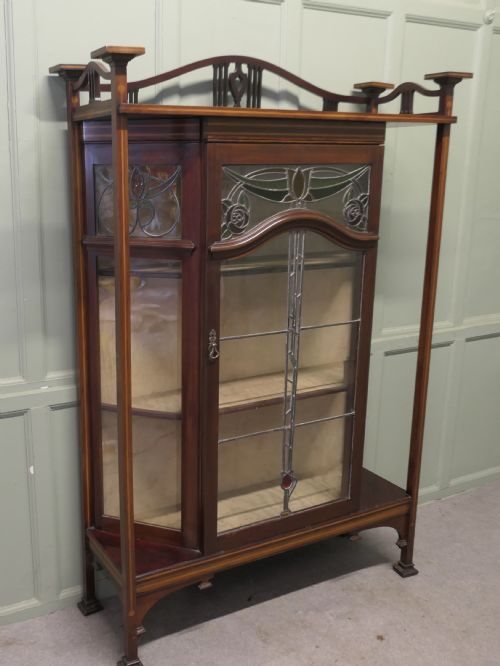
Cabinetmakers integrated these artistic principles directly into the structural woodwork, often combining carved mahogany with stylized glass doors.
Where were these ceramic items produced?
Production centred on major British potteries as well as continental workshops. English firms produced notable lustre lines featuring intricate butterfly and dragon motifs.
Designers collaborated closely with manufacturers to develop specialised glaze formulas and handpainted decorative series.