


Art Deco Wooden Sideboard
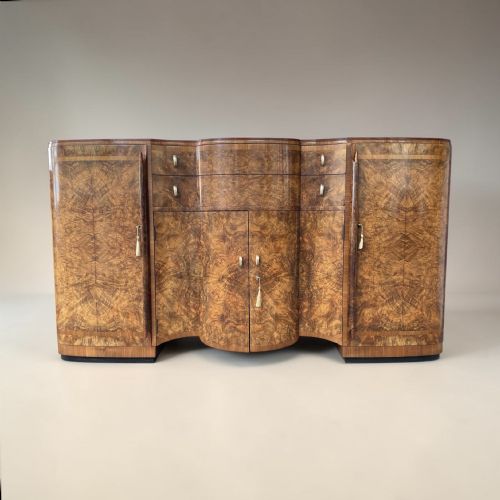
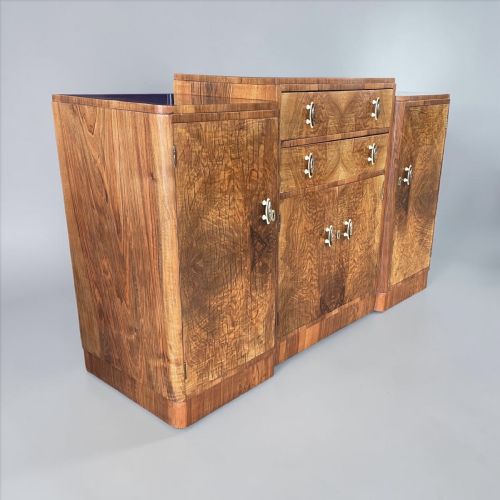
An art deco wooden sideboard anchors a dining room with clean architectural lines and rich grain figures from the 1920s and 1930s.
Art Deco Wooden Sideboard
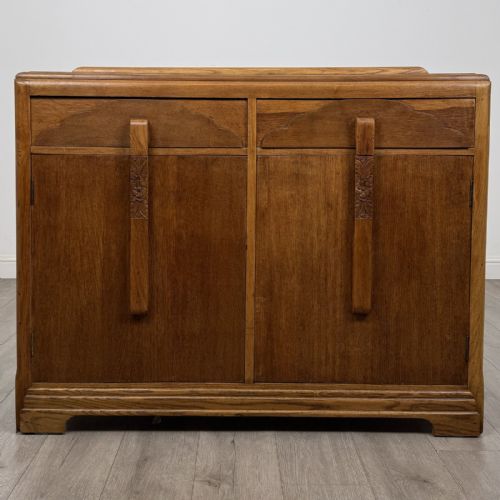
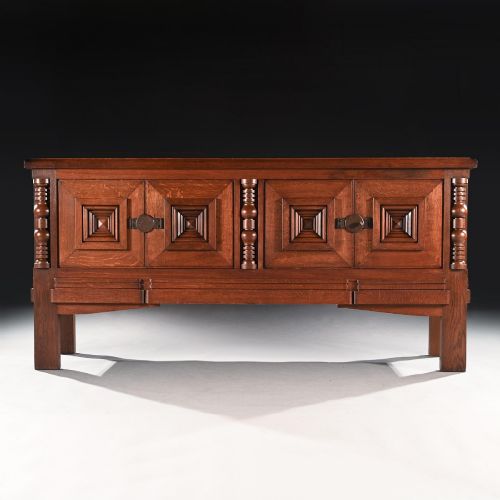
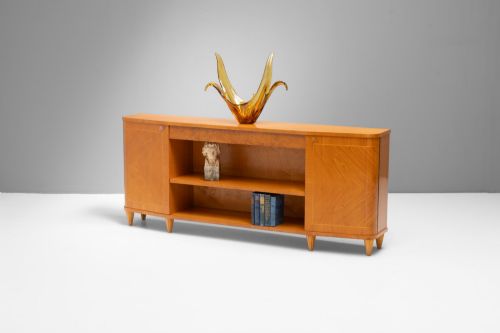
An art deco wooden sideboard represents the functional storage of the interwar period, combining deep storage capacity with striking geometric forms. These pieces serve as both serving tables and focal points in a dining space.
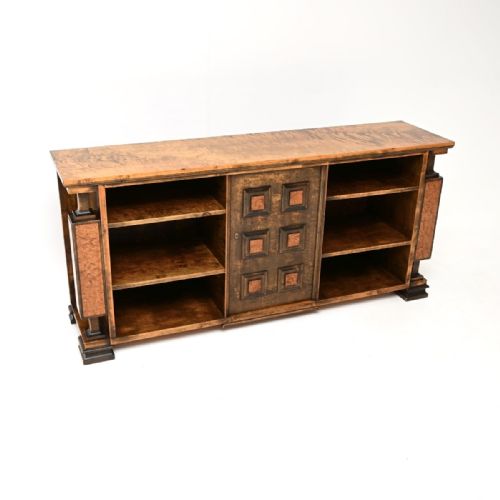
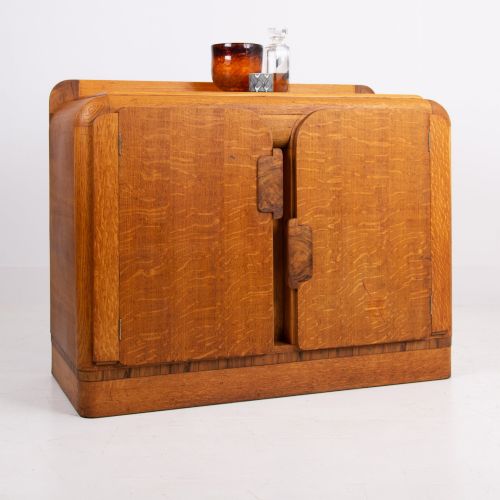
The versions most frequently met on this page date from the 1920s and 1930s, taking the form of sideboards, cabinets, and compact side units. They originate from British, French, and Scandinavian workshops.
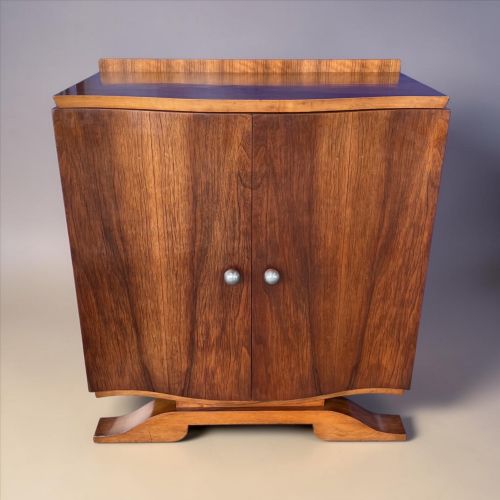
Makers utilised architectural silhouettes, stepped profiles, and substantial proportions to create practical furniture that remains visually striking today. The construction accommodates contemporary dining rooms just as effectively as period interiors.
Materials and construction
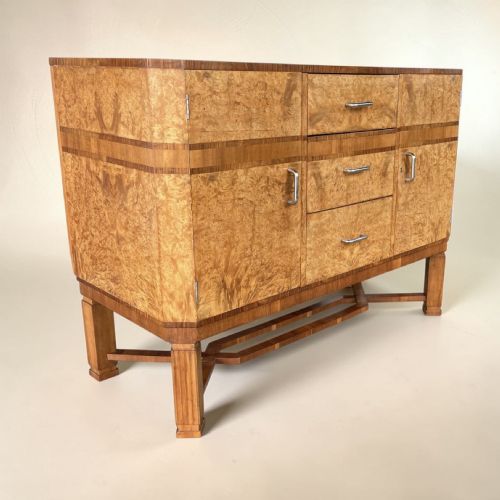
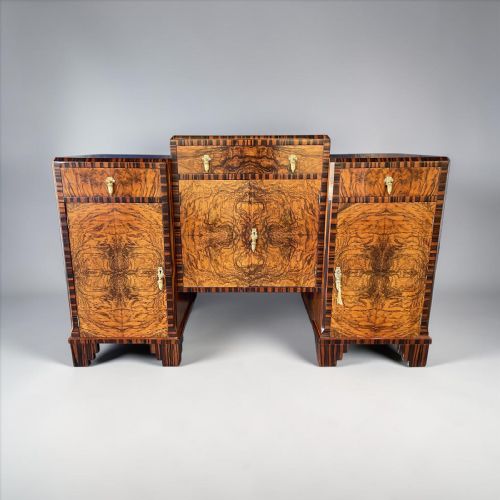
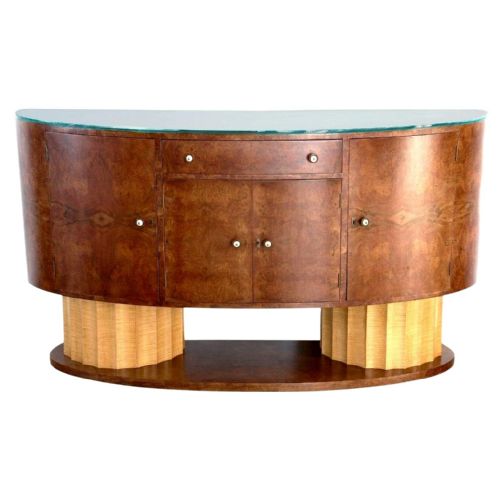
Cabinet makers built these pieces using solid timbers like oak alongside decorative wood veneers such as walnut, burr walnut, birch, and sycamore. These veneers were applied in matched patterns to create symmetrical grain displays across the front doors and drawers.
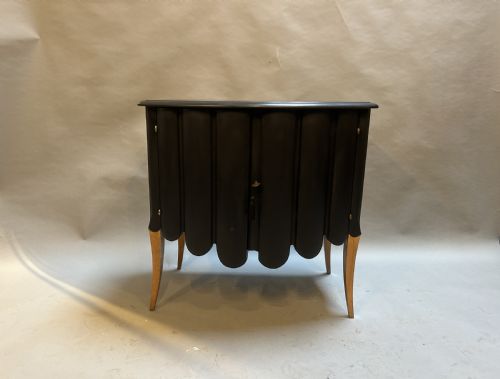
Metal accents in brass and contrasting ebonised wood frequently appeared as handles, feet, and decorative inlay lines. The underlying carcase structure relied on traditional cabinet-making joints hidden beneath the polished surface veneers.
Listings feature walnut, burr walnut, oak, birch, and sycamore across British, French, and Scandinavian pieces.
Assessing quality
The standard of a piece rests largely on the choice and placement of its veneers, where book-matched burr walnut or figured birch creates a more compelling visual rhythm than plain timber. Master workshops selected specific logs to ensure the grain flowed harmoniously across multiple drawers and doors.
Hardware details and internal fittings distinguish standard production from premier outputs. Original cast brass handles, well-fitted cutlery drawers, and secondary timbers of high grade signal the care invested by the original maker.
Maurice Adams·Gomme·Hille·Étienne Kohlmann·Bowman Brothers·Otto Schulz for Boet·Epstein
The Art Deco Wooden Sideboard Glossary
- Veneer
- A thin slice of decorative wood adhered to a stable underlying timber base. This technique allowed makers to display dramatic grain patterns without using solid sections of costly exotic woods.
- Burr walnut
- A growth deformity in the walnut tree that produces intricate, swirling grain patterns. Cabinet makers prized this material for creating focal panels on high-status furniture.
- Book-matching
- A veneer technique where adjacent slices from a log are opened like a page to mirror each other. This creates symmetrical, repeating patterns across large cabinet doors.
- Ebonised wood
- Timber treated to resemble ebony through staining or painting. Makers utilised this finish to provide dark, sharp contrasts against lighter woods like birch or satin birch.
- Swedish Grace
- A sophisticated Nordic design style bridging neoclassical restraint and early modernism during the 1920s. Pieces in this style emphasise refined proportions and subtle surface ornamentation.
Art Deco Wooden Sideboard: Frequently Asked Questions
How do I clean an art deco wooden sideboard?
Dust the surface regularly with a soft, dry cloth to prevent particulate build-up in the wood grain.
Avoid silicone-based sprays and apply a quality beeswax periodically to nourish the vintage polish.
What is the difference between a sideboard and a commode?
Sideboards generally offer longer, lower profiles designed for dining rooms to store tableware and serve food.
Commodes are traditionally chest-of-drawers formats adapted in the 20th century for hallway or living room placement.
Can I use an art deco sideboard in a modern room?
The clean geometry and rich wood tones of these pieces blend effortlessly with minimalist contemporary interiors.
They provide substantial concealed storage while serving as a strong architectural anchor in an open-plan space.
How do I identify pieces from the 1920s versus the 1930s?
Pieces from the 1920s often retain transitional elements with subtle curves and classical proportions.
Thirties designs lean further into streamlined, horizontal geometries with dramatic veneer matching and minimal hardware.