




Art Deco Walnut Seating
Art deco walnut seating combines bold 1930s forms with rich grain, offering strong geometric presence and deep comfort for any modern interior.
Art Deco Walnut Seating
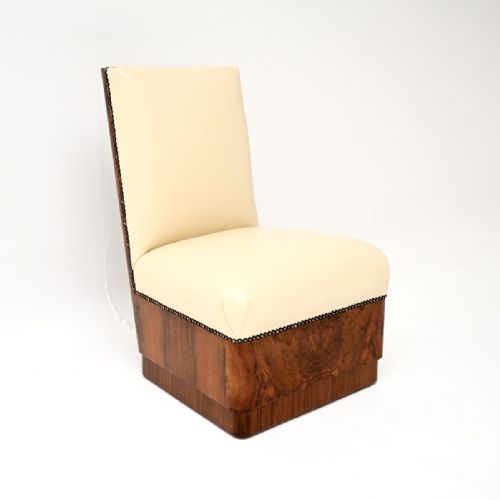
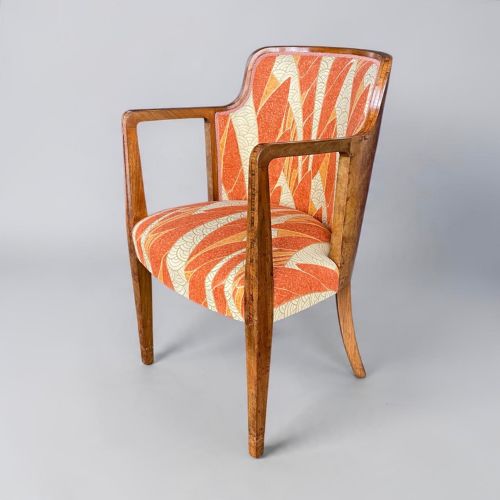
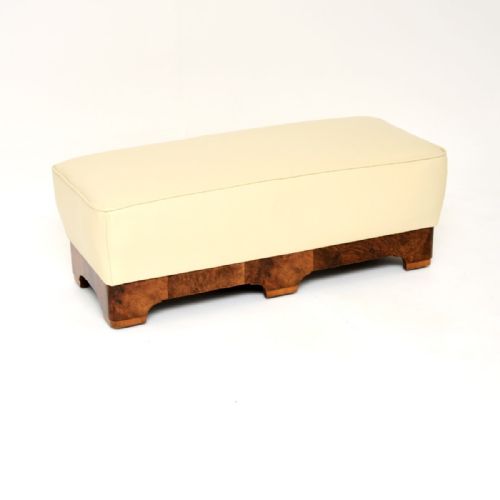
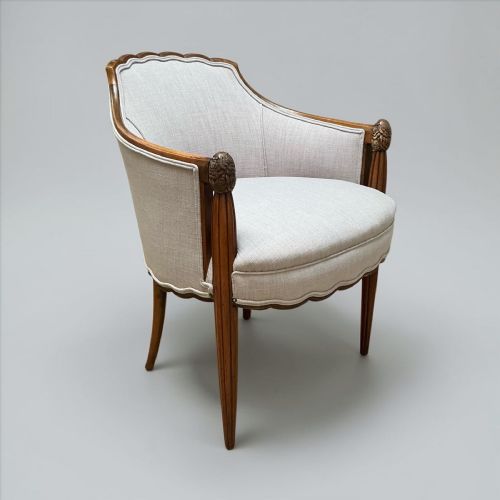
Art deco walnut seating encompasses functional forms designed during the interwar period, specifically emerging across the 1920s and 1930s. Pieces span large club chairs, dining suites, occasional chairs, and various stools designed for dressing tables or pianos.
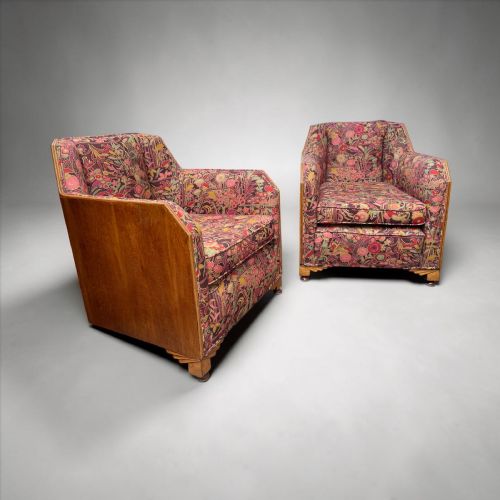
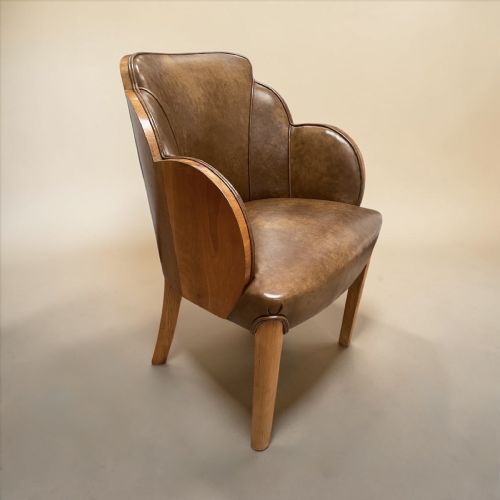
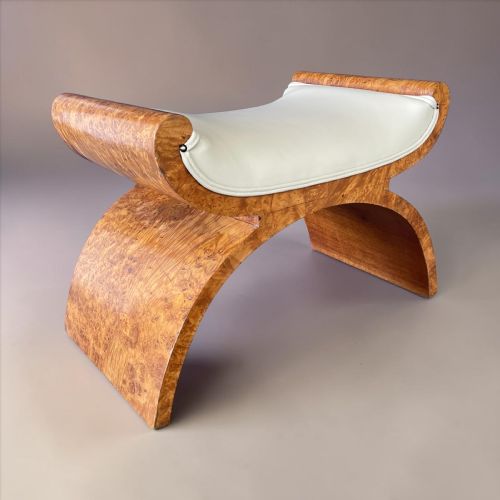
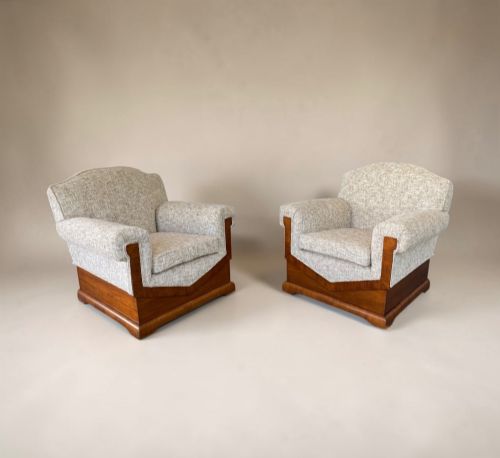
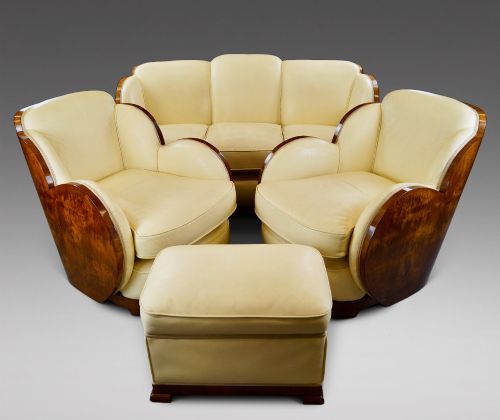
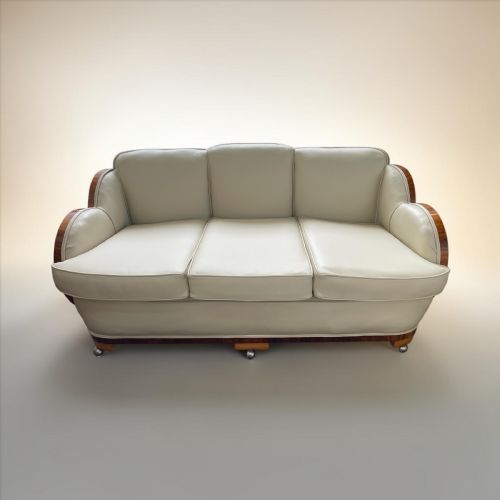
The most common versions met on this page are armchairs and lounge suites shaped in the distinctive rounded cloud profile. Makers also produced smaller items like rectangular dressing stools alongside complete dining sets comprising tables and matching chairs.
Makers utilised native and imported timber to construct these items, frequently pairing solid wood frames with distinct veneers. English workshops dominated much of this production, shaping seating around comfort and architectural lines characteristic of the period.
What varies in quality
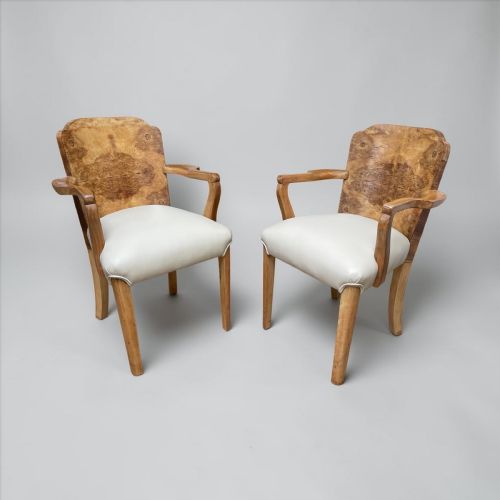
The selection of veneer dictates much of the visual merit, where highly figured burr walnut commands greater visual presence than plain timber surfaces. Matched grain across a pair of armchairs or a full dining suite demonstrates deliberate planning by the maker.
Art Deco Walnut Seating Retail Price Guide 2026
Typical asking prices for art deco walnut seating among the pieces listed under this phrase on Sellingantiques today, from the lower quarter to the upper quarter. They describe what is for sale here now, not the wider market.
Several dressing stools include clever built-in storage compartments beneath the seat, perfect for hiding midnight reading.
Harry and Lou Epstein·Hille
The Art Deco Walnut Seating Glossary
- Burr walnut
- A veneer taken from the warted growth on a walnut tree, producing swirling, intricate grain patterns. It was heavily favoured by makers for high-end art deco cabinets and seating frames.
- Cloud chair
- An armchair characterised by rounded, bulbous upholstered sections that mimic stacked pillows or cloud formations. This style represents a distinct English interpretation of international art deco design.
- Veneer
- A thin layer of superior wood adhered to a secondary timber core to present a decorative surface. Walnut veneer allowed makers to display dramatic grain without relying entirely on solid scarce timber.
- Dining suite
- A matched set comprising a table and a designated number of chairs designed in unison. These groupings ensure uniform style and wood selection across the entire dining arrangement.
Art Deco Walnut Seating: Frequently Asked Questions
What defines art deco seating?
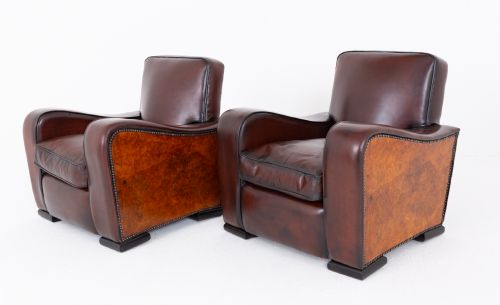
Art deco seating is defined by streamlined geometric shapes, curved profiles, and the prominent use of walnut and burr walnut woods. Pieces often incorporate leather upholstery and distinct architectural lines typical of the interwar period.
Designs range from bulky club chairs to slender dining chairs and low dressing stools. The aesthetic prioritises both visual impact and functional comfort.
What is the difference between occasional chairs and armchairs?
Occasional chairs are generally lighter, smaller seats designed to be moved around a room as needed for temporary use. They feature simpler frames and less bulky padding than primary lounging seats.
Armchairs, particularly club chairs from this era, are heavier, deeply padded seats built for prolonged relaxation. They dominate a room's layout through sheer volume and pronounced upholstery.
How should I care for walnut and leather furniture?
Walnut surfaces benefit from occasional dusting with a soft cloth and minimal exposure to direct sunlight to prevent fading. Conditioning the wood periodically maintains the polish and highlights the natural grain.
Leather upholstery requires regular treatment with suitable leather balms to keep the hide supple and prevent cracking. Avoid placing these pieces near direct heat sources which dry out both timber and leather.