


Art Deco Walnut Mirror
These pieces combine figured walnut with geometric glass to bring striking 1930s style into a room.
Art Deco Walnut Mirror
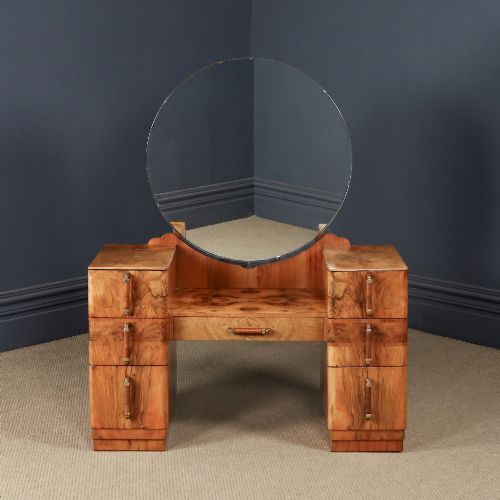
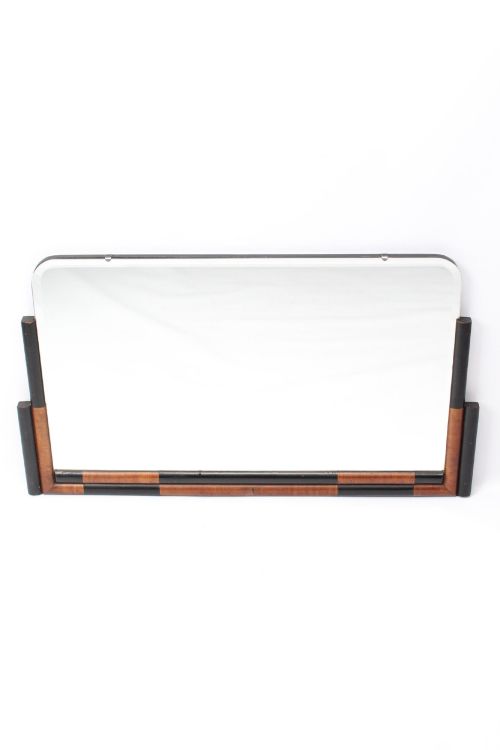
An art deco walnut mirror brings geometric form and rich timber grain together, most commonly seen in wall-hanging formats or freestanding cheval designs. The pieces range from simple rectangular or cloud-shaped wall mirrors to large dressing mirrors attached to vanity tables.
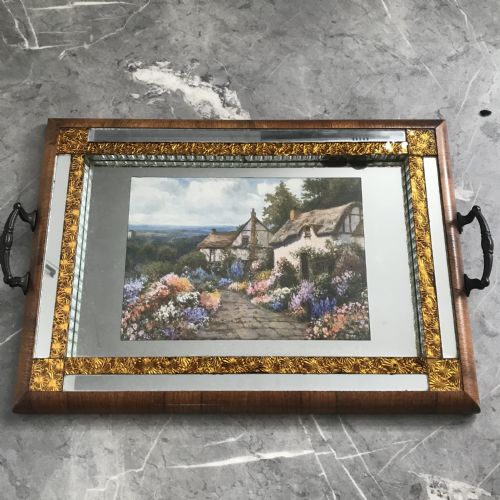
Makers and workshops produced these mirrors across the 1910s, 1920s, and 1930s, utilising styles that span from strict modernism to revival influences. Buyers will frequently encounter cheval dressing mirrors alongside occasional table surfaces that incorporate mirrored glass tops.
Originating from English and continental workshops, the selection includes both standalone wall pieces and those integrated into larger bedroom suites such as wardrobes and dressing chests.
How they were made
Cabinet makers applied thin layers of burr walnut or figured walnut veneer over sturdy timber carcases to display striking natural wood grain patterns across the frame. These wooden surfaces were finished and polished to highlight the warm brown tones of the walnut.
Reflective glass panels were cut to geometric shapes, sometimes featuring bevelled edges, and secured within wooden frames or mounted alongside chrome and brass metal fittings. Ebonised detailing was occasionally added to contrast against the polished walnut timber.
Some cheval mirrors originally served gentlemen in outfitting shops before finding their way into domestic dressing rooms.
What varies in quality
The choice of timber veneer dictates much of the visual impact, with tightly figured burr walnut and book-matched grain patterns commanding attention over plain timber surfaces. Expert application of the veneer ensures smooth edges and seamless joints across curved frames.
The clarity and depth of the original mirror glass, together with the precision of the mitred wooden corners and metal mounts, distinguish standard production from exceptional cabinet work.
Maurice Adams·Harry and Lou Epstein·Jean Faure·Whytock and Reid
The Art Deco Walnut Mirror Glossary
- Burr Walnut
- A specialised wood cut from the abnormal growths of a walnut tree, producing swirling, intricate grain patterns prized in cabinet making.
- Cheval Mirror
- A full-length floor mirror supported in a freestanding frame that tilts on vertical pivots.
- Veneer
- A thin layer of superior wood adhered to a base timber surface to provide a decorative exterior appearance.
- Ebonised
- Timber treated with a dark stain or finish to imitate the appearance of dense ebony wood.
- Overmantle Mirror
- A decorative looking glass specifically designed to be hung on the wall immediately above a fireplace mantelpiece.
Art Deco Walnut Mirror: Frequently Asked Questions
Where should an art deco walnut mirror be hung?
These mirrors suit hallways, living rooms above sideboards, or bedrooms where the warm walnut tones complement interior woodwork.
Ensure the wall fixings can support the weight of the timber frame and glass plate safely.
How do I care for walnut veneer frames?
Dust the timber gently with a soft, dry cloth and avoid placing the piece in direct sunlight or damp conditions.
Keep glass cleaner away from the wooden edges to protect the polished veneer finish from moisture damage.
Are cheval mirrors free standing?
Cheval mirrors are designed to stand independently on the floor, held within a supportive frame that allows the glass to tilt.
They offer full-length reflection without requiring wall mounting.
What is figured walnut?
Figured walnut refers to wood grain that displays unique patterns, waves, or swirls due to the growth of the tree.
Cabinet makers select these sections to create decorative, symmetrical fronts on frames and furniture.