


Art Deco Walnut Mantle
Art deco walnut mantle pieces combine rich wood veneers with geometric lines, offering a striking centrepiece for any room.
Art Deco Walnut Mantle
When buyers search for art deco walnut mantle items, they encounter a range of timepieces and architectural surrounds from the 1920s and 1930s. Mantel clocks dominate this category, featuring prominently alongside desk clocks, wall clocks, and occasional fireplace surrounds.
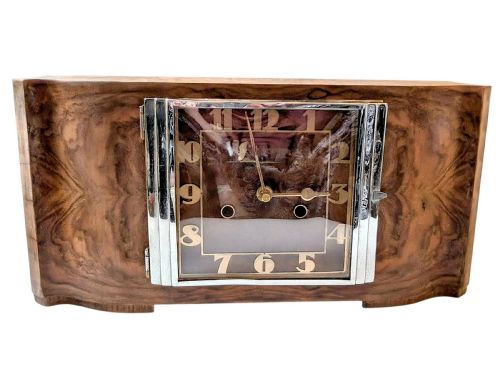
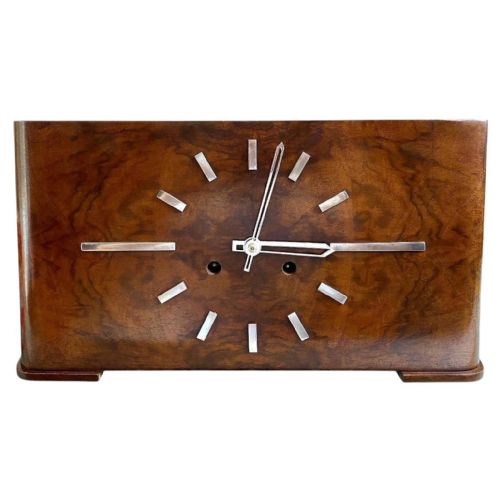
The standard version met on this page is the wooden mantel clock constructed during the 1930s, often combining walnut or burr walnut with contrasting metal details. These functional objects bring period character to domestic interiors through architectural silhouettes and mechanical movements.
How they were made
Cabinet makers utilised walnut and burr walnut veneers applied over solid wood foundations to achieve rich grain patterns across the front of each case. Wood veneer provides the characteristic decorative surface, frequently shaped into geometric tiers or rounded waterfall edges.
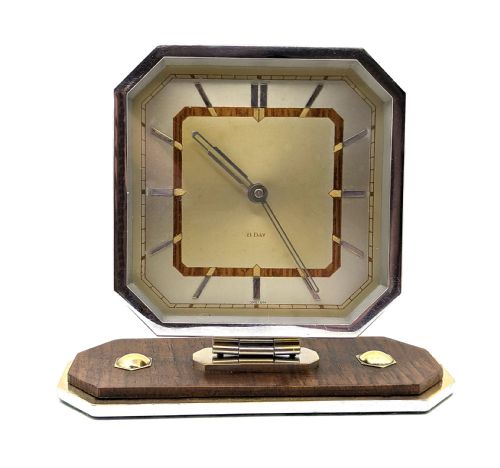
Metal elements such as chrome, brass, and plain steel integrate directly into the wooden housings to provide dials, bezels, and decorative feet. Makers incorporated mechanical eight day movements or chime mechanisms behind glass covers, securing precision alongside decorative impact.
Several clocks still chime the Westminster melody every quarter hour, just as they did in interwar sitting rooms.
What varies in quality
The choice of surface timber distinguishes standard production from finer pieces, with burr walnut offering superior grain movement and visual depth compared to plain walnut veneers. Two tone wooden combinations and skyscraper architectural forms also indicate greater design ambition.
Internal clock movements signed by established makers or fitted with specialised chimes elevate the standard of construction significantly. The integration of high grade chrome mounts and heavy glass bezels further separates robust workshop production from simpler output.
Haller·Elliott·Perivale·Elliott of London·Junghans
The Art Deco Walnut Mantle Glossary
- Burr Walnut
- A figured wood grain obtained from tree growths, producing swirling patterns that makers selected for prime display surfaces on clock cases.
- Chrome
- A hard, corrosion resistant metal plating applied to steel or brass components to create bright metallic accents typical of the period.
- Mantel Clock
- A clock designed to sit on a fireplace mantelpiece or shelf, serving as both a timekeeper and an ornamental room feature.
- Veneer
- A thin slice of superior wood bonded over a stable secondary timber base to present an attractive exterior without excessive material cost.
- Westminster Chime
- A melodic sequence of quarter hourly tones utilised by mechanical movements in many clocks of this era.
Art Deco Walnut Mantle: Frequently Asked Questions
How do I wind my clock?
Insert the key into the winding holes on the dial and turn gently until resistance increases, taking care not to overwind the mainspring.
Most mechanical examples run for eight days between windings, requiring a consistent routine to maintain accurate timekeeping.
Where should I place a mantel clock?
Position the piece on a stable, level surface away from direct heat sources and damp environments to protect the wood veneer.
Mantel clocks look particularly striking on living room shelves or central fireplace surrounds where their architectural forms can be appreciated.
How do I date these items?
Examine the overall silhouette, dial typography, and material combinations, as geometric skyscraper profiles and chrome trim point directly to the interwar decades.
Makers' marks stamped on the internal movements or case backs often provide more precise production years.
Can these clocks be repaired?
Professional horologists can service and restore the mechanical movements found within these vintage timepieces to ensure reliable operation.
Cabinet repairs require specialist knowledge of period wood veneers and traditional French polish finishes.