





Art Deco Waiter Tray
An art deco waiter tray brings geometric grace and polished metal to your home drinks service, combining period style with practical hosting.
Art Deco Waiter Tray
An art deco waiter tray is a serving piece designed for drinks and cocktails, heavily influenced by the geometric and linear design movements of the early twentieth century. These items typically date from the 1920s, 1930s, and 1940s, capturing the modernist aesthetic of the period.
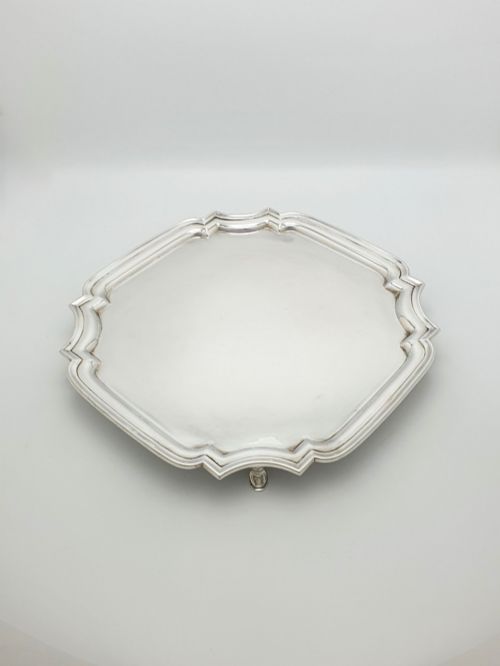
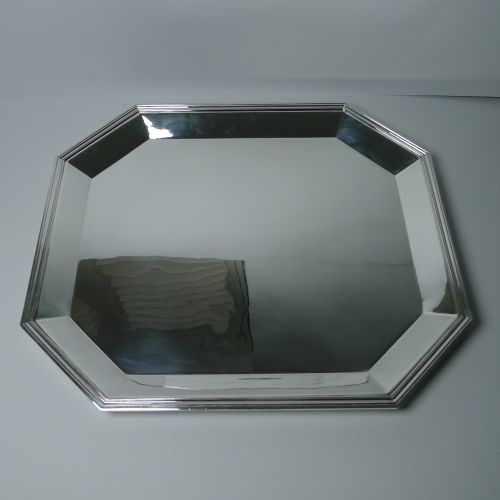
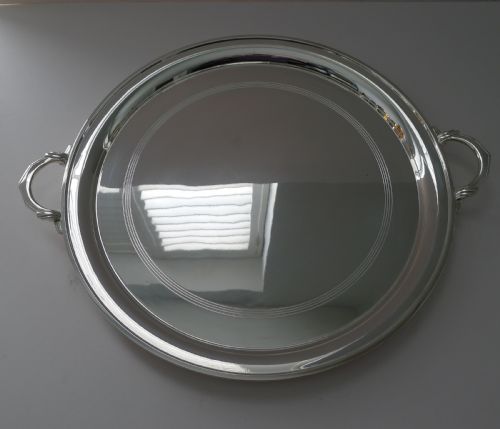
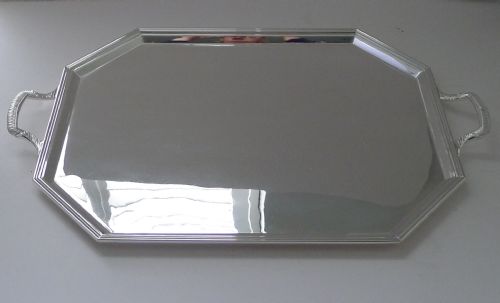
The versions you are most likely to meet on this page take the form of cocktail trays, serving trays, and drinks trays with distinctive geometric outlines. Round, square, octagonal, and hexagonal shapes appear frequently across the selection.
Makers such as Mappin & Webb, Walker & Hall, and Elkington produced these serving pieces in sterling silver and silver plate. Pieces by designers like Keith Murray or French makers like Orfèvrerie Christofle also feature in the current range.
Materials and construction
Silversmiths and metalworkers utilised sterling silver, silver plate, nickel silver, and electroplated nickel silver to construct these trays. Base metal cores provided structural rigidity, whilst wood occasionally appeared as a contrasting element in the design.
Surface ornamentation often relied on engine turned patterns to catch the light across the flat metal surfaces. Raised handles and gallery borders were integrated into the structural design to secure glasses during transit.
Art Deco Waiter Tray Retail Price Guide 2026
Typical asking prices for art deco waiter tray among the pieces listed under this phrase on Sellingantiques today, from the lower quarter to the upper quarter. They describe what is for sale here now, not the wider market.
Listings feature items spanning four decades, with the 1920s and 1930s representing the core of the art deco selection.
Assessing quality in period trays
The weight and gauge of the metal separate heavier, substantial silver or plated pieces from lighter alternatives. A solid feel in the hand and robust handle attachment indicate superior manufacturing standards.
The precision of the geometric lines and the crispness of engine turned engraving distinguish workshop production from standard commercial output. Maker marks from established firms also indicate higher status and quality of execution.
Orfèvrerie Christofle·Mappin & Webb·J B Chatterley & Sons·Walker & Hall·James Dixon & Sons·Elkington·Atkin Brothers·John Collyer Birmingham
The Art Deco Waiter Tray Glossary
- Silver Plate
- A base metal such as copper, nickel, or brass coated with a thin layer of pure silver. This technique allowed makers to produce luxurious items at a lower cost than solid sterling silver.
- Engine Turned
- A decorative technique involving precise geometric patterns mechanically engraved into metal surfaces. This method creates repetitive, textured designs that catch the light.
- Electroplated Nickel Silver
- An alloy of copper, nickel, and zinc coated with silver via an electrolytic process. It served as a durable and popular foundation for twentieth-century tableware.
- Sterling Silver
- An alloy consisting of 92.5 percent silver and 7.5 percent other metals, usually copper. This standard provides the ideal balance of durability and purity for silverware.
- Salver
- A flat tray used for serving food or drinks, typically made of silver or other metals. The term often denotes a formal serving piece with feet or a raised edge.
Art Deco Waiter Tray: Frequently Asked Questions
How were art deco waiter trays used?
These trays served cocktails and drinks in domestic settings, particularly during the interwar cocktail hour revival. Hosts utilised them to transport glassware and bottles between rooms with stability and style.
Today, they function both as practical barware accessories and as decorative tabletop centerpieces when displayed on sideboards.
What metals are these trays made from?
The pieces utilise sterling silver, silver plate, nickel silver, and electroplated nickel silver over base metal foundations. Some examples incorporate wooden elements for contrast.
Sterling silver marks the highest tier of material quality, whilst silver plate offered a bright finish for everyday entertaining.
How do I date an art deco tray?
Dating relies on maker marks, hallmarks, and stylistic indicators such as geometric motifs or engine turned decoration. Many pieces carry stamps corresponding to Birmingham or Sheffield assay office records from the 1920s and 1930s.
Design attributions, like those by Keith Murray, help narrow the production period to specific decades.
How do I care for silver plated trays?
Maintenance involves regular cleaning with a soft cloth and appropriate silver polish to preserve the reflective surface. Avoiding abrasive materials prevents damage to the plated layer or engine turned engraving.
Storing the tray in a dry environment protects the base metal from tarnishing or oxidation over time.