



Art Deco Standing Lamp
An art deco standing lamp brings architectural presence and ambient illumination to a room, combining geometric forms with period materials.
Art Deco Standing Lamp
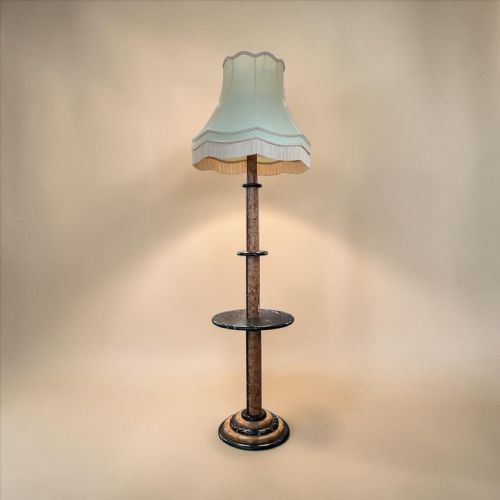
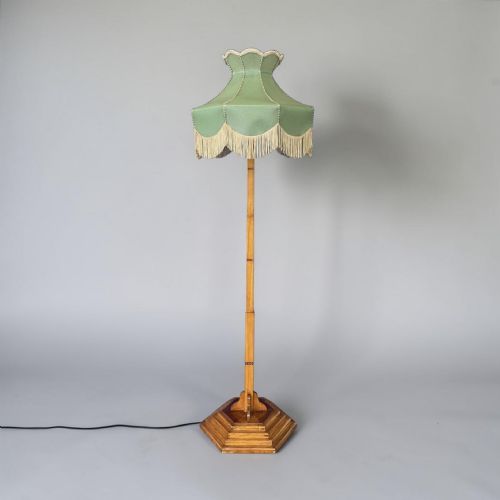
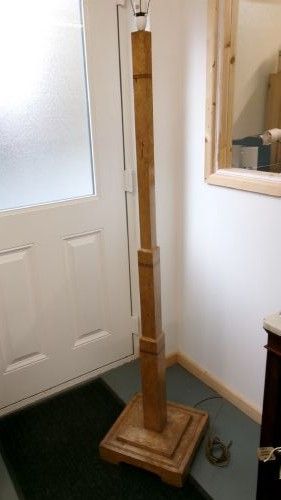
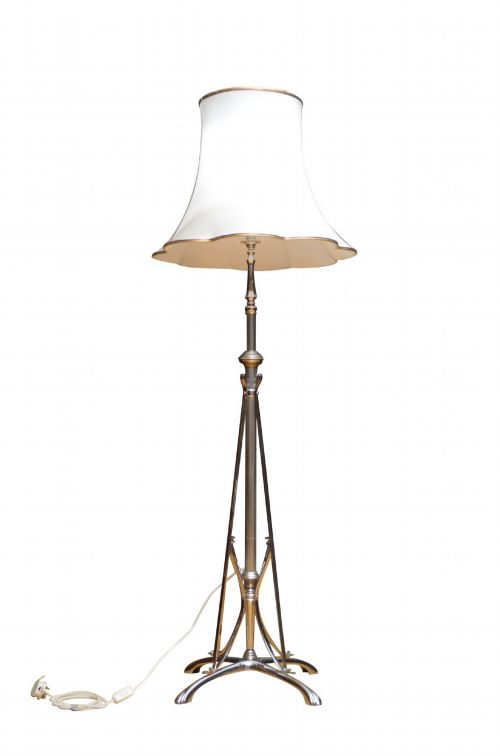
An art deco standing lamp stands upright on the floor to cast light from an elevated position, frequently appearing alongside occasional furniture or seating. These tall fixtures embody the design ethos of the interwar years through stepped profiles and clean vertical lines.
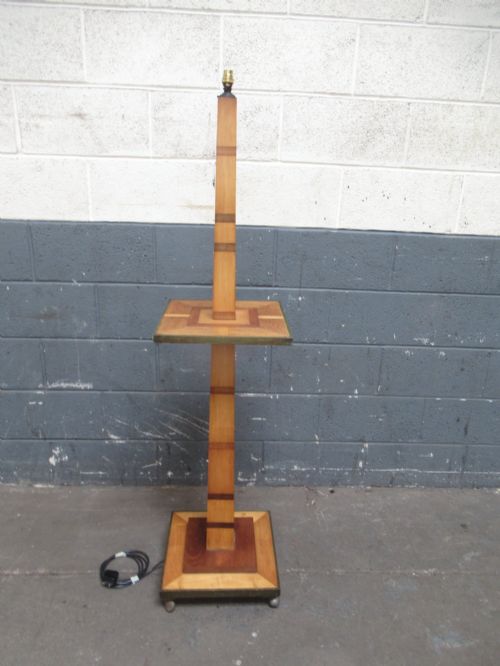
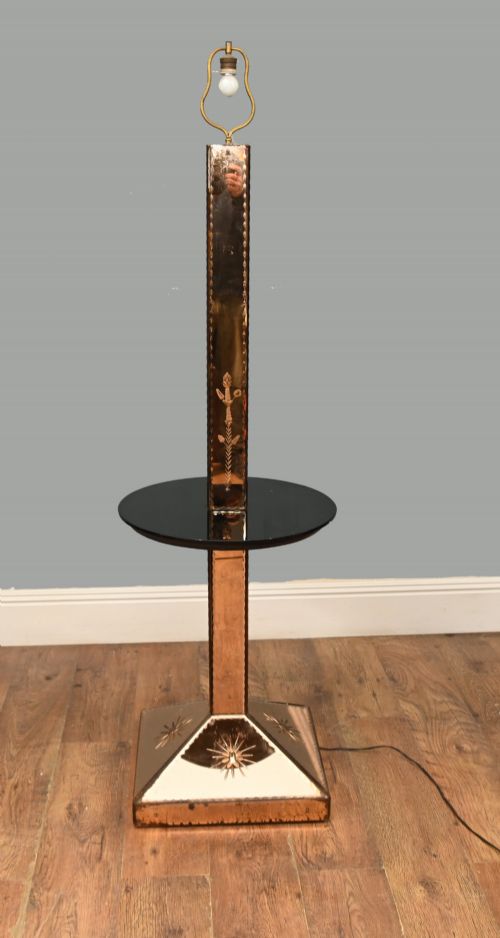
The versions met most often on this page date from the nineteen-twenties and nineteen-thirties, aligning with the height of the movement. Alongside traditional upright standards, variants incorporate integrated tables or glass surfaces designed for practicality in compact modern interiors.
Materials and construction
Maker workshops built these floor-standing fixtures using a combination of dense hardwoods like walnut, oak, and mahogany alongside reflective metals such as brass and chrome. Timber elements often highlight rich grain patterns through veneering techniques, while metal components provide structural support and adjustable mechanisms.
Additional textures arrive through fabric shades, solid marble bases, and glass inserts that complete the assembly. These diverse materials are joined securely to maintain stability at height while celebrating the industrial and natural textures favoured by period designers.
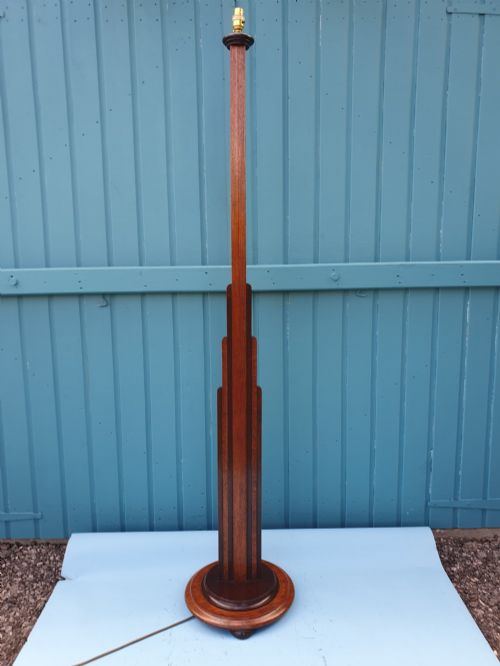
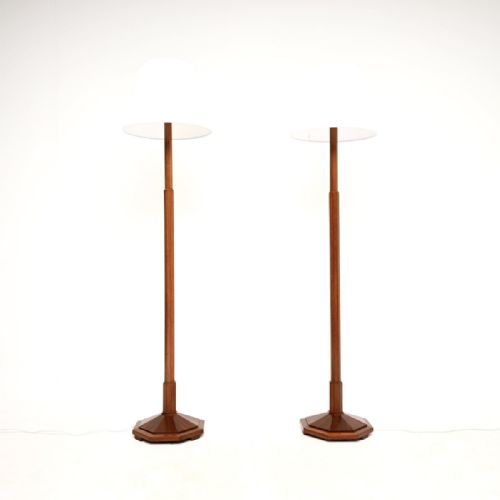
Listings feature standard lamps constructed from brass, oak, walnut, chrome, and marble across the nineteen-twenties and nineteen-thirties.
Assessing the execution
Quality rests upon the selection of timbers and the precision of the metalwork, where superior examples exhibit carefully matched wood veneers and substantial, well-balanced metal bases. The harmony between the vertical shaft and any attached shelving or functional surfaces dictates the visual cohesion of the piece.
Finer items display thoughtful detailing in stepped architectural motifs or integrated adjustment fittings that operate smoothly. Conversely, lesser examples rely on simpler construction without the refined proportions and material depth defining the top of the range.
Harry and Lou Epstein·Hille·Majorelle·Heals
The Art Deco Standing Lamp Glossary
- Standard lamp
- A tall floor-standing lamp designed to illuminate a room from a raised bulb position. This term is frequently used interchangeably with floor lamp in British antique inventories.
- Torchiere
- A floor lamp directing light upwards toward the ceiling to create diffuse ambient illumination. These often feature decorative bowls or uplighter configurations.
- Odeon style
- An aesthetic inspired by cinema architecture of the era, characterised by concentric stepped tiers and skyscraper silhouettes. It imparts a theatrical verticality to wooden and metal standards.
- Amsterdam School
- A twentieth-century architectural and design movement originating in the Netherlands, known for expressive brickwork, organic timber forms, and rich metal detailing. Pieces in this style share affinities with contemporary art deco work.
- Veneer
- A thin layer of figured wood applied over a secondary timber core to display decorative grain patterns. Walnut and oak veneers are common on period stands.
Art Deco Standing Lamp: Frequently Asked Questions
How do I wire an antique floor lamp?
Safety standards require rewiring older lighting fixtures with modern insulated flex and an appropriately earth-wired lampholder. A professional electrician can update the internal wiring while retaining the original exterior components.
Preserving the original switch or plug top can be balanced with modern safety by concealing certified wiring within the existing hollow stem.
What is the difference between a standard lamp and a torchiere?
A standard lamp typically employs a side-facing shade to cast light outwards for reading or general tasks. A torchiere directs its beam straight up toward the ceiling for indirect ambient glow.
Both formats utilise tall vertical shafts resting on weighted bases to ensure stability across the floor space.
Where should I place an art deco standing lamp?
These lamps suit corners of reception rooms or beside armchairs where their vertical height fills empty space effectively. Models incorporating small tables function well beside seating areas to hold drinks or books.
Allowing adequate clearance around the base prevents accidental tipping and showcases the stepped architectural profiles.
How do I clean wooden and metal lamp bases?
Polishing wooden standards with a quality beeswax nourishes the grain without building up heavy residue. Metal sections in brass or chrome benefit from gentle dusting and occasional cleaning with non-abrasive metal care products.
Avoiding harsh chemical solvents protects the original patination accumulated over decades of use.