


Art Deco Silver Cooler
An art deco silver cooler brings geometric lines and gleaming hospitality to any room, holding ice or wine with serious style.
Art Deco Silver Cooler
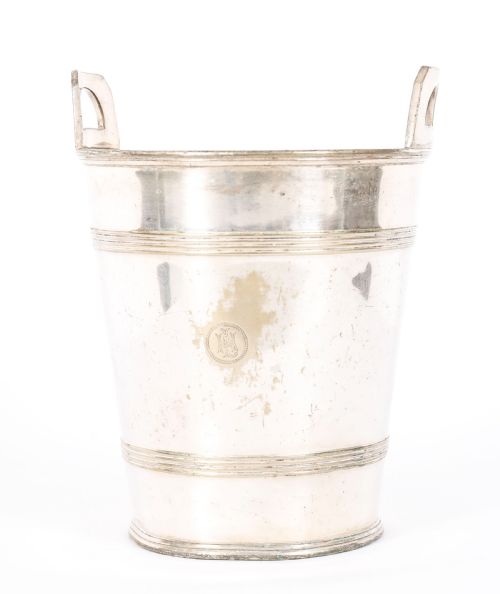
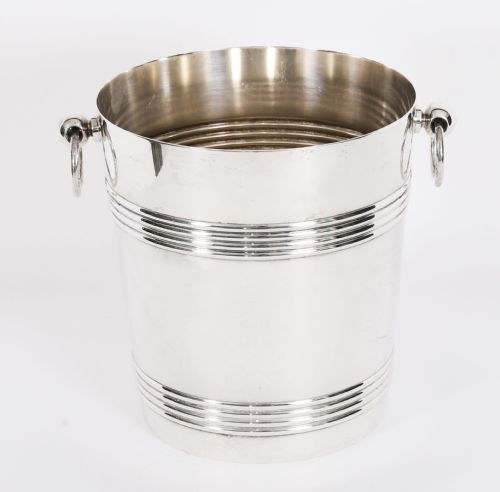
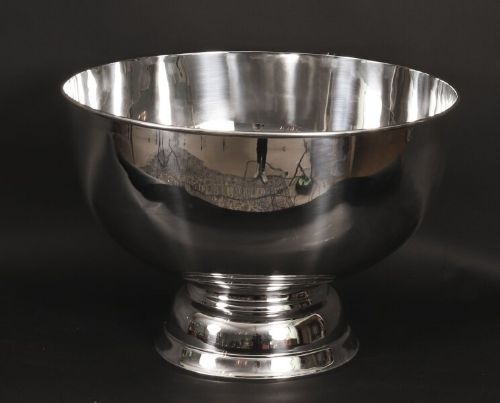
When you search for an art deco silver cooler, you find functional vessels designed to chill wine, champagne, or store ice for entertaining. The objects on this page take the form of wine coolers, champagne buckets, and ice buckets originating mainly from the early twentieth century.
Most examples belong to the Art Deco style, though Scandinavian Modern pieces also appear. Forms range from standard single-bottle buckets and floor-standing coolers to multi-bottle vessels and specialised ice servers.
Makers and manufacturers span British, French, and European workshops. Buyers encounter both compact ice buckets with liners and large champagne coolers designed for grand hospitality.
How they were made
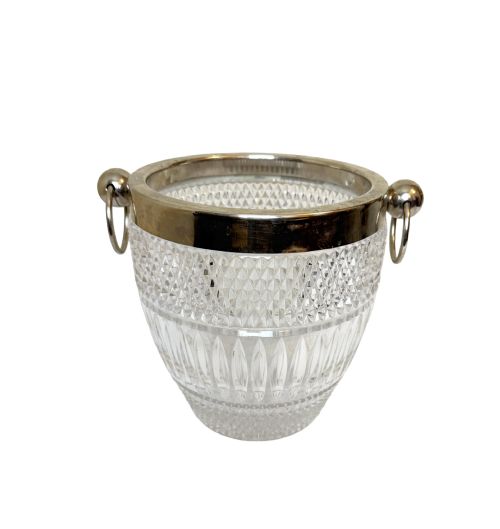
Makers utilised silver plate, silver-plate, and metal as the primary foundational materials for bodies and mounts, frequently combining them with cut glass, cut crystal, and Bakelite handles or accents. Plating was applied over base metals such as copper to achieve a bright, reflective finish.
Vessels incorporated heavy glass or crystal liners to hold ice securely against the metal exterior. Construction methods relied on precise stamping, spinning, and soldering to create the characteristic geometric shapes and stepped profiles.
Object types include floor-standing champagne coolers, caviar ice servers, and cocktail shakers alongside standard wine buckets.
What varies in quality
Distinctions in quality rest upon the weight and gauge of the metal used in the body, which dictates rigidity and durability over decades of use. Substantial walls and heavy bases separate standard production items from grander workshop pieces.
The crispness of geometric detailing and the integrity of applied mounts or handles also mark differences in grade. Makers known for luxury production maintained higher standards in plating thickness and crystal cutting.
Hutton Sheffield·Christofle·Mappin & Webb·WMF·Elkington·Luc Lanel·Hukin & Heath·St Medard·Ercuis·Lee and Wigfull
The Art Deco Silver Cooler Glossary
- Silver plate
- A thin layer of silver bonded to a base metal, usually copper or an alloy. This technique allowed makers to produce impressive vessels at a lower cost than solid silver.
- Cut crystal
- High-clarity glass shaped by precise wheel-cutting to create faceted patterns that refract light. It appears in liners and buckets alongside metal components.
- Bakelite
- An early synthetic plastic utilised for heat-resistant or decorative handles and knobs. Its rich colour and durability suit the geometric aesthetic.
- Gallia
- A high-grade silver-plate alloy developed by Christofle for special lines of tableware and decorative objects. Pieces bearing this mark denote high manufacturing standards.
Art Deco Silver Cooler: Frequently Asked Questions
How do I clean an art deco silver cooler?
Wash the interior with warm soapy water and a soft cloth, avoiding abrasive pads that scratch the metal surface.
Dry thoroughly with a soft towel to prevent water spots and tarnishing on the silver-plated exterior.
Can I use these coolers for daily dining?
These vessels were built for regular hospitality and remain fully functional for holding ice or chilling bottles during meals.
Take care to lift heavy pieces by their bases rather than relying solely on handles if the vessel is filled with ice and water.
How do I identify the period of a cooler?
Examine the object for maker marks, registry numbers, and stylistic cues such as stepped geometric motifs or streamlined silhouettes characteristic of the early decades of the twentieth century.
Materials like Bakelite and cut crystal also point towards specific manufacturing eras.
What is the difference between a wine cooler and an ice bucket?
Wine coolers generally feature taller, deeper bodies designed to accommodate a bottle alongside ice and water.
Ice buckets tend to be wider and shorter, frequently including removable glass liners and matching tongs for serving.