




Art Deco Sign
An art deco sign brings geometric discipline and striking lettering into a room, serving as both utilitarian communication and bold interior sculpture.
Art Deco Sign
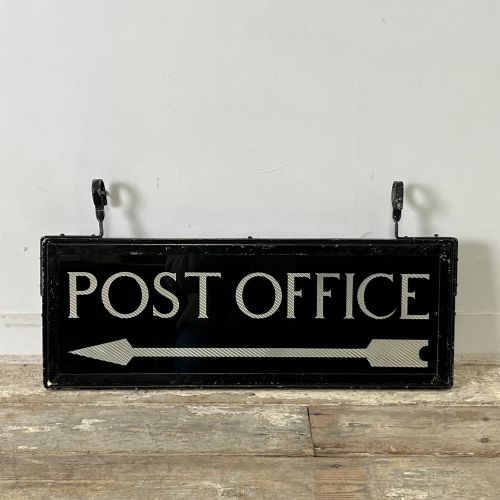
When you search for an art deco sign, you encounter pieces that merge early twentieth-century graphic lettering with period materials. These objects range from architectural cinema markers and double-sided post office direction indicators to reverse-painted glass panels created for commercial establishments.
The selections on this page draw heavily from the 1920s and 1930s, reflecting the era's taste for streamlined industrial design and commercial visibility. While many items originated as functional wayfinding or shop windows, today they function as wall-mounted focal points.
Materials and construction
Makers utilised heavy plate glass, brass, and timber as the primary substrates for these displays. Reverse-painting techniques applied pigments directly to the rear of the glass, protecting the vibrant colours and metallic leaf from surface wear.
Metal components often combined cast bronze or brass with hand-lettered elements, creating tactile contrast between raised frames and smooth glazed panels. Structural backing relies on durable hardwoods and iron brackets designed to withstand daily commercial use.
Art Deco Sign Retail Price Guide 2026
Typical asking prices for art deco sign among the pieces listed under this phrase on Sellingantiques today, from the lower quarter to the upper quarter. They describe what is for sale here now, not the wider market.
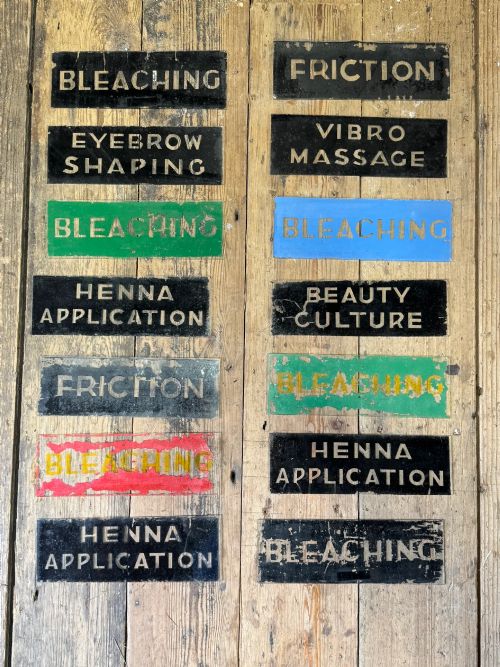
Several panels preserve the specific commercial trades of the 1930s, advertising hairdressing, beauty, and confectionery establishments.
Judging quality and execution
Quality rests upon the precision of the lettering and the integrity of the glass or metal substrate. Hand-painted surfaces showing deliberate brush control and well-preserved leaf work stand apart from routine commercial production.
The weight of the materials, the clarity of the reverse-painted layers, and the preservation of original mounting hardware determine the distinction between standard utilitarian items and superior examples of period craftsmanship.
Eugene Canneel·Daum·G Vallon·Elizabeth Graydon-Stannus·Charlotte Rhead·P.M.Favre·L.GERFAUX·D.H. Chiparus·Majorelle·Sabino
The Art Deco Sign Glossary
- Reverse-painted glass
- A technique where the design is applied to the back of a glass panel so that it is viewed through the front. This method imparts a deep, glossy sheen to the finished lettering.
- Tubelined
- A ceramic decoration method using a fine nozzle to trail lines of clay slip onto a body before glazing. It creates raised borders that contain pools of coloured enamel.
- Opalescent glass
- A milky, translucent glass that diffuses light and exhibits subtle shifts in colour. It appears frequently in decorative vessels and lighting components from the period.
- Animalier
- A nineteenth and twentieth-century artistic focus on the realistic portrayal of animals. Sculptures in this style often capture wildlife in dynamic motion.
- Alabaster
- A fine-grained, translucent stone used for carved figures and lamp bases. Its natural veining gives sculptural forms a soft, luminous quality.
Art Deco Sign: Frequently Asked Questions
How were glass signs originally displayed?
Commercial glass panels were typically fitted into shop windows or suspended in doorways to guide patrons. They relied on natural daylight or interior illumination to make the reverse-painted lettering legible from the street.
Today, mounting them securely away from direct sunlight preserves the pigments and prevents thermal stress on the aged glass panels.
Can these signs be hung on modern walls?
Most directional and shop panels feature original metal brackets or robust wooden frames suitable for hanging. Standard picture wire is rarely sufficient for heavier glass and brass constructions.
Consulting a professional framer ensures that the weight is distributed properly across structural wall studs without placing undue strain on the antique frame.
How do I clean reverse-painted glass?
Dust the surface gently with a dry, soft microfiber cloth to remove loose particles. Avoid liquid cleaners, ammonia, or abrasive sponges that might seep behind the glass and dissolve the original paint.
Moisture management is critical because trapped water can lift the historical pigments away from the glass substrate permanently.
What defines the typical colour palette?
The palette relies heavily on rich golds, deep blacks, muted creams, and contrasting metallic tones. These hues were chosen to maximise contrast and ensure readability in busy commercial environments.
Over decades, the paints develop a stable patina that softens the high-contrast geometry characteristic of the interwar period.