




Art Deco Shop Display
These pieces of art deco shop display bring the striking geometry and utilitarian elegance of twentieth-century commerce straight into modern interiors.
Art Deco Shop Display
An art deco shop display encompasses the cabinets, counters, stands, and mannequins utilised by merchants during the interwar decades to showcase goods to the public. These survivals bridge commercial utility and decorative design, reflecting the streamlined aesthetics of the 1920s and 1930s.
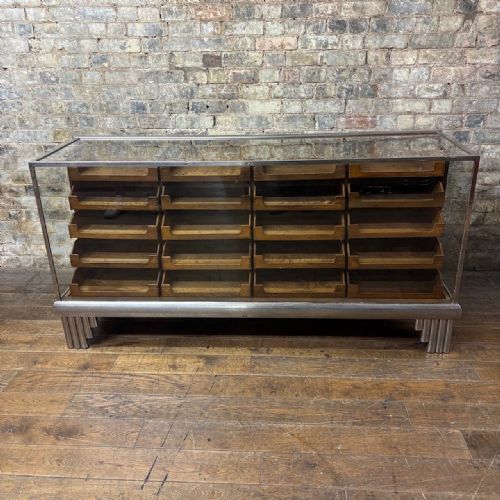
Buyers encounter a variety of forms on this page, ranging from large oak haberdashery counters and tall ebonised tower cabinets to brass-framed glass vitrines. Advertising display pieces and painted plaster mannequins also appear, having originated in high-end department stores and specialist boutiques.
The selection leans heavily on oak, mahogany, and glass construction, alongside metal frames in brass, aluminium, and steel. These pieces served to organise merchandise while projecting a modern, prosperous image to shoppers.
Materials and Construction
Makers built these fixtures using sturdy timbers like oak and mahogany, often pairing them with ebonised finishes or applying limed treatments to highlight the grain. Glass panels permitted maximum visibility from multiple angles within the retail floor.
Metals such as brass, chrome, steel, and aluminium formed structural frames, slender shelf supports, and decorative mounts. Plaster, fabric, and paint brought form and colour to the busts and mannequins designed to model clothing and accessories.
Art Deco Shop Display Retail Price Guide 2026
Typical asking prices for art deco shop display among the pieces listed under this phrase on Sellingantiques today, from the lower quarter to the upper quarter. They describe what is for sale here now, not the wider market.
Several items on this page include meteorological barometers that once advised shoppers on approaching rain while they browsed.
Assessing Quality
The distinction between standard commercial fittings and exceptional items lies in the integration of materials and the sophistication of the hardware. Superior examples display meticulous joinery, substantial timber sections, and custom metalwork rather than plain sheet construction.
Makers' marks and branded provenance elevate certain counters and cabinets significantly, connecting utility pieces directly to prominent department stores or confectionery houses. The survival of original glass panes, functional sliding doors, and untouched surface finishes maintains the integrity of the piece.
Dudley & Co·Saml Elliott & Sons·Pollards·Pierre Iman·Christian Dior
The Art Deco Shop Display Glossary
- Haberdashery cabinet
- A specialised multi-drawer shop unit with glass fronts, originally designed to store small sewing items and textiles for customer inspection.
- Vitrine
- A glass-sided display cabinet intended for the prominent exhibition of luxury goods or decorative objects.
- Ebonised wood
- Timber treated with a dark stain or finish to imitate the appearance of expensive ebony.
- Stormoguide
- A specialised aneroid barometer used in retail settings to indicate atmospheric pressure trends alongside weather forecasts.
Art Deco Shop Display: Frequently Asked Questions
How were haberdashery cabinets used?
These counters allowed shop assistants to display ribbons, buttons, and fabrics neatly behind glass panels while keeping larger stocks organised in shallow drawers underneath. Customers could easily inspect small goods without handling them directly.
Today, these same cabinets function well in domestic settings for organising collections, jewellery, or tableware while providing a distinct interior focal point.
What metals are typical for frames?
Makers utilised brass, chrome-plated steel, and aluminium to create slender, robust supports that maximised glass viewing areas. These metals brought industrial strength and a bright metallic sheen suited to commercial interiors.
Over time, unlacquered brass develops a natural patina, while chrome and aluminum retain a brighter, more reflective surface if maintained.
How do I fit a large cabinet at home?
Large display counters and tower cabinets require careful measurement of room access points, as their solid wood and glass construction makes them heavy and fixed in proportion. Positioning them away from direct sunlight helps protect interior timber and displayed items.
Pairing commercial display furniture with domestic seating or artwork softens the industrial origin and integrates the piece into a living space.