

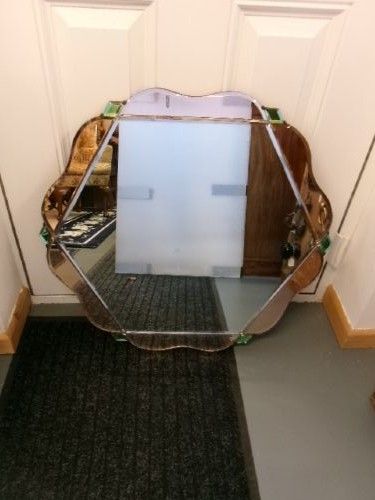
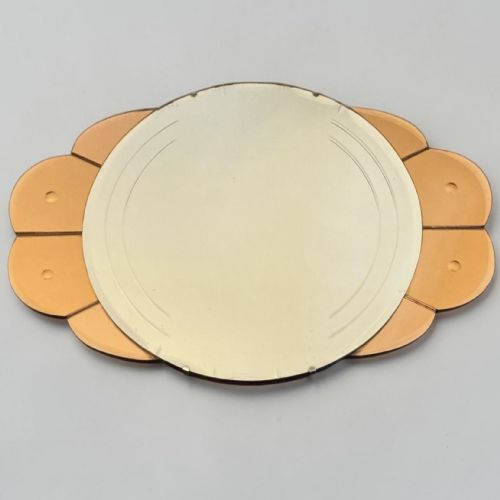


Art Deco Scalloped Mirror
An art deco scalloped mirror brings geometric glamour and curved glass to a room, offering the clean lines characteristic of the 1920s and 1930s.
Art Deco Scalloped Mirror
An art deco scalloped mirror typically dates from the 1920s or 1930s and functions as a striking decorative wall piece, overmantel fixture, or tabletop tray. These pieces combine geometric forms with curved edges, often featuring distinct shaped perimeters that define the aesthetic of the period.
Buyers encountering this selection will frequently find wall mirrors, overmantel versions, and smaller vanity or display pieces. Origins span English and French workshops, utilising the signature decorative vocabulary of the interwar decades.
Materials and construction methods
The construction of these pieces relies heavily on glass, silvered glass, and specialised tinted panes such as peach glass. Frames may incorporate wood or metal, while silver plate appears frequently on tray and plateau formats.
Techniques involve precise cutting of curved and scalloped perimeters alongside specialised etching and bevelling. Many examples employ frameless designs or integrated wooden backing with original hanging chains.
Art Deco Scalloped Mirror Retail Price Guide 2026
Typical asking prices for art deco scalloped mirror among the pieces listed under this phrase on Sellingantiques today, from the lower quarter to the upper quarter. They describe what is for sale here now, not the wider market.
Listings span the 1920 and 1930 periods, incorporating materials such as peach glass, silver plate, and wood alongside standard mirror glass.
Judging quality and craftsmanship
Quality in these mirrors rests upon the precision of the glass cutting along the scalloped edges and the clarity of the silvering. Finer examples display clean bevels and deliberate geometric panel detailing rather than plain, uniform planes.
The incorporation of specialist tinted glass, such as peach or amber panel accents, elevates certain pieces above standard clear glass iterations. Superior construction is further indicated by robust wooden backings and intact original hardware.
The Art Deco Scalloped Mirror Glossary
- Overmantel mirror
- A large mirror designed specifically to hang above a fireplace mantelpiece. These pieces often span a wider horizontal format to anchor the room.
- Bevelled glass
- Glass with an angled edge cut and polished to a specific width. This technique catches the light and adds depth to the mirror face.
- Peach glass
- A tinted mirror glass popular in the interwar period, imparting a warm pinkish-orange tone to the reflection. It is characteristic of stylish 1930s interiors.
- Silver plate
- A thin layer of silver applied to a base metal object, commonly seen on trays and plateau surrounds from the 1920s.
- Vanity mirror
- A smaller mirror intended for a dressing table or vanity unit, sometimes equipped with an easel back for freestanding use.
Art Deco Scalloped Mirror: Frequently Asked Questions
How do I date an art deco scalloped mirror?
Dating relies heavily on materials, construction methods, and stylistic cues recorded in the 1920 and 1930 periods. Details such as peach glass tints and specific edge cuts help place the piece correctly.
Examining the backing materials and hanging hardware also provides context, as original wooden backs and chains often accompany pieces from the interwar decades.
Where should I hang an overmantel mirror?
An overmantel mirror is traditionally placed directly above a fireplace to reflect light and anchor the decorative space of a room. Its proportions are suited to this central architectural location.
Ensure the wall fixings match the weight of the mirror and wooden backing to support the piece securely.
What is the difference between wall and vanity mirrors?
Wall mirrors are designed to be mounted securely onto vertical surfaces using chains or brackets. They provide permanent visual impact within a room layout.
Vanity mirrors are smaller, often featuring easel stands or tray formats, intended for tabletop use on dressing surfaces.
How do I care for silvered glass?
Silvered glass requires gentle cleaning with a soft, dry cloth to avoid damaging the reflective backing over time. Avoid harsh chemical cleaners that can seep into the edges.
Keep the mirrors in stable environmental conditions away from excessive moisture to preserve the original silvering and glass integrity.