



Art Deco Sapphire Trilogy
An art deco sapphire trilogy ring offers a distinct arrangement of three stones that captures the geometric spirit of the period.
Art Deco Sapphire Trilogy
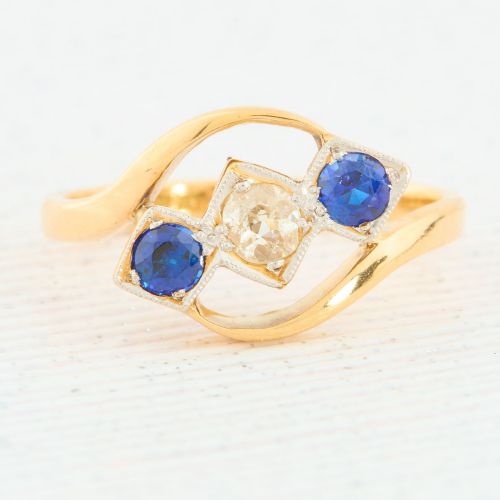
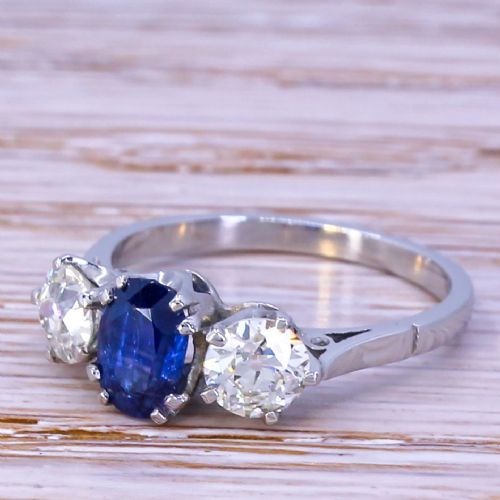
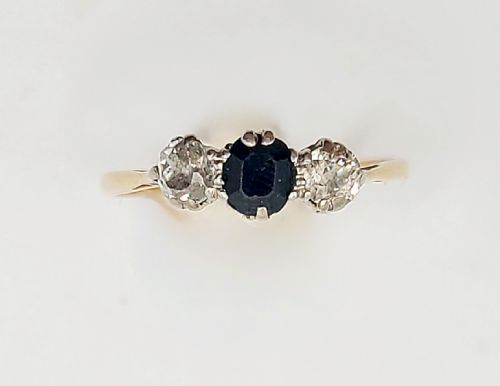
An art deco sapphire trilogy ring presents a central gem flanked by two matching stones, or three stones of balanced proportion, set across the finger. These pieces date from the 1920s, 1930s, and 1940s, embodying the geometric design principles of the era.
The most common version met on this page pairs a deep blue sapphire with old cut diamonds, mounted in either platinum or 18ct gold. Variations include pink sapphires, Burmese origins, and twist or crossover settings that alter the silhouette.
Quality Variations
The distinction between tiers rests on stone weight, clarity, and geographic origin, such as Burmese or Ceylon provenance for the sapphires. Heavier carat weights and well-matched diamond pairings elevate the standing of a piece.
Execution of the metalwork, including crisp geometric detailing and secure setting integrity, separates standard workshop production from finer examples.
The site listings feature rings spanning the 1920s, 1930s, and 1940s, constructed in platinum, 18ct gold, 15ct gold, and 9ct gold.
The Art Deco Sapphire Trilogy Glossary
- Trilogy ring
- A ring featuring three distinct stones set in a row, often symbolising past, present, and future.
- Old cut diamond
- A precursor to the modern brilliant cut, featuring a smaller table, higher crown, and distinct culet facet.
- Millegrain
- A decorative technique involving a line of tiny beaded metal beads along the edges of the setting.
- Transition cut diamond
- A stone cut during the shift from old European cuts to modern brilliant cuts, spanning the early twentieth century.
- French cut
- A square or rectangular gemstone cut characterised by a high table and triangular facets extending to the corners.
Art Deco Sapphire Trilogy: Frequently Asked Questions
How do platinum and gold settings differ?
Platinum settings offer high durability and a bright white finish that allows fine claw work and millegrain detailing. Gold settings, including 18ct and 9ct variations, provide warm tones that alter the visual weight of the ring.
Many period pieces combine both metals, utilising platinum for the stone heads and gold for the band.
Are all sapphires in these rings blue?
While traditional blue sapphires dominate the selection, pink sapphires also appear in period pieces. Burmese and Ceylon origins are recorded among the stones.
Colour saturation varies from deep navy to vivid cornflower or soft pink shades, depending on the origin of the sapphire.
How should an antique ring be worn daily?
Daily wear requires care to protect the delicate platinum or gold settings and the older gemstone cuts. Regular checks by a jeweller help ensure the claws remain secure.
Removing the ring during manual tasks prevents unnecessary impact on the stones and the structural metalwork.