





Art Deco Salver
An art deco salver brings geometric discipline and refined hospitality to any table, offering a sleek surface for serving drinks.
Art Deco Salver
An art deco salver is a formal serving tray designed during the early decades of the twentieth century to accommodate drinks and glassware. The form prioritises clean lines, architectural symmetry, and geometric borders over Victorian ornamentation.
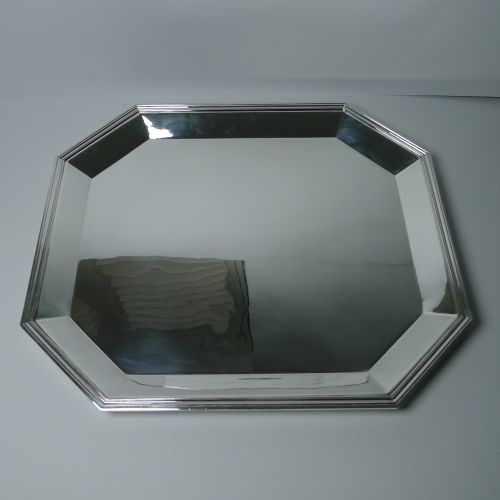
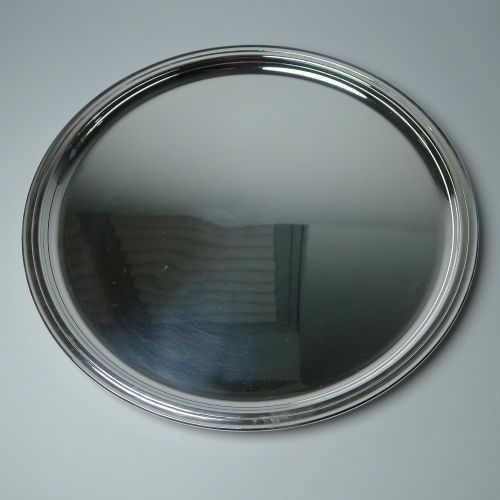
Buyers encountering this group will mostly find circular or octagonal silver-plated and sterling silver drinks trays dating from the nineteen-twenties through to nineteen-forty. Occasional pieces incorporate contrasting materials such as wood or opalescent glass to create striking visual focal points.
Materials and construction
Silversmiths utilised sterling silver and durable silver plate applied over base metal foundations, shaping the metal through spinning, pressing, and hand-finishing techniques. Engine turning frequently decorated the central fields with precise, repeating mechanical patterns.
Makers integrated sturdy handles directly into the rim designs or mounted contrasting glass panels into metal frames. The structural integrity relied upon heavy-gauge metalwork capable of supporting weighted decanters and glassware without flexing.
Art Deco Salver Retail Price Guide 2026
Typical asking prices for art deco salver among the pieces listed under this phrase on Sellingantiques today, from the lower quarter to the upper quarter. They describe what is for sale here now, not the wider market.
Distinguishing quality
Superior quality rests in the crispness of the geometric stamping, the weight of the metal blank, and the integrity of the silver plating. Better workshops employed heavier gauges of metal that resisted warping and maintained rigid boundaries.
The distinction between standard commercial production and finer output also lies in the execution of decorative details, such as engine-turned engraving or scalloped rims, which required skilled artisan labour rather than simple machine pressing.
Orfèvrerie Christofle·Walker & Hall·James Dixon & Sons·John Collyer & Co·René Lalique·Elkington
The Art Deco Salver Glossary
- Salver
- A flat tray traditionally used for serving food or drinks. In this period, the term specifically denotes decorative trays intended for cocktails and beverages.
- Engine turned
- A mechanical engraving technique that produces intricate, geometric patterns of fine lines across a metal surface. This decoration was popular for reducing glare and hiding minor surface wear.
- Silver plate
- A thin layer of pure silver fused to a base metal substrate such as nickel brass or copper. Most domestic serving pieces utilised this method to achieve the appearance of solid silver at a lower cost.
- Opalescent glass
- Glass that displays milky, milky-blue, or fire-coloured light effects due to the addition of bone ash or chemical opacifiers during manufacture. René Lalique utilised this material for high-art decorative salvers.
Art Deco Salver: Frequently Asked Questions
How were art deco salvers used?
These trays served primarily for presenting cocktails, spirits, and glassware to guests during formal or social gatherings. They functioned both as portable serving surfaces and as decorative centrepieces on sideboards and cocktail cabinets.
The raised rims and sturdy handles ensured that glassware remained secure while being carried between rooms. Many households displayed them permanently when not in use to reflect light and showcase polished metalwork.
How do I care for a silver-plated tray?
Regular dusting with a soft, dry cloth helps maintain the shine without abrading the thin silver layer. When polishing is necessary, use a specialist silver cream formulated specifically for plated items rather than harsh abrasive pastes.
Store the tray in a dry environment away from direct sunlight and dampness to prevent tarnishing. Avoid contact with rubber bands or acidic substances that can react chemically with the metal surface.
What shapes are typical for these items?
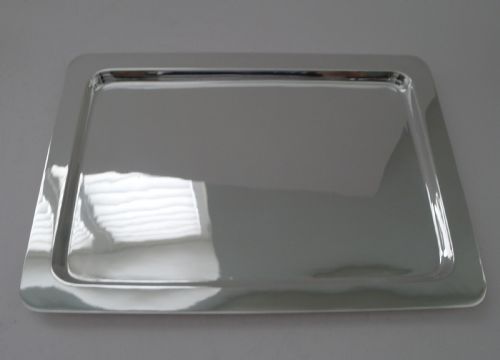
Circular and octagonal formats dominate the selection, reflecting the geometric preferences of the modernist design movement. Square profiles also appear frequently, often featuring integrated handles and stepped borders.
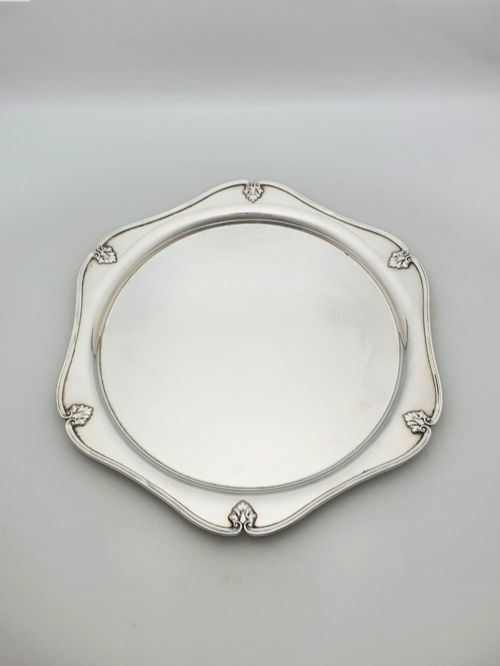
Some exceptional variations incorporate distinct contours like scalloped edges or moulded glass insets. These alternative silhouettes added architectural variety to the standard domestic drinks service.