


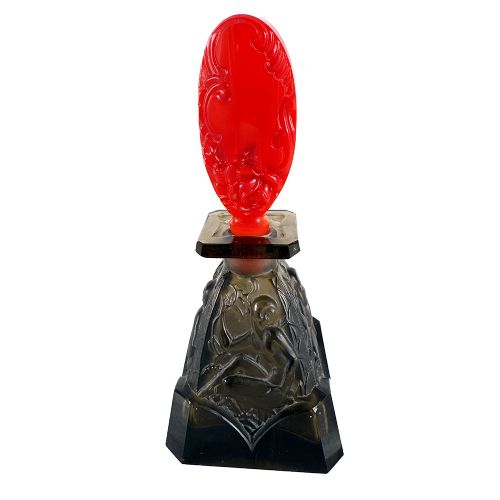


Art Deco Perfume Flask
An art deco perfume flask brings geometric flair and tactile glass to a dressing table, combining utility with miniature sculpture.
Art Deco Perfume Flask
An art deco perfume flask typically takes the form of a scent bottle, perfume bottle, or snuff bottle, emerging predominantly from the 1920s and 1930s with occasional examples from the 1910s. These vessels range from moulded, opalescent, and frosted glass creations to ceramic or blue glass bodies fitted with metal mounts.
Collectors frequently encounter pieces from French and Czechoslovakian makers alongside English silver-topped designs. The selection balances delicate atomizers with substantial carved and moulded vessels designed for daily vanity use.
Materials and Technique
Makers utilised clear, frosted, opalescent, cut, and moulded glass, often pairing the glass bodies with sterling silver, 18K gold, enamel, tortoiseshell, and paper details. Some pieces feature coloured glass or distinct red staining to accentuate the moulded relief work.
Certain bottles arrive with stubborn, dried remnants of vintage perfume that still release a faint, ghostly scent decades later.
Standard and Execution
Quality rests upon the crispness of the glass moulding, the depth of the cut crystal, and the preservation of delicate surface details like enamel or staining. Pieces bearing signatures from renowned designers command attention through superior sculptural definition.
The integration between metal mounts, such as silver collars or atomizers, and the glass body demonstrates the original craftsmanship. Intact stoppers and well-preserved guilloche enamel elevate the overall execution of the piece.
Karl Palda·Cartier Paris·Henry Perkins·Rene Lalique·Barnsley and Co·Sabino
The Art Deco Perfume Flask Glossary
- Guilloche enamel
- Metal surface decorated with intricate engine-turned geometric patterns beneath a translucent coloured enamel layer. This technique adds depth and light reflection to silver perfume mounts.
- Opalescent glass
- Glass containing ingredients that cause it to milky-blue appear in transmitted light and warm amber in reflected light. Makers employed this to create luminous, otherworldly effects.
- Moulded glass
- Glass formed by pressing molten material into a metal or wooden matrix to create relief decoration. It allowed manufacturers to produce consistent, highly sculptural bottle designs.
- Atomizer
- A mechanical spray mechanism fitted to a perfume bottle, often operated by a bulb and mesh hose. These fittings turned liquid scent into a fine mist.
Art Deco Perfume Flask: Frequently Asked Questions
How do I spot a real art deco flask?
Examine the vessel for characteristic geometric lines, stylised floral motifs, and period materials such as opalescent glass or guilloche enamel.
Signatures or maker stamps etched into the glass base or stamped on the silver mounts provide further confirmation of origin.
Are these flasks meant for daily use?
While originally designed to hold and dispense perfume on a dressing table, many antique flasks are now appreciated primarily as display objects.
Older stoppers and delicate atomizers may not seal perfectly, so contemporary collectors often keep them empty to preserve the interior.
How do I clean an old perfume bottle?
Dust gently with a soft, dry cloth and avoid submerging pieces with paper labels or glued metal mounts in water.
If the interior requires cleaning, rinse carefully with warm water without using harsh chemical solvents that might damage coloured glass or enamel.
What is the difference between frosted and opalescent glass?
Frosted glass has a uniformly matte, acid-etched surface that diffuses light evenly across the vessel.
Opalescent glass shifts in colour depending on the light source, displaying milky blue tones alongside warm amber highlights due to its chemical composition.