



Art Deco Pendant Necklace
An art deco pendant necklace brings geometric precision and bold colour from the interwar years straight to the neckline.
Art Deco Pendant Necklace
An art deco pendant necklace unites the geometric abstraction of the 1920s and 1930s with personal adornment, dropping a focused motif from a delicate chain.
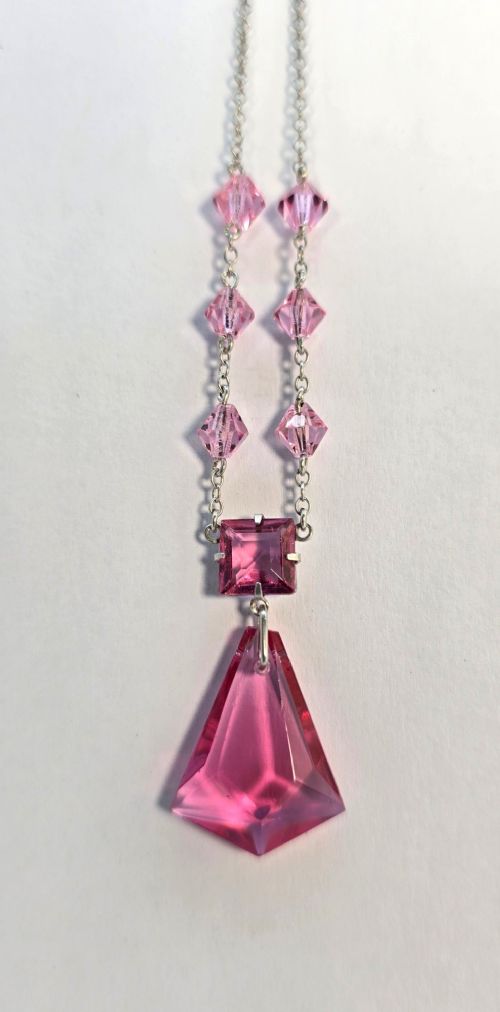
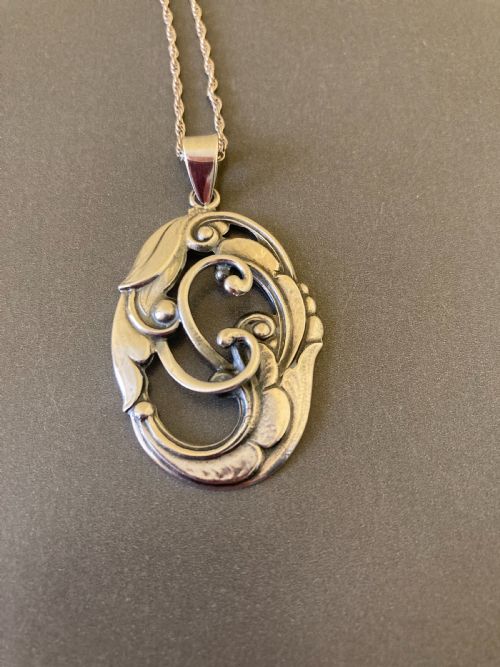
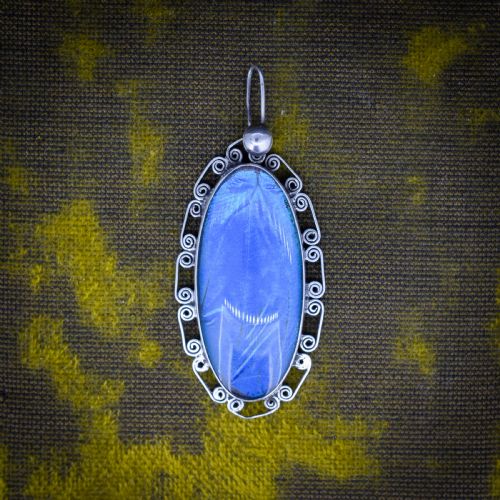
The most common versions on this page pair stamped or cast silver with butterfly wing panels, moulded glass, or bright paste stones.
Makers ranged from major French glass artists to small silversmiths working in Britain, Denmark, and continental Europe during the period.
How they were made
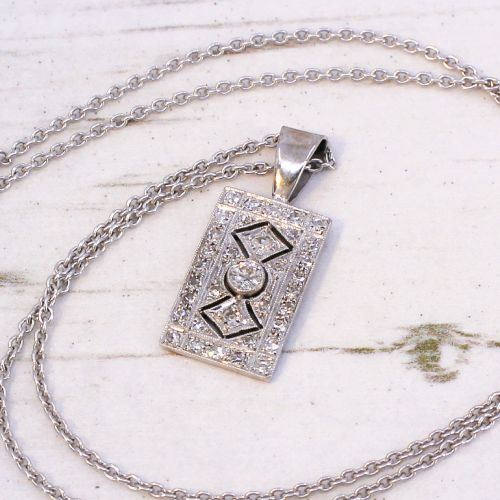
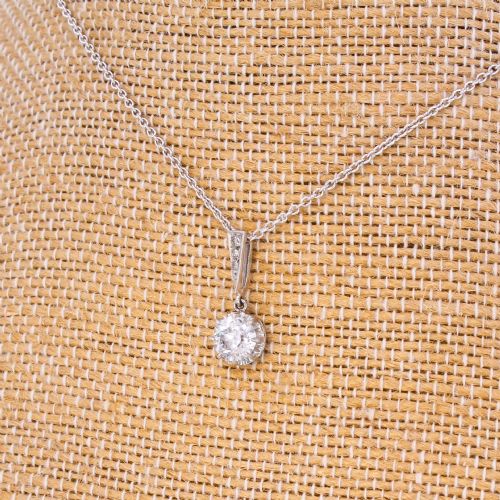
Platinised metals, platinum, and white gold provide the cooler foundation for diamond-set clusters and architectural mountings.
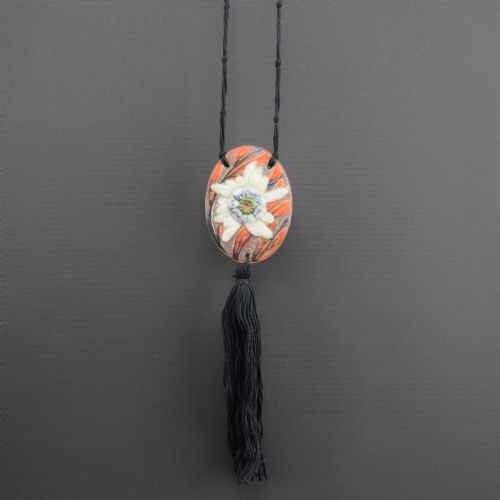
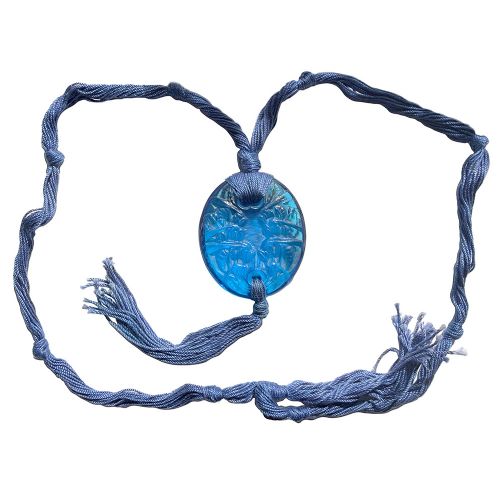
Moulded glass techniques, such as pate de verre, allowed makers like Lalique and Argy Rousseau to achieve translucent colour and tactile relief.
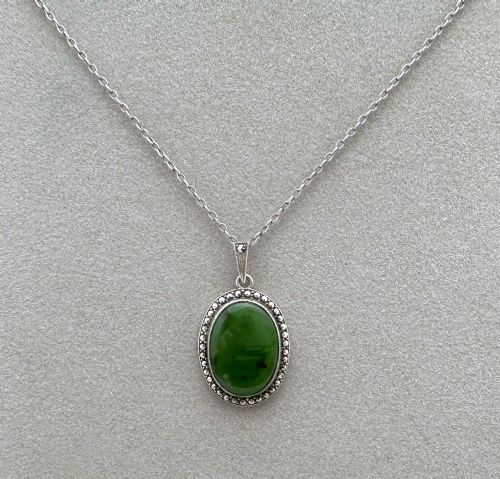
Silver work combines with organic materials like shagreen, rock crystal, and carved jade, assembled by hand with bezel or claw settings.
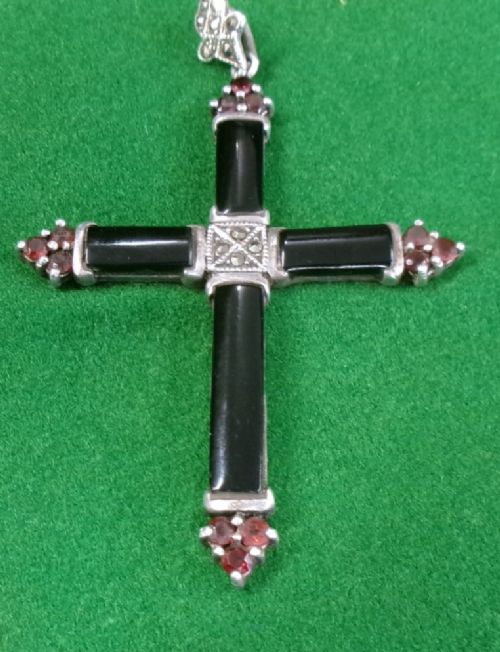
Pendant forms range from geometric diamond drops and floral rock crystal plaques to moulded glass wasps and sea thistles.
What varies in quality
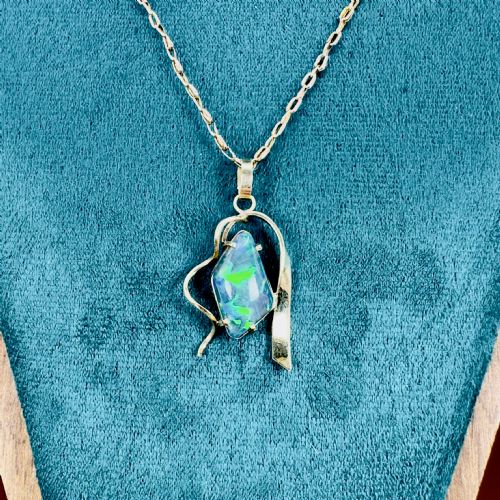
The choice of central gemstone or glass element dictates the tier, moving from moulded press-glass to large aquamarines, opals, and old-cut diamonds.
Execution of the metalwork separates workshop standards, distinguishing clean millegrain edges and pierced platinum mounts from simpler stamped silver frames.
Argy Rousseau·Rene Lalique·Paul Brandt·Knoll and Pregizer·Thomas L Mott·Charles Horner
The Art Deco Pendant Necklace Glossary
- Pate de verre
- A glass-making method where crushed glass is packed into a mould and fused in a kiln. This technique creates dense, textured pieces with shaded colour.
- Millegrain
- A decorative border of tiny raised metal beads along the edges of a setting. It softens the transition from metal to stone with a delicate texture.
- Marquise
- A boat-shaped gemstone cut with pointed ends. This format maximises perceived carat weight and fits symmetrical geometric designs.
- Platinon
- A proprietary white metal alloy used during the interwar period. It offered the appearance of platinum at a lower cost.
Art Deco Pendant Necklace: Frequently Asked Questions
How do I date my pendant necklace?
Examine the materials, mount styles, and any maker marks or hallmarks stamped on the reverse of the setting. Platinum and white gold mountings with calibrated sapphires or old-cut diamonds point directly to the interwar decades.
Simpler silver pieces utilising butterfly wings or moulded glass often bear registry numbers or maker stamps that narrow the production year. Comparing the chain style and clasp mechanism also helps confirm the period of manufacture.
Were these worn daily or for evening?
Original owners wore these pieces for both daytime outings and evening events, depending entirely on the materials used in the drop. Silver and butterfly wing or glass pendants suited daytime dresses, while platinum and diamond drops accompanied formal evening attire.
Many designs bridged the gap by using versatile geometric motifs that caught the light under indoor lighting as well as daylight.
How should I care for delicate glass elements?
Keep moulded glass and pate de verre drops away from ultrasonic cleaners, harsh chemicals, and sudden temperature changes. Wipe them gently with a dry or slightly damp soft cloth after wearing to remove skin oils.
Store each necklace flat or hung separately in a lined box to prevent the glass or soft stones from striking other jewellery.
What is the difference between paste and crystal?
Paste is a heavy, high-refractive lead glass that artisans cut by hand to imitate precious gems like aquamarine, sapphire, and diamond. It was shaped specifically for interwar costume jewellery.
Crystal refers to natural colourless quartz or high-purity glass without the coloured metallic oxides added to paste formulations. Both materials feature prominently in period necklaces for their clarity and brilliance.