

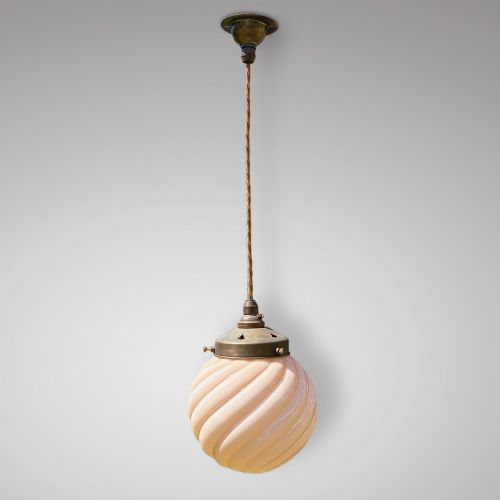
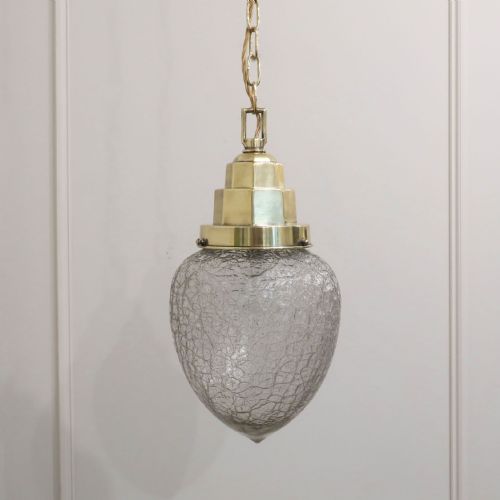


Art Deco Pendant Fixture
These art deco pendant fixtures bring architectural form and diffused light to a room, holding their appeal through clean lines and distinctive period glass.
Art Deco Pendant Fixture
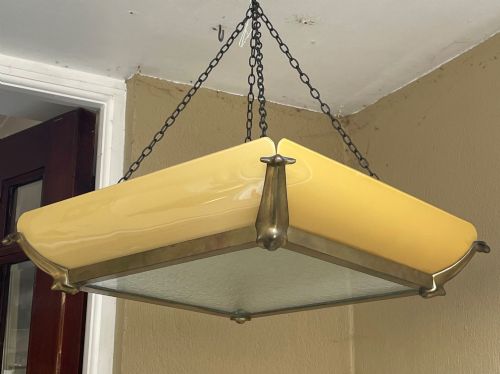
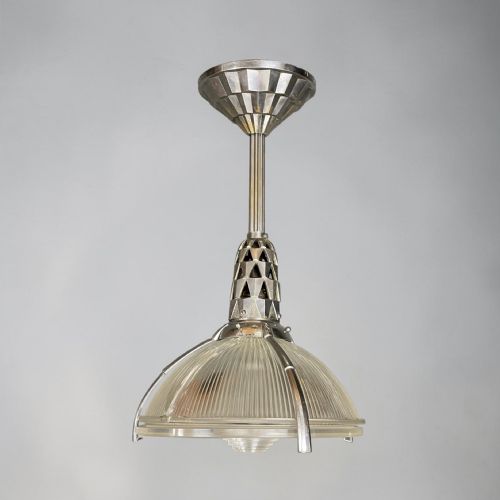
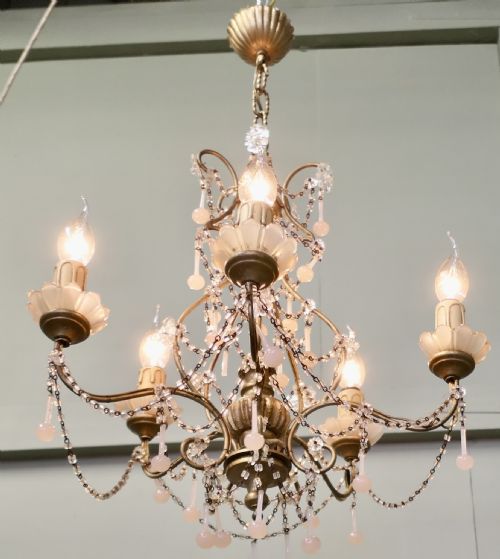
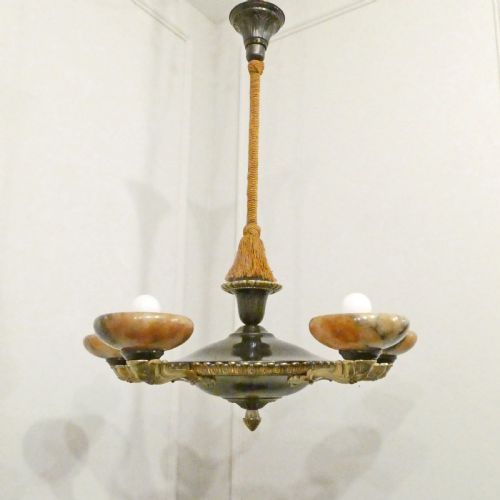
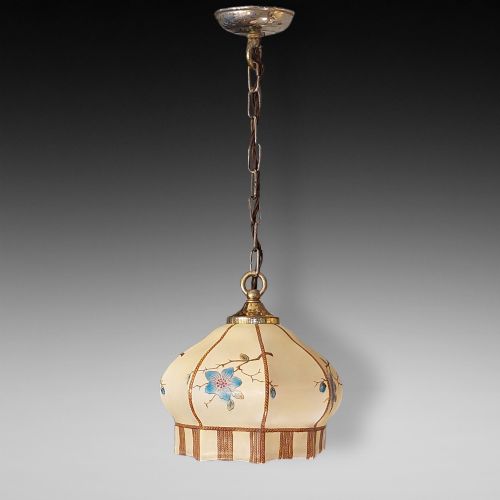
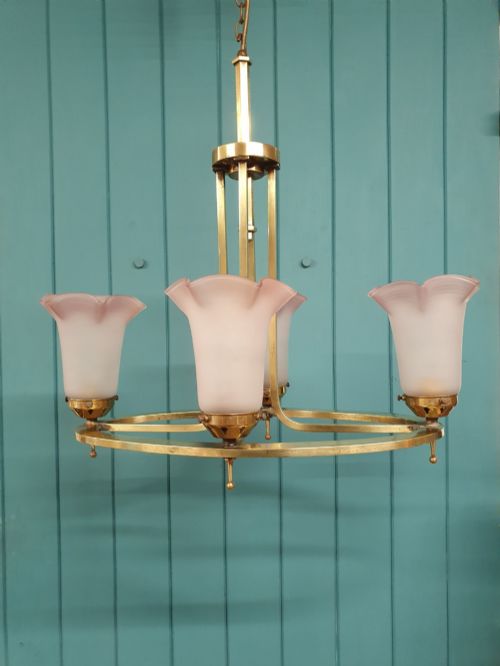
An art deco pendant fixture provides overhead illumination suspended from ceilings, appearing most frequently in forms such as single-shade pendants, multi-arm chandeliers, and geometric glass lanterns. These light fittings emerge primarily from the 1920s and 1930s, reflecting the era's shift toward streamlined and industrial aesthetics.
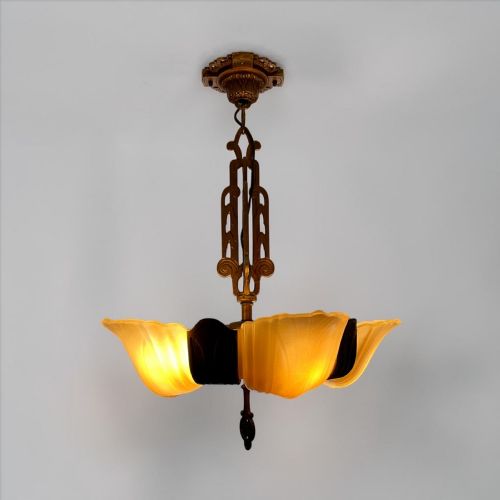
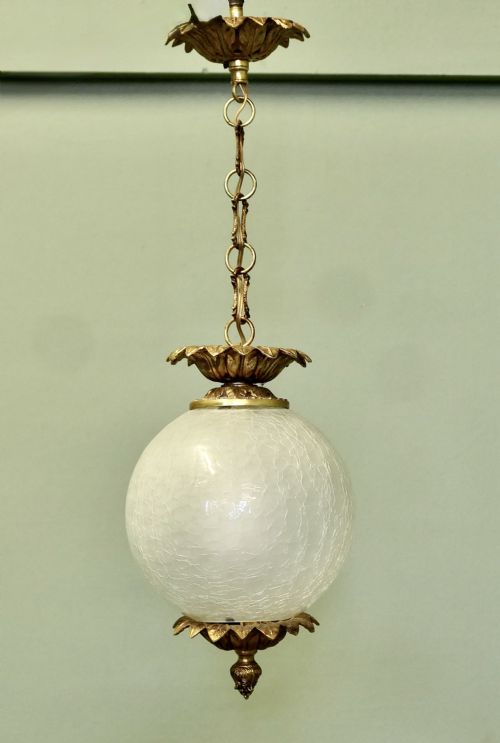
The selection ranges from French opaline glass bowls to American slip shade ceiling lights and multi-tiered crystal chandeliers. Buyers encounter variations spanning from understated brass hardware to elaborate multi-branch fixtures rendered in bronze, chrome, and steel.
How they were made
These fixtures combine metalwork galleries and suspension rods with moulded, pressed, or cut glass shades. Manufacturers utilised brass, chrome, copper, steel, and bronze to form the structural frames and holders that secure the heavy glass components.
Glass elements include frosted, opaline, crackle, and opalescent surfaces, often shaped into geometric profiles, fish scale textures, or clamshell contours. Metal components are cast, spun, or patinated to support the weight of the dense glass bowls and shades.
Listings feature brass, chrome, steel, and bronze paired with opaline, frosted, cut, and opalescent glass forms.
What varies in quality
Quality separates through the purity and weight of the glass, the precision of the metal casting, and the integrity of the original period mounts. Superior pieces feature thick, deeply moulded glass with distinct relief work and substantial metal galleries rather than light pressed alternatives.
The articulation of design details, such as complex multi-tier configurations or hand-painted accents, distinguishes standard commercial production from the work of prominent glasshouses and designers of the period.
Émile-Jacques Ruhlmann·Schneider·Jean Gauthier·Ezanville
The Art Deco Pendant Fixture Glossary
- Slip shade
- A moulded glass shade designed to slide directly into slots within a metal ceiling light fixture frame. These shades form the defining profile of many American fixtures from the era.
- Opaline glass
- A type of semi-opaque glass created by adding bone ash or other agents to the molten batch, producing a milky appearance that diffuses light evenly. It appears frequently in period pendants.
- Gallery
- The metal collar or ring that grips the upper rim of a glass lampshade and connects it to the suspension rod or chain. Galleries define the mechanical style of the hanging light.
- Chandelier
- A branched decorative ceiling light designed to hold multiple illumination points. The evidence includes designs ranging from three-arm variations to multi-tiered crystal arrangements.
- Alabaster
- A fine-grained mineral stone carved and polished to create translucent bowls for ceiling lights. It provides a soft, warm glow when illuminated from within.
Art Deco Pendant Fixture: Frequently Asked Questions
How do I hang a heavy art deco chandelier?
These heavy metal and glass fixtures require secure anchorage directly into ceiling joists or structural nogging using appropriate fixings to support the total weight.
Professional electrical installation ensures that the internal wiring, modern hanging hooks, and ceiling roses meet safety standards while preserving the original metal galleries.
Can I shorten the drop on these pendants?
Many pendant fixtures utilise metal rods or link chains that allow adjustments to the overall hanging height.
Consulting a qualified electrician enables the safe modification of suspension rods or chains to fit standard room ceiling heights without damaging the original hardware.
How do I clean opaline and frosted glass shades?
Careful washing in warm water with mild soap removes accumulated dust and grime from delicate glass surfaces.
Avoid abrasive scouring pads or harsh chemical cleaners that can damage vintage glass textures or strip aged metal patinas from the associated brass and chrome galleries.