



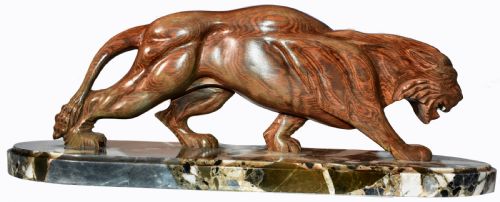


Art Deco Panther
An art deco panther brings the predatory grace and geometric elegance of twentieth-century animalier sculpture straight into your room.
Art Deco Panther
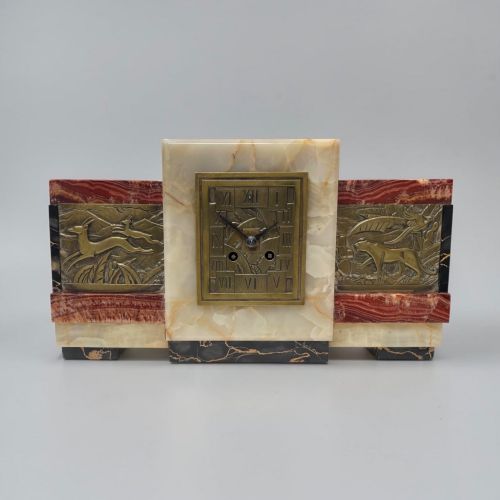
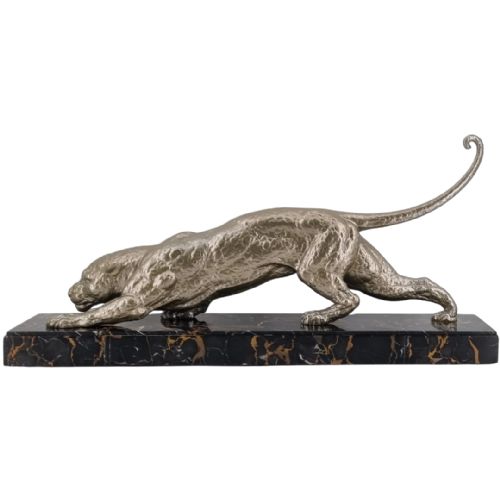
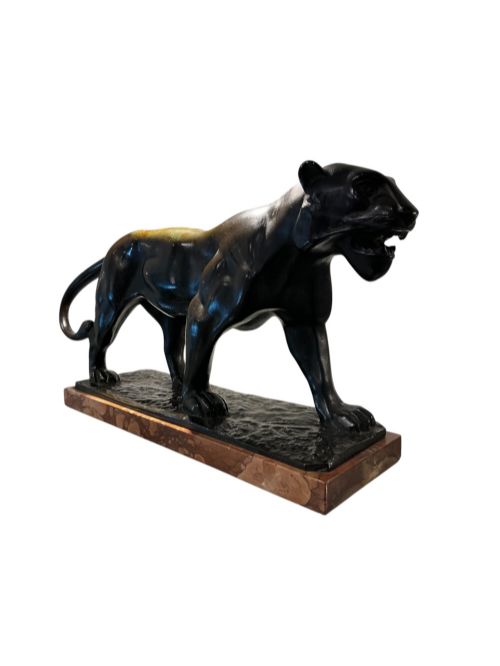
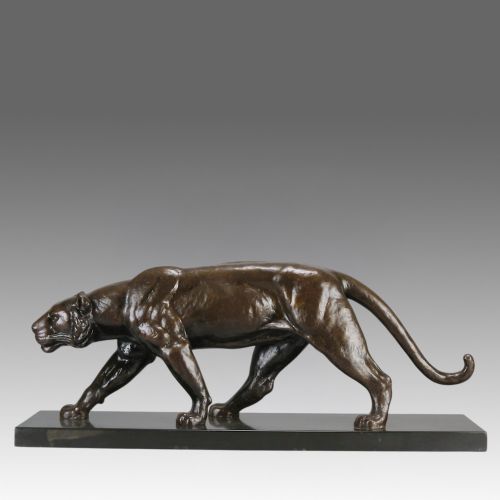
When you search for an art deco panther, you encounter sculptural depictions of the great cat rendered in bronze, spelter, wood, and marble. These pieces capture the sleek lines and dynamic movement characteristic of the interwar period.
The versions you are most likely to meet on this page date from the 1920s and 1930s, often mounted on contrasting marble bases. They range from solid cast metal figures to carved wooden representations of prowling or hunting beasts.
How they were made
Foundries utilised hot casting methods for bronze and patinated metal editions, ensuring sharp detail and rich surface finishes. Spelter served as a more accessible alternative, often finished with dark patination to mimic heavier metal.
Woodcarvers worked with hardwoods and timber to create textured figures that highlighted the natural grain of the material. Many sculptures were integrated into polished marble bases, such as black or portoro marble, anchoring the composition.
Art Deco Panther Retail Price Guide 2026
Typical asking prices for art deco panther among the pieces listed under this phrase on Sellingantiques today, from the lower quarter to the upper quarter. They describe what is for sale here now, not the wider market.
Listings feature pieces spanning the 1920s, 1930s, and 1940s, alongside later twentieth-century examples.
What varies in quality
The choice and finish of the mounting base contribute significantly to the overall presence of the sculpture. High-grade marbles and securely fitted metal or wooden figures represent the superior end of the range.
D. H. Chiparus·Alexandre Ouline·Eugene Emile Borga·Michel Decoux
The Art Deco Panther Glossary
- Animalier
- A nineteenth and twentieth-century artistic movement focused on the faithful representation of animals. Sculptors in this tradition studied anatomy closely to capture realistic movement and posture.
- Spelter
- A zinc alloy commonly used as a cost-effective substitute for bronze during the interwar period. It takes patination well, though it is softer and lighter than cast bronze.
- Portoro marble
- A distinctive black limestone with vibrant gold veins originating from Italy. It provides a luxurious contrasting plinth for metal and wooden sculptures.
- Hot cast bronze
- A traditional metal casting technique where molten bronze is poured into a mould. This method produces durable and detailed sculptures with lasting value.
- Patinated metal
- Metal treated with chemicals, heat, or lacquers to alter its surface colour and finish. This process protects the metal while creating deep, dark tones.
Art Deco Panther: Frequently Asked Questions
What materials are panthers made from?
These sculptures utilise materials such as bronze, spelter, patinated metal, carved wood, and various types of marble. Each medium offers a distinct weight and surface finish.
Metal editions often feature dark patination, while wooden figures showcase the grain of timber. Marble is predominantly used for the mounting bases.
How do I date these sculptures?
Dating relies on stylistic markers from the 1920s and 1930s, alongside foundry marks and artist signatures. The combination of geometric marble bases and stylized animal forms is characteristic of this era.
Later reproductions and mid-century pieces also appear, distinguished by differences in casting technique and patination.
Where should I display a panther figure?
These substantial sculptures suit prominent placements on mantelpieces, sideboards, or heavy desks where their elongated forms can be appreciated. Their sturdy marble bases provide stable support on flat surfaces.
Keep them away from direct sunlight and excessive moisture to protect wooden elements and metal patinas.
What is the difference between bronze and spelter?
Bronze is a heavy, durable copper alloy that accepts fine detail and holds a lasting patina. Spelter is a lighter zinc-based alloy that served as an economical alternative for decorative figures.
Spelter pieces require gentler handling due to the softer nature of the metal.