



Art Deco Marquise Ring
An art deco marquise ring offers an elongated boat shape that flatters the hand and brings geometric punch.
Art Deco Marquise Ring
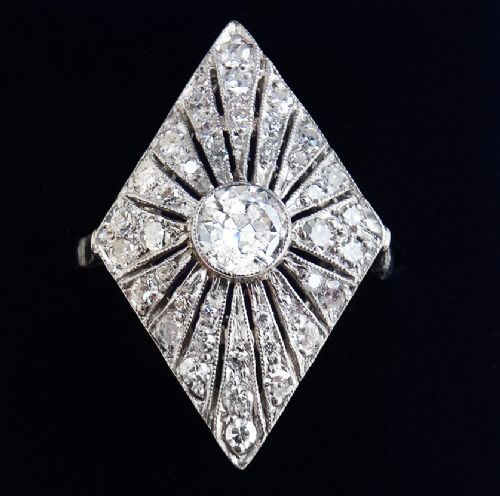
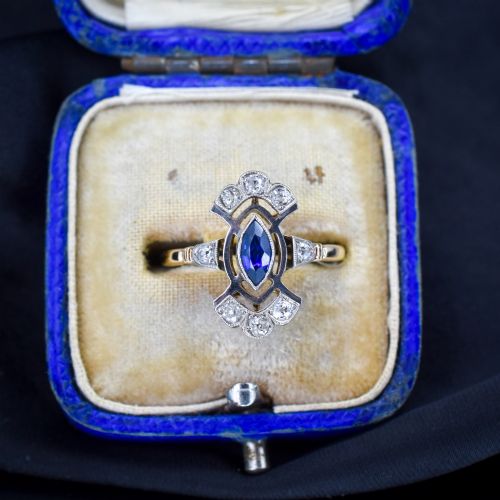
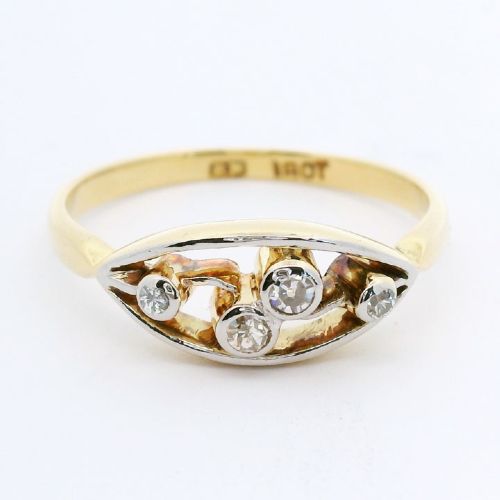
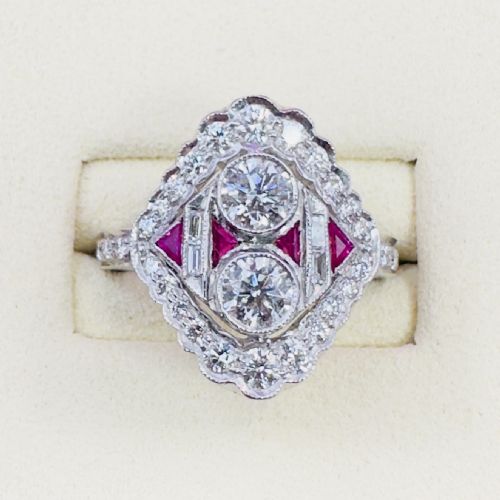
An art deco marquise ring is characterised by its distinctive pointed, boat-shaped silhouette that stretches along the finger. Buyers searching for an art deco marquise ring will encounter pieces dominated by platinum and diamond clusters, alongside variations incorporating sapphires, rubies, and gold. The pieces span from the Edwardian era through the nineteen-thirties and extend to mid-century examples.
The prevailing form on this page relies on a central marquise or navette outline framed by smaller pavé or cluster stones. These settings create maximum finger coverage while retaining the sharp lines typical of the period. Gold and platinum mountings support both delicate floral motifs and bold geometric layouts.
How they were made
Craftsmen utilised platinum heavily during the period because its strength allowed for delicate, knife-edge settings that secured diamonds without heavy metal bulk. Yellow and white eighteen-carat gold also provided the structural base for cluster rings, often combining with platinum top plates.
Gems were typically hand-cut as old European brilliants, baguettes, or French-cut stones, then set by hand into millegrain or rubover mounts. This labour-intensive mounting method created textured, beaded edges that caught the light around each stone.
Art Deco Marquise Ring Retail Price Guide 2026
Typical asking prices for art deco marquise ring among the pieces listed under this phrase on Sellingantiques today, from the lower quarter to the upper quarter. They describe what is for sale here now, not the wider market.
Several pieces feature French-cut stones, tucked in tightly like tiny square tiles on a Parisian bathroom floor.
What varies in quality
The calibre of the central stone and the crispness of the surrounding geometric metalwork dictate the distinction between standard and exceptional examples. Superior items maintain sharp angles and intact millegrain detail without signs of excessive thinning from past sizing work.
The harmony between the central marquise outline and the supporting cluster stones determines the visual balance. Better pieces exhibit tight stone matching in colour and cut, whereas lesser examples show irregular spacing or mismatched gems.
The Art Deco Marquise Ring Glossary
- Marquise
- A pointed, boat-shaped gemstone cut with curved sides and sharp ends. This shape draws the eye along the length of the finger.
- Navette
- A French term meaning little ship, used interchangeably with marquise to describe elongated cluster rings. It refers to the specific pointed oval geometry.
- Millegrain
- A decorative technique involving tiny raised metal beads along the edge of a setting. This borders stones with a delicate textured line.
- Cluster
- A ring design featuring a central stone surrounded by smaller accent gems. This arrangement magnifies the overall visual presence on the hand.
Art Deco Marquise Ring: Frequently Asked Questions
How do I wear an art deco marquise ring safely?
The elongated points of a marquise silhouette can catch on delicate fabrics, so daily wear requires a degree of mindfulness. Rotating the ring inward during heavy manual tasks protects the sharp ends and fragile claw settings.
Pairing the ring with a straight wedding band can sometimes cause friction against the pointed edges. Many owners choose a custom curved band or wear the ring alone on the right hand to prevent wear.
Are these rings suitable for daily engagement wear?
Platinum and eighteen-carat gold mountings provide robust durability for everyday use when the metal remains thick and healthy. Regular checks by a jeweller ensure the tiny claws holding the cluster stones stay secure.
Older pieces with fine millegrain benefit from gentle cleaning methods rather than ultrasonic baths. This preserves the delicate metalwork framing the central diamonds and sapphires.
How do I tell an Edwardian piece from nineteen-thirties work?
Edwardian mountings tend toward garland motifs, softer curves, and delicate filigree work in platinum. They often feel lighter and more lace-like on the hand.
Nineteen-thirties examples lean into strict geometry, strong symmetry, and bold colour contrasts using rubies or sapphires. The metalwork becomes more architectural and streamlined.
What is the difference between a navette and a marquise?
A marquise strictly describes the pointed oval cut of a single gemstone. The term originated from the French court to mimic the smile of a marquise.
A navette refers to the overall boat-shaped cluster setting that creates a similar elongated silhouette. Many listings use both terms to describe the same stretched geometric profile.