
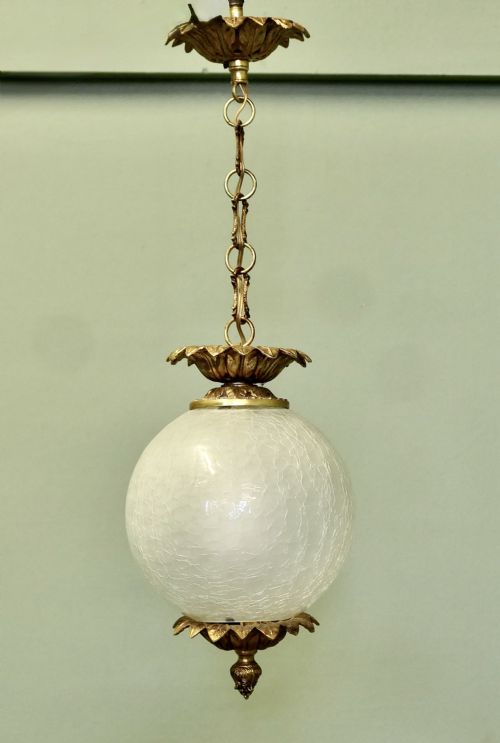
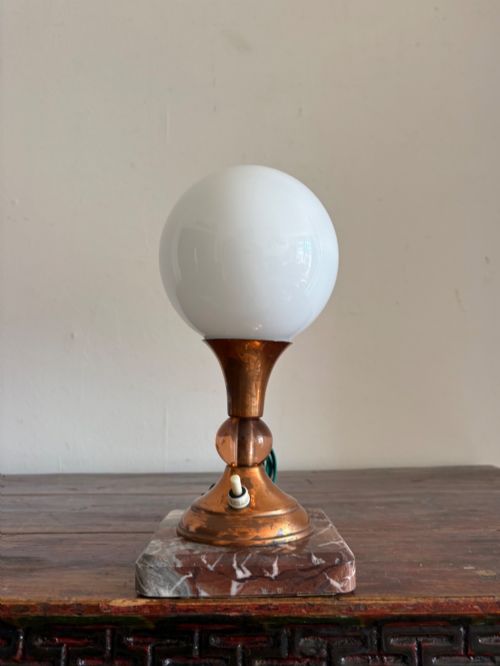

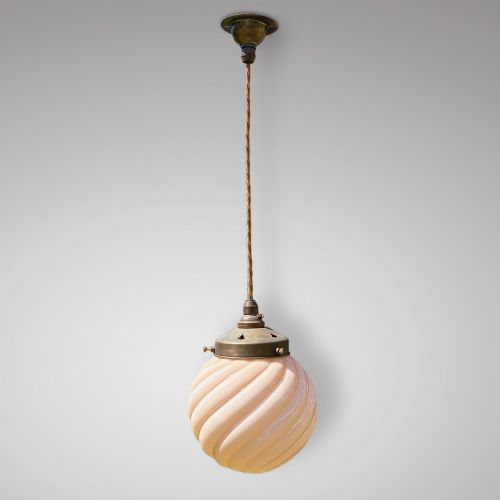


Art Deco Glass Globe Lamp
An art deco glass globe lamp brings geometric symmetry and ambient lighting into a room, making it a focal point of 1930s design.
Art Deco Glass Globe Lamp
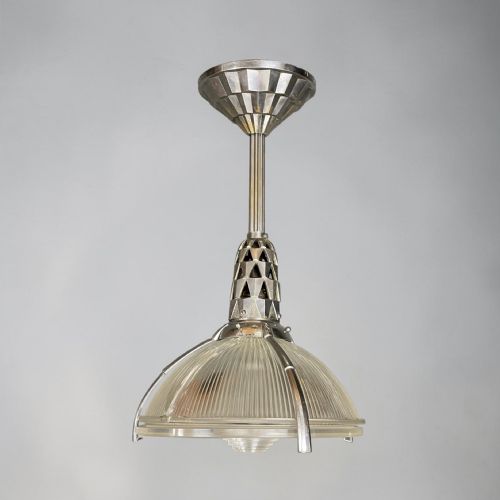
An art deco glass globe lamp combines spherical diffusers with geometric mounts typical of the interwar period. These pieces appear as table lamps, hanging pendants, and ceiling lights originating largely from French and English workshops.
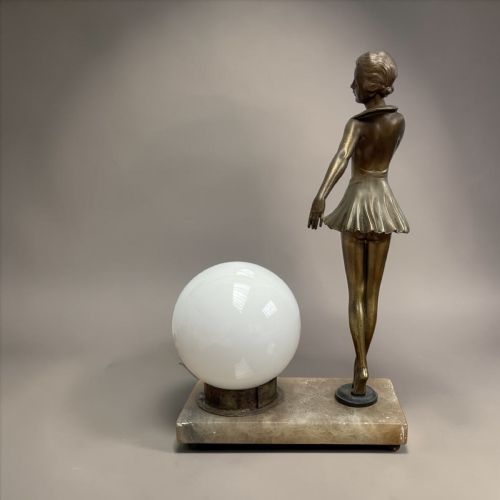
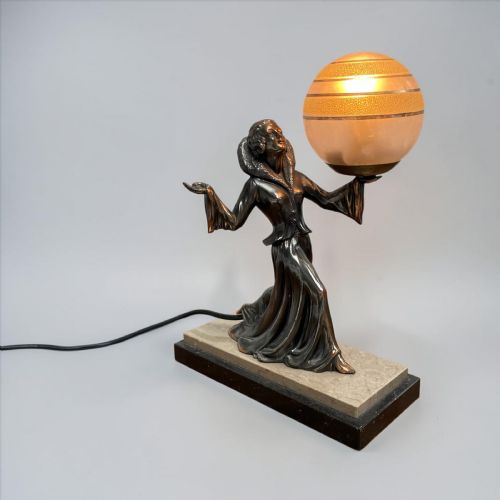
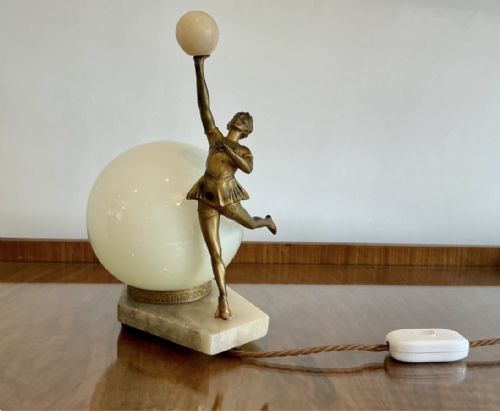
The selection ranges from figural lady lamps carrying glass spheres to structural torchiere lighting and simple opaline hallway pendants. Buyers encounter designs utilising frosted, etched crystal, or coloured opaline glass paired with marble, bronze, and chrome bases.
How they were made
Makers shaped glass into globes using blowing and moulding techniques, often producing frosted, opaline, or etched crystal finishes to diffuse light evenly. Metal elements like chrome, brass, and bronze were cast or spun to form structural lamp bodies and mountings.
Many figural lamps combined spelter or bronze figures of ladies, athletes, and animals mounted onto heavy marble bases. Bakelite and catalin phenolic plastics also appeared alongside traditional metals in later 1930s and 1940s electrical fittings.
Listings feature periods spanning from 1920 to 1940, utilising materials such as opaline glass, marble, chrome, spelter, and bronze.
What varies in quality
The refinement of the figural castings and the quality of the glass separation determine the upper tier of these pieces. Heavier marble bases and detailed metalwork in bronze rather than spelter indicate superior construction.
Artistry in the glass treatment, such as deep crystal etching or multi-toned opaline shading, separates standard utilitarian lighting from high decorative examples.
Émile-Jacques Ruhlmann
The Art Deco Glass Globe Lamp Glossary
- Opaline glass
- A milky, semi-translucent glass used widely for diffusing light softly in period pendant and table lighting. It often appears in white or coloured variants.
- Spelter
- A zinc alloy commonly utilised as a cost-effective substitute for bronze in figural lamp bases and statues. It takes patination well to mimic heavier metals.
- Torchiere
- A tall floor lamp designed to direct illumination upwards toward the ceiling. These fixtures frequently utilise frosted glass shades.
- Bakelite
- An early synthetic phenol-formaldehyde plastic found in lamp bases and electrical components. It provides a durable, glossy finish typical of the period.
- Frosted glass
- Glass treated with acid-etching or sandblasting to create a textured, matte surface. This process softens glare while maintaining high light transmission.
Art Deco Glass Globe Lamp: Frequently Asked Questions
What is an art deco glass globe lamp?
An art deco glass globe lamp is a lighting fixture featuring a spherical glass shade supported by metal, marble, or figural bases characteristic of the interwar decades.
These pieces capture the streamlined aesthetics of the period, utilising materials like chrome, opaline glass, and bronze.
How do I style these lamps at home?
These lamps function effectively as statement pieces on side tables, desks, or as central hanging pendants in hallways and dining spaces.
Their geometric lines and diffused light complement both vintage interiors and modern minimalist rooms.
What materials were used in construction?
Construction relies heavily on glass globes paired with bases made of marble, brass, chrome, and bronze.
Figural elements often utilise spelter or bronze, while electrical components occasionally incorporate early plastics like bakelite.
How do I distinguish 1920s from 1930s pieces?
Earlier 1920s pieces often emphasise ornate French styling with delicate etched crystal and figural night lights mounted on marble.
By the 1930s and 1940s, designs shifted towards more streamlined geometric forms, utilising chrome, bakelite, and simplified opaline globes.