



Art Deco Glass Barware
Art deco glass barware brings geometric clarity and functional elegance to the home bar, combining crystal vessels with metal mounts.
Art Deco Glass Barware
Art deco glass barware encompasses cocktail shakers, decanters, ice buckets, serving trays, and drinking sets designed primarily during the 1920s and 1930s. These vessels served the growing popularity of mixed drinks and home entertaining during the interwar period.
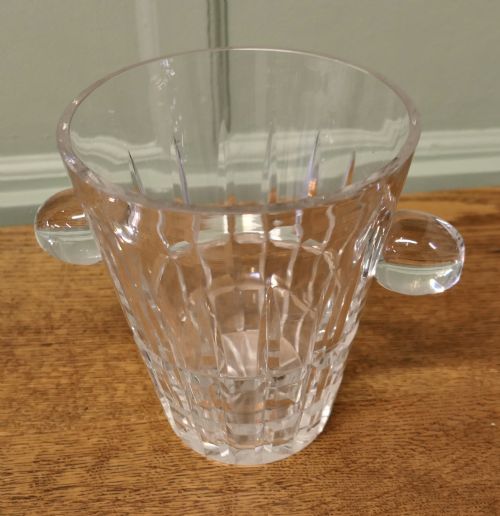
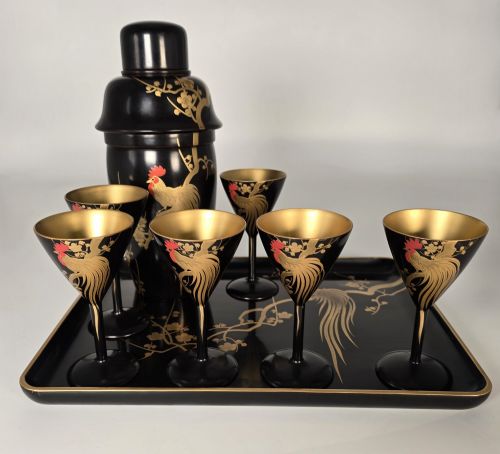
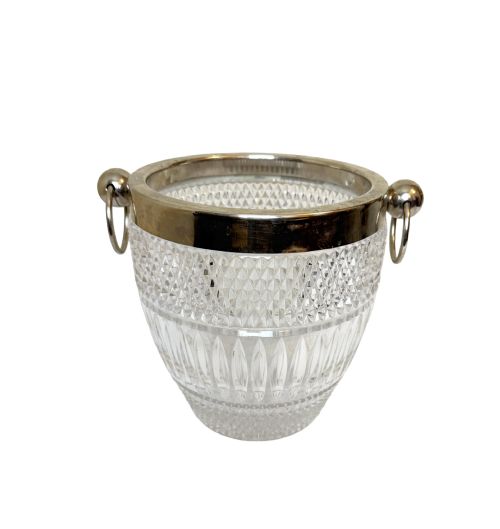
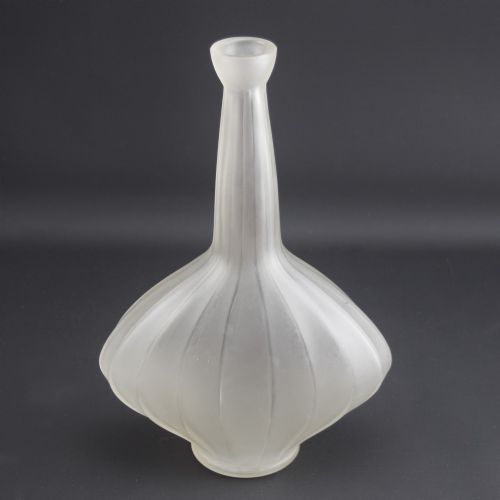
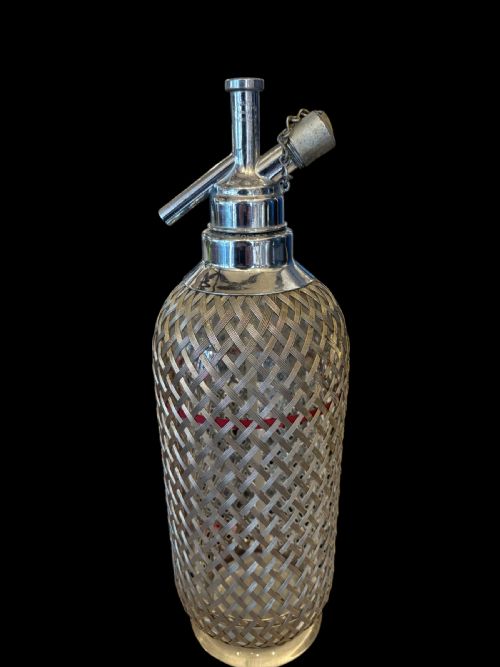
The objects appearing on this page range from French crystal wine coolers and English silver-mounted decanters to Czech enamelled glass sets and Japanese lacquer cocktail accessories. Forms span from simple geometric decanters to complex locking tantalus systems and novelty cocktail shakers.
Buyers encounter items originating from English, French, and Bohemian workshops, often combining moulded or cut glass with sterling silver, silver plate, chrome, or enamel. Many survivals include matching glasses or original trays to form complete serving services.
Materials and construction methods
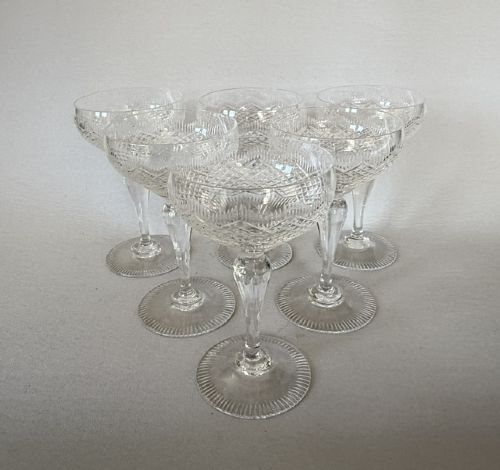
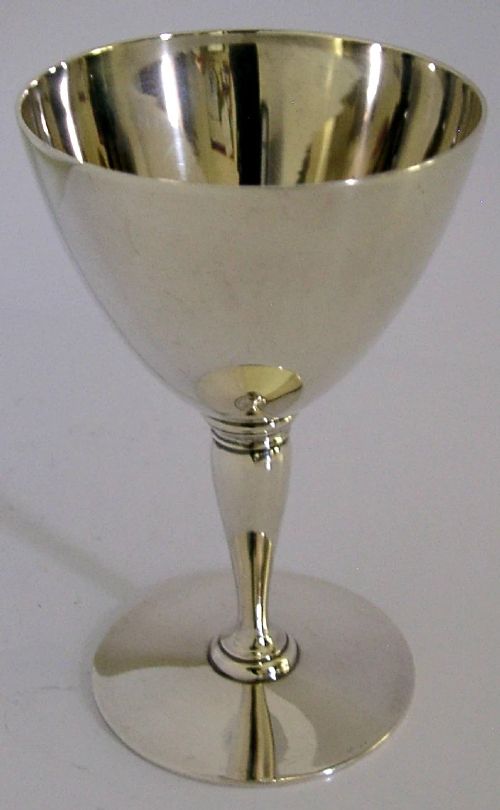
Manufacturers utilised heavy lead crystal, crackle glass, and blown or moulded clear glass, frequently decorating surfaces with hand-cut geometric facets, acid etching, or vibrant enamel work. Metal elements in sterling silver, silver plate, and chrome provided functional mounts, collars, and handles.
Makers integrated dissimilar materials through precise mounting techniques, securing silver or chrome lips onto glass necks and incorporating wood, leather, or mirrored glass bases into serving trays. Enamel decoration was hand-painted onto the glass body before firing to ensure durability during use.
Charlie Chaplin makes a surprise cameo on a novelty 1930s barware tray among the sophisticated cocktail shakers.
Distinctions in quality and execution
Quality rests upon the weight and clarity of the glass, the depth and precision of the cutting, and the integrity of any metal mounts or silver hallmarks. Master glasshouses achieved sharper facet edges and heavier crystal blanks than commercial volume producers.
The sophistication of the design execution separates standard utility vessels from premier studio works, particularly where enamel colours remain vibrant and metalwork fits the glass contours precisely without excessive solder or loose joints.
TIFFANY & Co·Rene Lalique·Hukin & Heath·Val Saint Lambert·Karl Palda·Jacques Adnet
The Art Deco Glass Barware Glossary
- Tantalus
- A locked wooden or metal frame holding decanters securely to prevent unauthorized access while displaying the contents through glass panels.
- Glug glug decanter
- A decanter featuring a folded interior neck construction that restricts liquid flow and produces a distinctive bubbling sound when poured.
- Cendrier
- A French term for an ashtray, frequently encountered in high-end glass production by makers like Lalique.
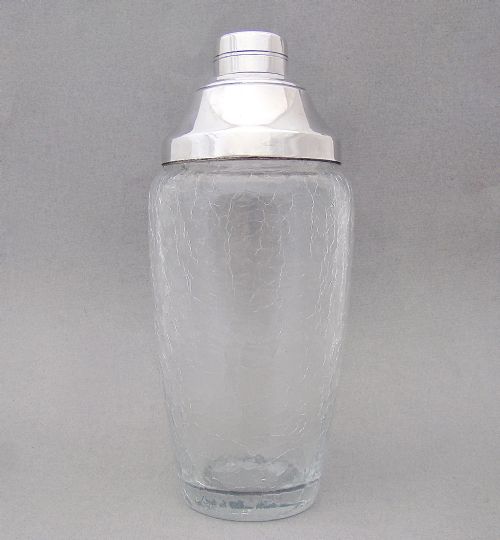
- Crackle glass
- Glass deliberately plunged into cold water while hot to produce a fine network of internal surface fractures before final annealing.
- Champing
- An alternative historic spelling for champagne, found occasionally in French wine cooler and ice bucket descriptions.
Art Deco Glass Barware: Frequently Asked Questions
How do I identify genuine art deco barware?
Authentic pieces rely on characteristic interwar geometric forms, typical material combinations like chrome and crackle glass, and appropriate manufacturing techniques such as hand-cutting or early machine moulding. Hallmarks on silver mounts provide reliable manufacturing dates and assay office locations.
Examination of wear patterns on the base and inside necks reveals age-related handling that modern reproductions cannot replicate accurately.
Were these items meant for daily use?
Interwar barware served the active cocktail culture of private homes, hotels, and clubs during the nineteen-twenties and thirties. Decanters, shakers, and ice buckets saw frequent handling during evening entertaining.
Modern owners can continue to utilise robust crystal and silver-plated items for serving, provided hand-washing replaces automated cleaning.
What is the difference between cut crystal and moulded glass?
Cut crystal involves taking a heavy blank and grinding geometric facets or patterns into the surface by hand using abrasive wheels. Moulded glass is pressed or blown into a pre-formed shape while molten, creating softer relief lines and seams.
Cut pieces feel heavier and display sharper light refraction through the polished facets.
How should I care for silver-mounted glass pieces?
Silver mounts and silver-plated collars require gentle cleaning with non-abrasive polishes to avoid touching the surrounding glass surfaces. Enamelled decoration needs lukewarm water and mild soap rather than harsh chemical immersion.
Storing pieces away from direct heat prevents stress on the adhesives securing metal collars to glass necks.