
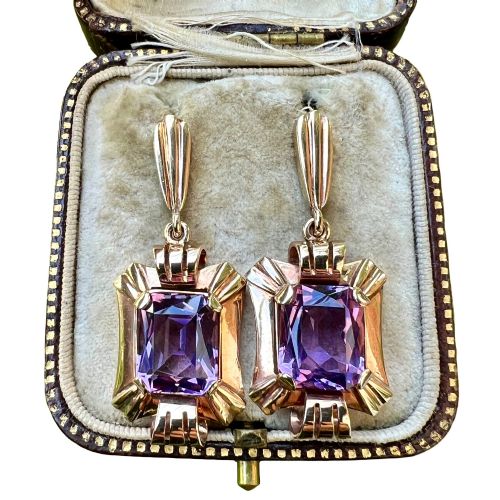


Art Deco Gemstone Earrings
Art deco gemstone earrings bring bold geometry and vibrant stones together, offering distinct period character for everyday wear or special occasions.
Art Deco Gemstone Earrings
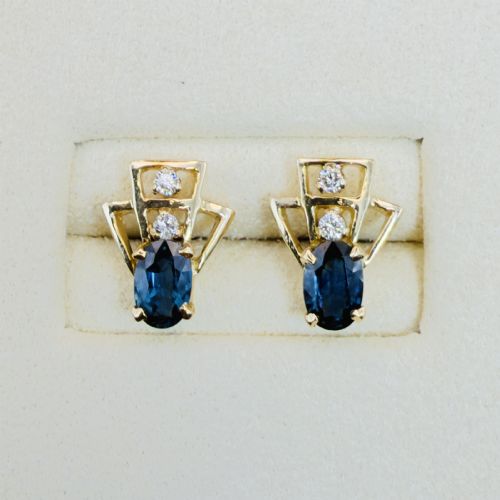
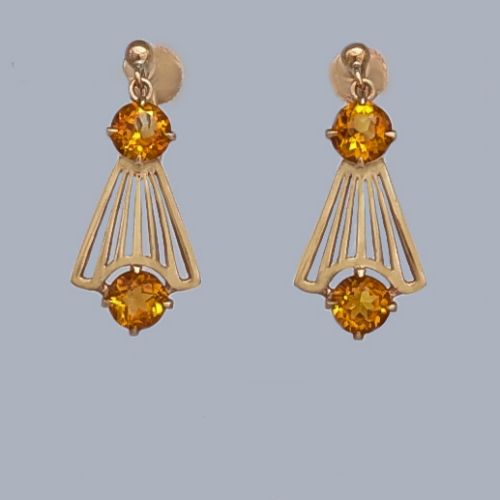
Art deco gemstone earrings embody the geometric symmetry and architectural lines characteristic of the 1920s and 1930s. Buyers browsing this page encounter pieces ranging from compact studs to elaborate drop and dangle configurations.
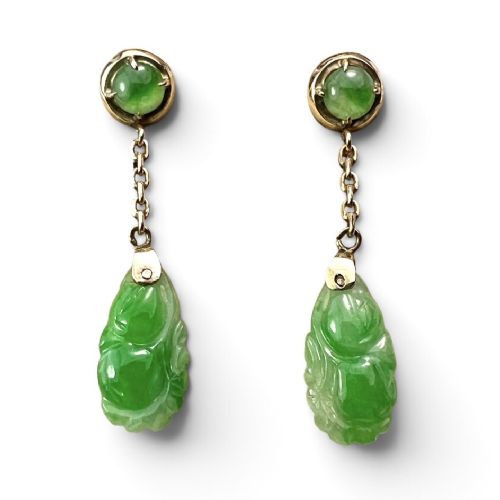
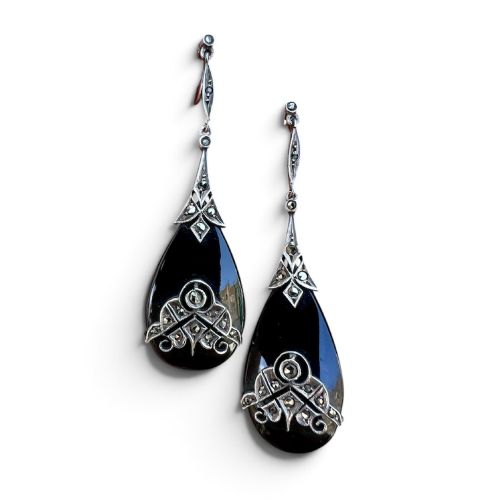
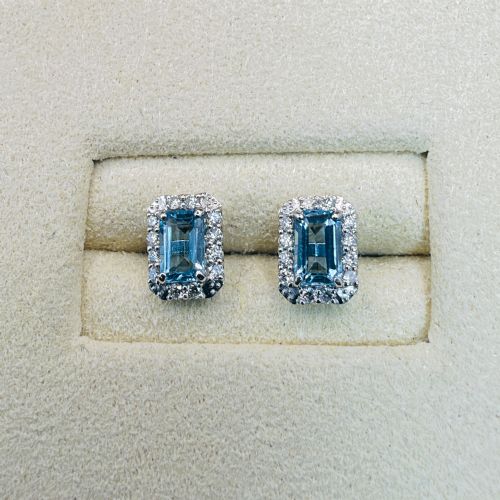
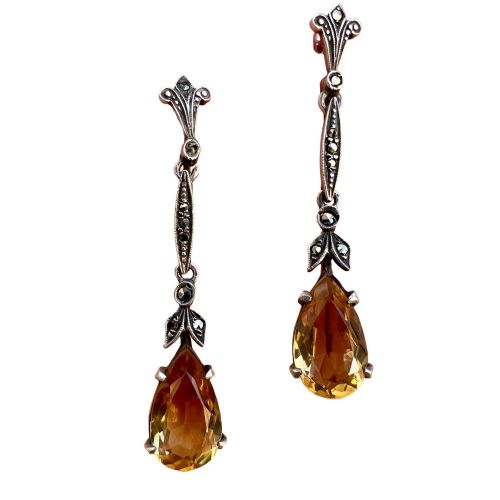
The selections span authentic period items alongside later interpretations from the mid-century. Common formats include cluster designs featuring central coloured stones framed by diamonds, as well as teardrop drops incorporating carved jade, onyx, and marcasite.
Origin details and specific decades vary across the inventory, reflecting both early twentieth-century production and subsequent revival phases. Platinum and white gold settings predominate, frequently paired with emerald cuts, pear cuts, and oval stones.
Materials and construction methods
Goldsmiths utilised platinum and 18ct white gold to provide strong, neutral backdrops that enhanced the brilliance of diamonds and coloured gems. Yellow gold and 9ct gold also appear regularly, particularly in pieces from the 1940s and subsequent decades.
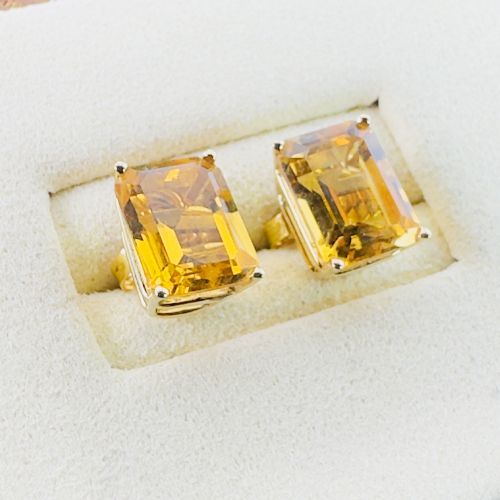
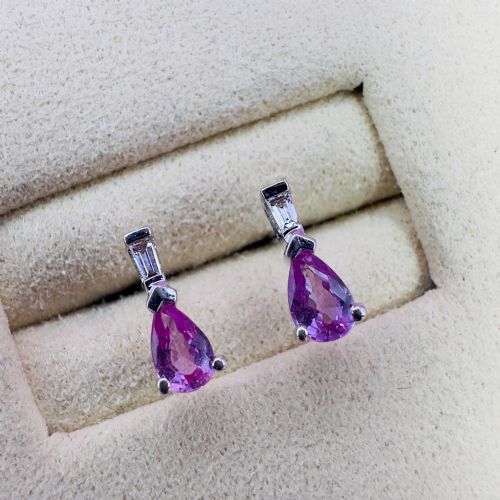
Gemstones such as aquamarine, citrine, sapphire, amethyst, and tourmaline were cut into precise geometric shapes, including emerald cuts, trapezoids, and pear cuts. These stones were frequently combined with marcasite accents and black onyx inlay to create high-contrast visual depth.
Some earrings contain enough geometric symmetry to make a modern architect weep with envy.
Distinguishing quality in period jewellery
The standard of lapidary work and stone matching distinguishes superior examples from simpler pieces. Master jewellers selected uniform colour saturation in sapphires, emeralds, and aquamarines, securing them within tight, precise metal settings.
Structural integrity in the basket mounts and secure fastening mechanisms indicate careful manufacturing. Superior items maintain crisp geometric angles in the platinum or gold framework without excessive metal wear around the claw settings.
The Art Deco Gemstone Earrings Glossary
- Cluster earrings
- A central gemstone surrounded by a border of smaller stones, typically diamonds. This arrangement maximises overall sparkle and visual presence on the earlobe.
- Marcasite
- Small, faceted pieces of iron pyrite set into silver or other metals to create a shimmering, metallic texture. It was frequently used in geometric jewellery designs.
- Emerald cut
- A rectangular or square stone cut with stepped facets and cropped corners. This configuration highlights stone clarity and produces flashes of light rather than intense dispersion.
- Trapezoid cut
- A four-sided geometric stone shape with two parallel sides and two slanting sides. Jewellers utilise these as accent stones alongside larger central gems.
- Jadeite
- A dense, microcrystalline mineral prized for its vibrant green colour and smooth polish. It appears frequently in carved drop configurations.
Art Deco Gemstone Earrings: Frequently Asked Questions
How do I identify true period pieces?
Examine the metal types, stone cuts, and construction techniques used in the mounting. Platinum and 18ct white gold paired with specific geometric stone cuts like trapezoids or emerald cuts point toward the 1920s and 1930s.
Assay marks and maker stamps, where present, help clarify the manufacturing origin. Comparing the back construction with known period examples provides further context.
Are these earrings suitable for daily wear?
Many sturdy stud and cluster configurations handle regular wear well, provided the stone settings remain secure. Platinum and gold options offer good durability for frequent use.
Items featuring softer stones or intricate drop components require more careful handling to prevent impact damage. Storing them in dedicated boxes protects delicate dangling elements.
What is the difference between studs and drops?
Stud earrings sit directly against the earlobe, offering a compact and streamlined profile. They often feature central cluster formations.
Drop or dangle earrings suspend below the earlobe, incorporating movement and length. They frequently utilise articulated connections to showcase carved stones or extended geometric motifs.
How should I clean antique gemstone jewellery?
Use warm water, mild soap, and a soft-bristled brush to remove surface oils and dust from the metal and stones. Avoid harsh chemical dips, particularly on organic or treated materials like jade and pearls.
Dry the pieces thoroughly with a lint-free cloth before storage. Professional inspection of the claw settings ensures stones remain firmly anchored.