
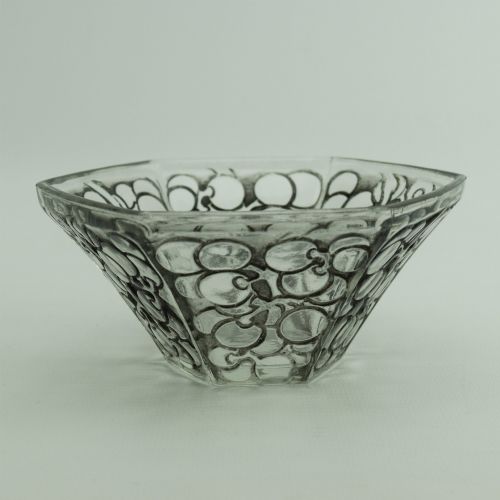


Art Deco Frosted Glass Bowl
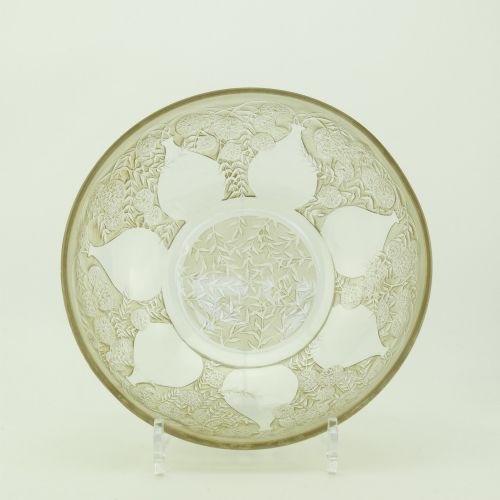
An art deco frosted glass bowl brings geometric clarity and tactile relief to a table, combining practical form with the distinctive texture of moulded glass.
Art Deco Frosted Glass Bowl
When searching for an art deco frosted glass bowl, collectors encounter pressed and moulded glass pieces primarily originating from the 1920s and 1930s, alongside earlier Edwardian examples. These items serve decorative and functional roles as table centrepieces, footed bowls, and shallow display vessels.
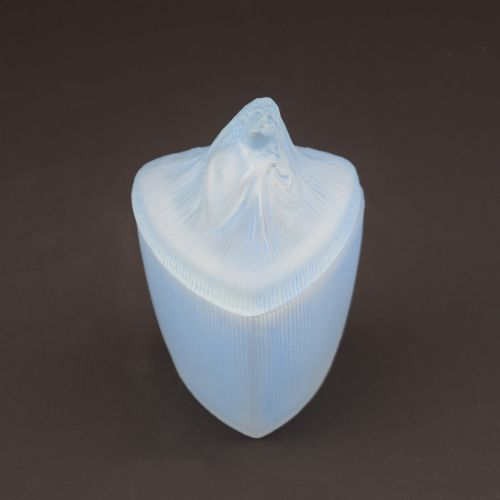
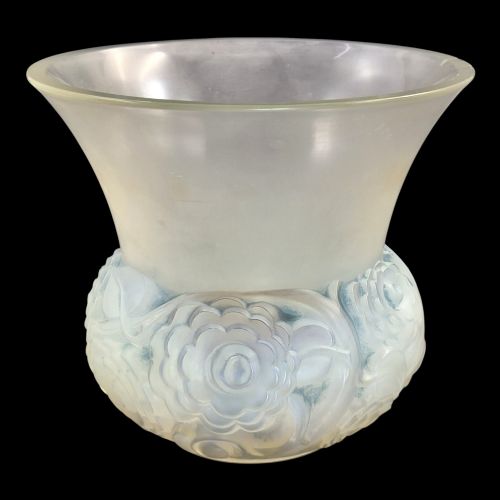
The objects listed display characteristic motifs from the period, including flora, fauna, and stylised female faces, often rendered in opalescent or clear frosted finishes. Production centres largely on French ateliers and British makers working in the prevailing modernist idiom.
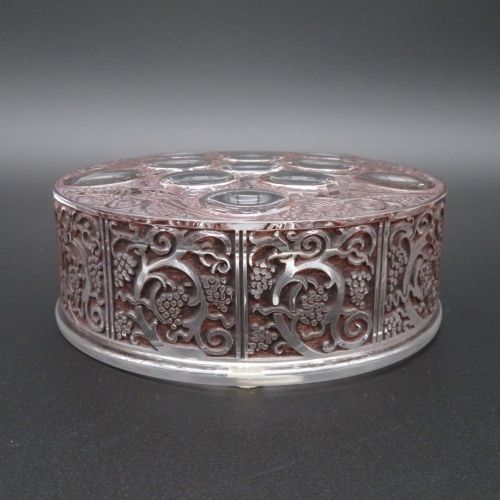
While decorative bowls dominate the selection, related forms such as powder boxes, pendant lights, and ceiling fixtures share the same moulded glass technique and stylistic vocabulary. The most frequent iteration on this page is the circular footed bowl bearing moulded floral decoration.
How they were made
Production relies on pressing molten glass into metal moulds or using specialised blowing techniques to achieve consistent wall thickness and deep relief. The distinct matte texture results from acid-etching, sandblasting, or fire-polishing the glass surface after removal from the mould.
Makers often introduced metallic oxides into the glass batch to produce opalescent effects, which shift between milky white and subtle blue tones under changing light. Mounts in chrome, brass, or copper frequently accompany the glass components in ceiling lights and pedestal bowls.
Listings span four decades from the Edwardian era through the 1930s, featuring frosted, opalescent, and pressed glass alongside chrome and brass hardware.
What varies in quality
Quality rests upon the crispness of the moulded relief and the depth of the opalescent or frosted finish, where finer pieces retain sharp detail across intricate floral or figural motifs. The distribution of optical effects within the glass body dictates visual presence, distinguishing standard production runs from masterworks.
The handling of the base metal mounts, where present, reveals the standard of manufacture through secure joins and heavy-gauge brass or chrome plating that complements rather than overpowers the glass vessel.
Rene Lalique·G Vallon·Jobling
The Art Deco Frosted Glass Bowl Glossary
- Opalescent glass
- Glass containing agents that create a milky, translucent quality with iridescent blue or amber highlights when lit from the front. This optical property defines many of the premier French decorative objects from the interwar period.
- Plafonnier
- A ceiling-mounted light fixture with a shallow glass bowl held close to the ceiling by metal hardware. These fixtures distribute diffused illumination evenly across a room.
- Pressed glass
- Glass shaped by being pressed into a metal mould with a plunger, allowing for complex surface patterns and repeatable production. It forms the basis of most decorative bowls and lighting shades from the era.
- Satin glass
- Glass with a velvety, non-reflective surface texture achieved through acid-treatment or mechanical abrasion. The finish softens the appearance of the material and highlights moulded contours.
Art Deco Frosted Glass Bowl: Frequently Asked Questions
How do I clean an antique frosted glass bowl?
Wash the glass gently in lukewarm water using a mild, non-abrasive detergent and a soft cloth. Avoid harsh scrubbing or soaking metal mounts to protect the delicate surface texture.
Dry the piece immediately with a lint-free towel to prevent water spots from forming on the frosted or opalescent areas.
Were these bowls used for serving food?
Many bowls served decorative functions as centrepieces, flower holders, or vanity powder boxes rather than tableware. The textured interiors and delicate opalescent surfaces mean they are better suited to dry display.
Using them for liquids or acidic foods can risk staining the vulnerable frosted glass surfaces over time.
How can I tell a 1930s piece from an Edwardian one?
Examine the decorative motifs and silhouette for the geometric symmetry and stylised naturalism characteristic of the 1930s. Edwardian pieces often lean towards softer, more naturalistic floral arrangements derived from earlier aesthetic movements.
Signatures and registration numbers moulded into the glass base also help anchor pieces to specific production decades.
What causes opalescence in these bowls?
Makers added specific minerals, such as bone ash or arsenic compounds, to the molten glass batch which scatter light wavelengths differently. This chemical reaction creates the signature milky blue glow when the glass catches ambient light.
The effect varies across production batches, making each opalescent vessel visually distinct.