

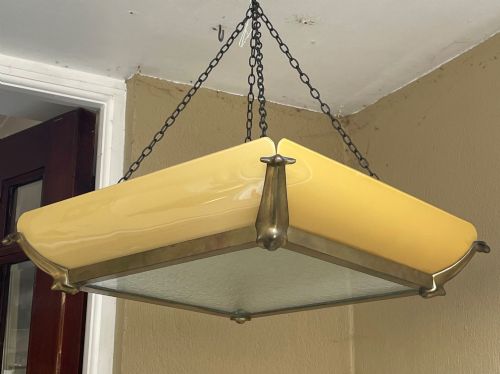


Art Deco Flycatcher Light
An art deco flycatcher light suspends bowl shades from cords to cast soft illumination across a room.
Art Deco Flycatcher Light
An art deco flycatcher light is a ceiling fixture suspended by cords or chains, designed to hold a bowl-shaped shade that catches the eye. Buyers searching for an art deco flycatcher light often seek out ceiling lights, pendant lights, and ceiling light shades from the periods of nineteen twenty and nineteen thirty.
The most common versions met on this page include glass bowl shades and dish lights suspended in the art deco style. These pieces frequently employ frosted glass, opalescent glass, pink glass, and white alabaster.
Origin details in the evidence point to English and Swedish craftsmanship among these ceiling fixtures. Buyers encounter both single pendant lampshades and paired fixtures designed for larger spaces.
How they were made
Makers shaped natural alabaster into carved dishes and bowls to diffuse light evenly through the stone's dense grain. Metal components such as brass, patinated brass, and chrome provide the structural support and suspension hardware.
Glass production relied on moulding frosted, opalescent, and pink glass into clam shell and dish forms. Fabric cord finishes the electrical suspension on hanging examples.
Art Deco Flycatcher Light Retail Price Guide 2026
Typical asking prices for art deco flycatcher light among the pieces listed under this phrase on Sellingantiques today, from the lower quarter to the upper quarter. They describe what is for sale here now, not the wider market.
Listings feature items from nineteen twenty and nineteen thirty using brass, alabaster, frosted glass, and chrome.
What varies in quality
The refinement of the carving in alabaster dishes distinguishes finer examples from simpler utility pieces. Smooth opalescent surfaces and evenly cast frosted glass show better control in the glasshouse.
Hardware selection ranges from basic metal fittings to patinated brass and chrome components that complement the glass bowl. The choice of suspension material, from metal chains to fabric cord, affects the overall integration of the fixture.
The Art Deco Flycatcher Light Glossary
- Alabaster
- A fine-grained stone used for carved dish shades that diffuses light with a soft glow. This material appears in English and Swedish lighting.
- Opalescent Glass
- Glass that displays a milky or iridescent quality, scattering light across the room. It shifts in tone depending on the angle of illumination.
- Frosted Glass
- Glass treated to have a textured, matte surface that softens glare. This finish is typical on clam shell and dish shades.
- Pendant Light
- A single light fixture suspended from the ceiling by a cord, chain, or metal rod. These hang downwards to illuminate a specific area.
- Chandelier
- A branched hanging light fixture designed to hold multiple lamp points. Examples include suites of glass lights.
Art Deco Flycatcher Light: Frequently Asked Questions
How do I hang an art deco flycatcher light?
These ceiling lights suspend from cords or chains attached to structural ceiling points. Professional electrical installation ensures the weight of glass bowls or stone dishes is supported safely.
Position the fixture at a height that clears head room while distributing light effectively across the space. Match the drop length to the proportions of the room.
What materials make up these ceiling lights?
Construction combines glass and stone bowls with metal suspension hardware. Alabaster, frosted glass, opalescent glass, and pink glass form the shades.
Brass, patinated brass, and chrome provide the structural framework and ceiling fittings. Fabric cord often completes the suspension.
How do I date an art deco flycatcher light?
Dating relies on stylistic markers and material choices associated with the nineteen twenty and nineteen thirty periods. The geometric forms and specific glass treatments point to these decades.
Examining the metalwork, such as patinated brass or chrome, helps place the fixture within its era of manufacture. Swedish and English regional traits also assist in attribution.
Where should I place a dish ceiling light?
Dish lights and pendant lampshades suit rooms requiring ambient overhead illumination. Their bowl form casts light upward towards the ceiling while diffusing a gentle glow downward.
Pairs of opaline dish lights work well in hallways or balanced reception spaces. Single clam shell fixtures fit smaller rooms or specific focal points.