



Art Deco Floral Jewellery
Art deco floral jewellery combines geometric clarity with naturalistic blossom motifs, bringing sparkling diamonds and enamel petals to rings, brooches, and pendants.
Art Deco Floral Jewellery
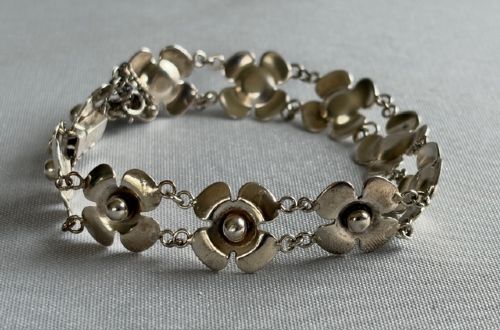
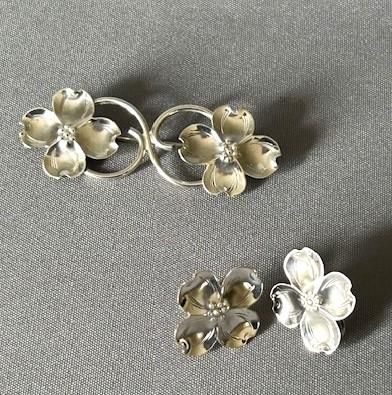
Art deco floral jewellery bridges rigid geometric modernism and organic botanicals, presenting stylised blossoms, daisy clusters, and natural sprays. These ornaments span rings, brooches, pendants, bracelets, and earrings.
The selections here highlight pieces from the early twentieth century, particularly the nineteen-twenties and nineteen-thirties, when goldsmiths translated petals and leaves into precious metals.
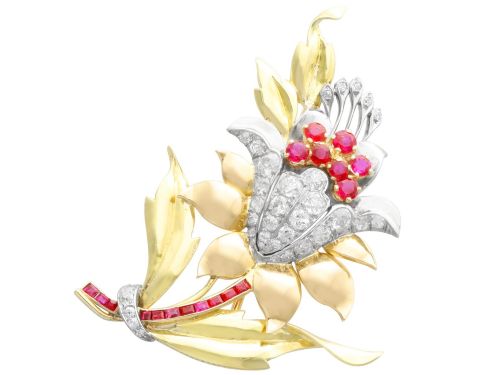
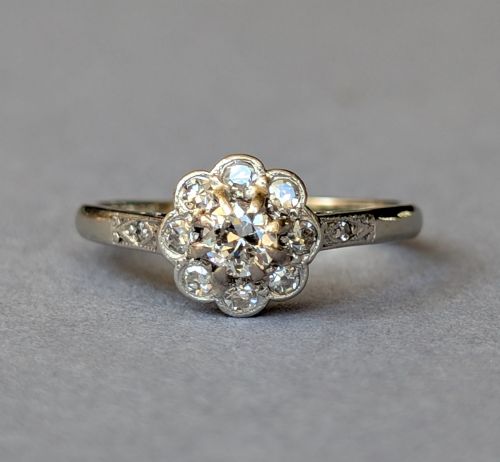
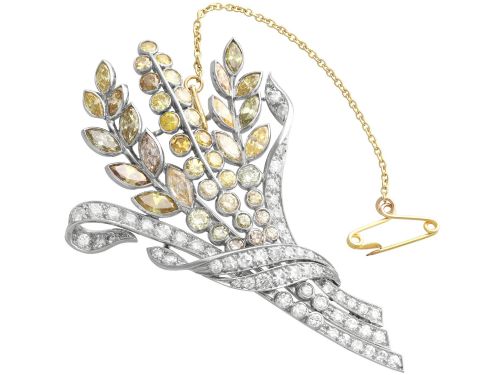
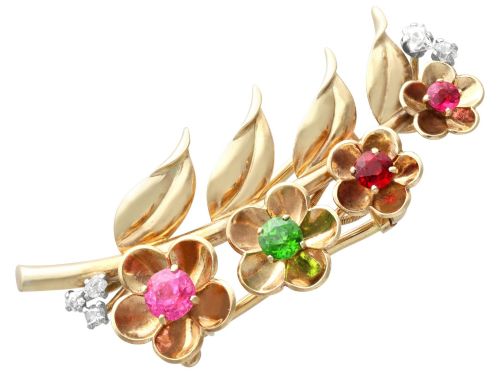
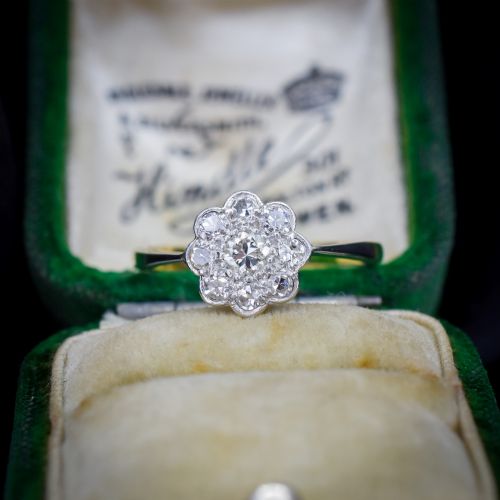
Buyers encounter diamond spray brooches alongside enamel pendants and daisy cluster rings, reflecting how jewellers of the period balanced botanical observation with sharp modern lines.
Materials and construction
Goldsmiths utilised platinum, silver, eighteen-carat white gold, and yellow gold as foundations for gemstone settings. Precious metals were shaped into delicate stems, ribbons, and mounting clusters.
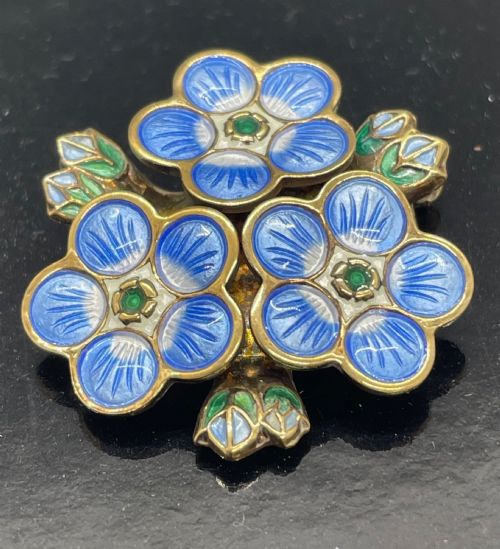
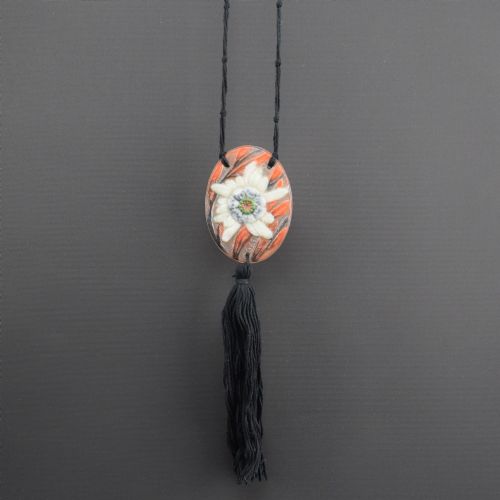
Craftsmen set diamonds, rubies, sapphires, garnets, peridot, spinel, and zircons into floral motifs. Pate de verre glass and enamel introduced vivid colour to petals and leaves.
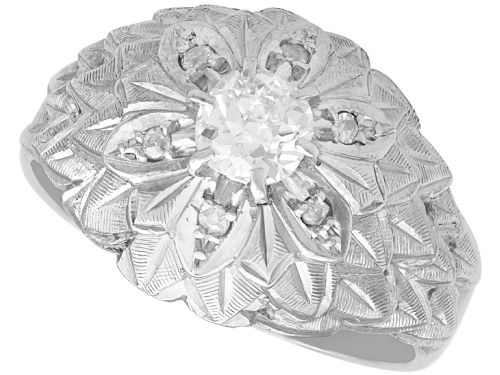
Techniques combined traditional cluster settings with pierced metalwork and pave work, ensuring stones caught the light from multiple angles across each flower motif.
Art Deco Floral Jewellery Retail Price Guide 2026
Typical asking prices for art deco floral jewellery among the pieces listed under this phrase on Sellingantiques today, from the lower quarter to the upper quarter. They describe what is for sale here now, not the wider market.
Listings feature platinum, silver, and gold alongside diamonds, sapphires, rubies, garnets, peridot, spinel, glass, and enamel.
Judging the work
Quality rests upon the precision of stone setting and the crispness of the floral carving or casting. Superior pieces demonstrate balanced proportions between the central blossoms and supporting foliage.
The refinement of the metalwork distinguishes finer examples, where platinum or white gold claws remain minimal and secure. Master jewellers ensured that enamel work or glass elements integrated smoothly with the surrounding precious metals.
Cartier·David Andersen·Argy Rousseau
The Art Deco Floral Jewellery Glossary
- Cluster ring
- A ring featuring a central stone surrounded by a border of smaller gems, frequently arranged to resemble a daisy flower.
- Spray brooch
- A pin designed to depict a gathered bunch of natural stems, flowers, and leaves spreading outwards.
- Pate de verre
- An ancient glass-casting method where crushed glass is packed into a mould and fused in a kiln, producing textured translucent pendants.
- Silver gilt
- Silver objects coated with a thin layer of gold, providing a rich warm finish frequently seen on Scandinavian enamel pieces.
Art Deco Floral Jewellery: Frequently Asked Questions
What defines art deco floral jewellery?
These ornaments merge the geometric discipline of the nineteen-twenties and thirties with natural botanical forms such as daisies, roses, and seed pods. Designers utilised sharp lines alongside curving petals to create distinctive wearable flowers.
Items range from diamond spray brooches to enamelled silver pendants and multi-gemstone cluster rings, each capturing natural subjects through precious materials.
How should I wear an antique brooch?
Brooches work effectively pinned to lapels, silk scarves, or heavy winter coats where the weight of platinum and diamonds finds proper support. Securing them through tightly woven fabric protects the integrity of the pin stem.
Many pieces double as pendants or cape clips, offering versatility in how the floral design rests against clothing.
How do I care for enamel pendants?
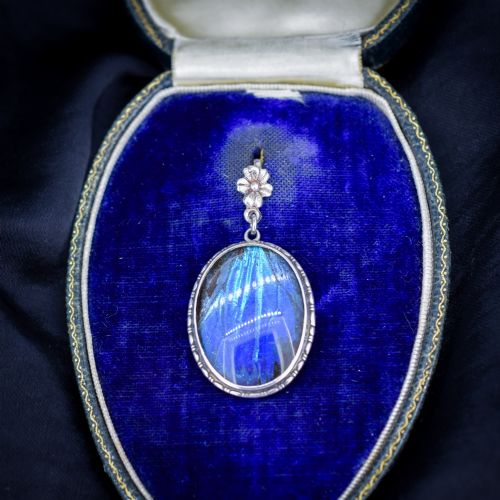
Pate de verre and enamelled pieces require gentle handling to prevent chipping the glass surfaces against hard objects. Cleaning should rely on soft dry cloths rather than chemical dips.
Storage in dedicated lined compartments protects delicate glass drops and coloured enamel from scratching against diamond settings.
How can I date these pieces?
Dating relies upon material combinations, such as platinum-topped gold, alongside distinct design traits like stylized symmetrical petals. Maker marks and silver hallmarks often provide specific decade markers.
The prevalence of white gold and platinum settings typically points towards the interwar decades when bright icy metals dominated fashionable wardrobes.