


Art Deco Flatware
Art deco flatware brings geometric precision and bold style to the dining table, offering everything from single cheese scoops to complete canteens.
Art Deco Flatware
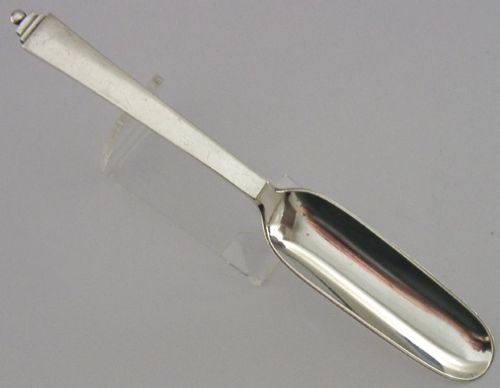
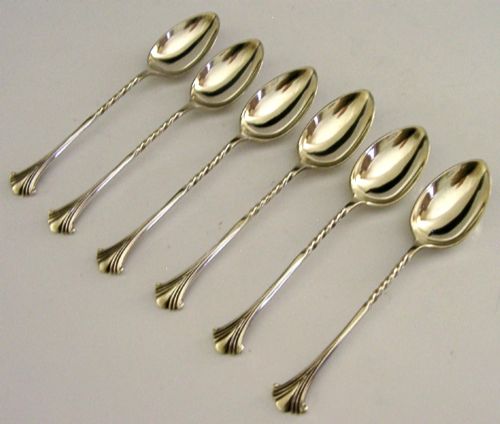
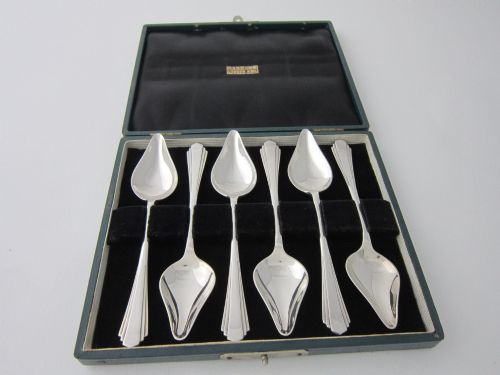
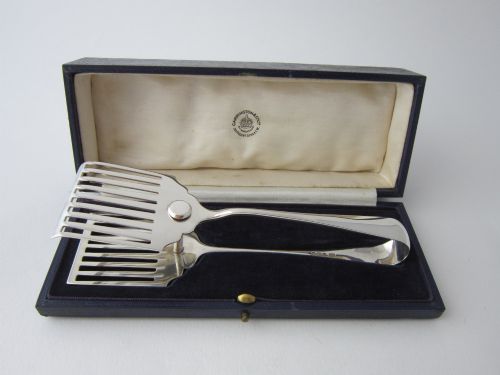
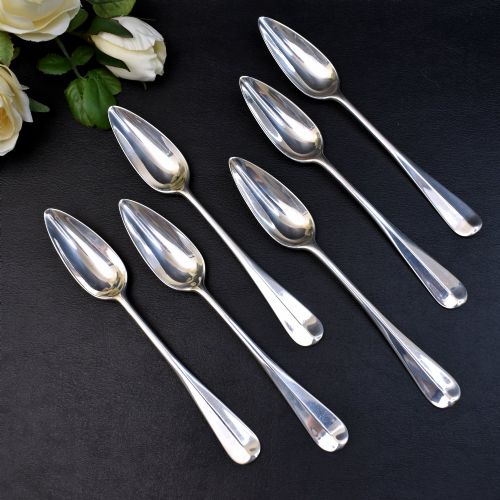
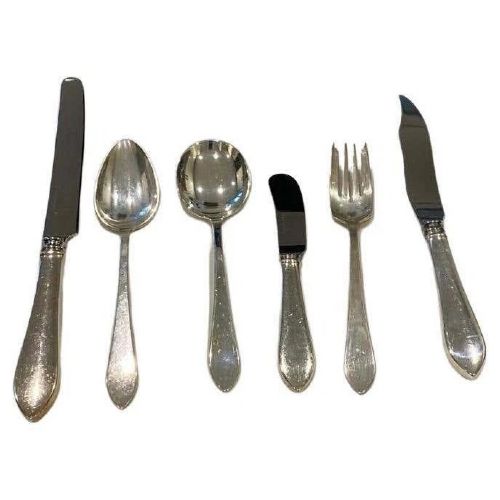
Art deco flatware encompasses cutlery, spoons, silverware, serving utensils, and seafood picks produced primarily during the 1920s, 1930s, and 1940s. A buyer exploring this search phrase encounters varied forms ranging from cased sets of grapefruit spoons and cake forks to large canteens containing over a hundred pieces.
The objects frequently reflect both the distinct aesthetic of the Art Deco movement and traditional British reigns such as George V and George VI. Individual items like cheese scoops, asparagus tongs, and lobster picks demonstrate the specialised dining habits of the period alongside standard teaspoons and dessert servers.
Materials and Construction
Makers utilised sterling silver and silver plate as the primary metal foundations for these eating implements and serving tools. These metallic elements are often paired with decorative applications of enamel to introduce striking blocks of colour across spoon bowls and handles.
Storage and presentation formed an integral part of production, resulting in fitted containers lined with velvet, silk, fabric, leatherette, and similar textiles to protect the polished metal and decorative surfaces.
Elaborate dining habits of the period required dedicated silver tools just for extracting seafood and serving asparagus.
Assessing Quality and Execution
Quality rests upon the weight of the metal used in the construction of each spoon or fork, alongside the complexity of the pattern applied, such as the pyramid design or specific maker motifs. The presence of undamaged enamel work and complete matching sets elevates the standard of individual pieces.
The integrity of the original fitted case, including the condition of interior linings like silk, velvet, and leatherette, influences the overall coherence and preservation of the set.
Georg Jensen·Hamilton and Inches·Tiffany·Suckling Ltd
The Art Deco Flatware Glossary
- Sterling silver
- A silver alloy containing 92.5 percent pure silver by mass, frequently stamped with assay office marks denoting the place and year of manufacture.
- Silver plate
- A layer of silver applied to a base metal core, offering the appearance of solid silver at a different scale of production.
- Silver gilt
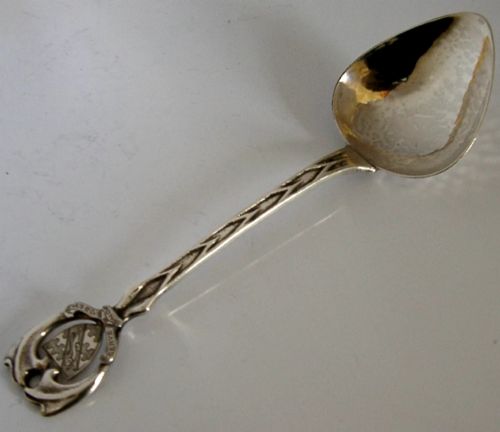
- Silver that has been coated with a thin layer of gold on its surface, often seen on the interior bowls of specialised spoons.
- Canteen
- A fitted box or cabinet designed specifically to hold and organise a complete service of cutlery and flatware.
- Seafood pick
- A narrow, elongated utensil designed for extracting meat from crustaceans such as lobsters and crabs during formal meals.
Art Deco Flatware: Frequently Asked Questions
What pieces are included in art deco flatware?
These collections comprise standard items like teaspoons and coffee spoons alongside specialised implements such as grapefruit spoons, asparagus tongs, cake forks, and seafood picks. Complete canteens containing over a hundred pieces also appear.
Most items date from the 1920s and 1930s, reflecting the geometric style of the period across both sterling silver and silver plated versions.
How do I care for silver and enamel flatware?
Wash silver pieces by hand in warm soapy water and dry them immediately with a soft cloth to prevent tarnishing and water spots. Avoid abrasive cleaners that might scratch the metal or damage applied surfaces.
Enamelled items require particular care to protect the coloured glass decoration from chipping or harsh chemical exposure during cleaning.
How are different periods identified?
Makers relied on hallmarks stamped directly into the metal to record the year of creation, the assay office, and the standard of silver purity. Stylistic details also provide clues, with strict geometric shapes pointing to the 1920s and 1930s.
Reference to specific British monarchs like George V or George VI in hallmarks helps narrow down the decade of production.
Were these pieces used daily or for special occasions?
Many specialised items like cheese scoops, lobster picks, and grapefruit spoons were designed for specific course dining during the early twentieth century. They belonged in households that maintained formal dining rituals.
Today, these utensils serve both functional dining purposes and decorative collection displays, housed within their original fitted velvet or silk-lined boxes.