





Art Deco Flapper Figurine
An art deco flapper figurine captures the bold, kinetic energy of the interwar years through stylised porcelain and metal sculpture.
Art Deco Flapper Figurine
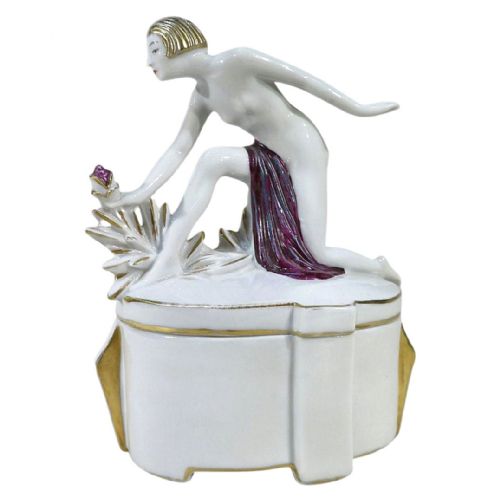
When you search for an art deco flapper figurine, you encounter sculptural objects spanning the 1920s and 1930s that embody the modern woman of the period. These pieces frequently double as functional vanity items, appearing as powder boxes, trinket jars, perfume bottles and cigarette strikers rather than purely decorative statuary.
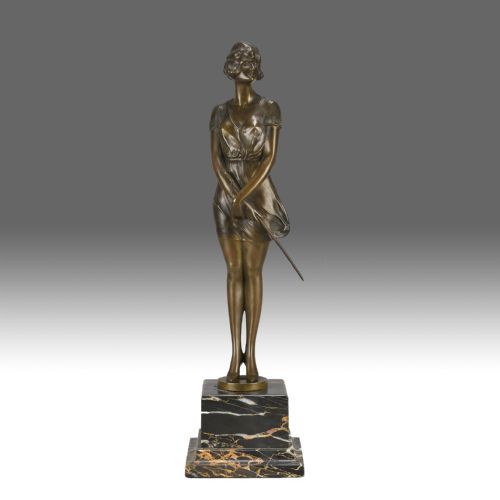
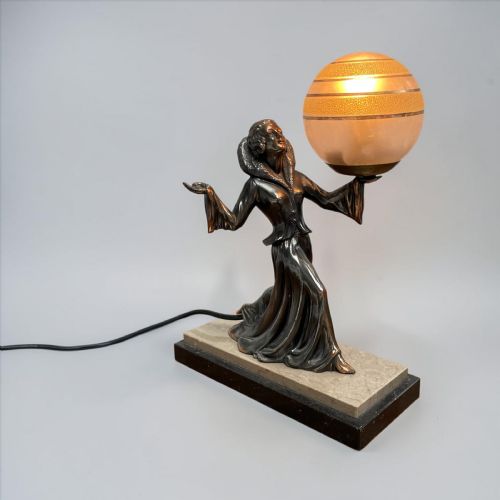
The most common forms you meet on this page are half doll figures combined with ceramic boxes or pin cushions, alongside standalone metal and bronze dancers. Originating from French, Austrian and German workshops, they present characteristic geometric lines and flattened perspective typical of the style.
Materials and construction methods
Manufacturers utilised glazed porcelain and ceramic for moulded figures, applying hand-painted details to capture facial expressions and period hairstyles. These ceramic bodies frequently sit atop functional bases made from marble or onyx.
Metal versions rely on cast bronze or patinated spelter, sometimes mounted to heavy stone plinths for stability. The combination of cold-painted metal surfaces and natural stone creates the characteristic weight and dual-texture appearance of the period.
Art Deco Flapper Figurine Retail Price Guide 2026
Typical asking prices for art deco flapper figurine among the pieces listed under this phrase on Sellingantiques today, from the lower quarter to the upper quarter. They describe what is for sale here now, not the wider market.
Several porcelain figures double as novelty cigarette strikers, proving that interwar smokers required their matches lit by glamorous flappers.
Distinguishing quality across pieces
The choice of base material and foundry signature also sets examples apart. Signed bronzes and pieces from documented porcelain houses demonstrate greater artistic ambition than unsigned spelter variants or unmarked ceramic novelties.
Bruno Zach·Zoldan Kovats·Fasold & Stuach·D.H. Chiparus·William Goebel·Royal Dux·Wagner & Apel
The Art Deco Flapper Figurine Glossary
- Half doll
- A porcelain figurine modelled from the waist up, historically designed to sit atop tea cosies, powder jars or pin cushions. They represent the upper torso of stylish women with stylised cloche hats and bobbed hair.
- Spelter
- A zinc alloy commonly used as a cost-effective substitute for bronze during the period. It accepts patination and cold-painted finishes well, though it remains softer and lighter than solid bronze.
- Trinket box
- A small lidded container designed to hold jewellery or small vanity items, often surmounted by a ceramic or metal female figure. The lid and base typically share matching glaze or patination.
- Hatpin holder
- A tall ceramic vessel featuring a perforated top or open rim to store long decorative hatpins. They frequently take the form of standing female figures from the 1930s.
- Patinated metal
- A chemically treated surface applied to bronze or spelter to alter its colour and simulate age. This treatment protects the underlying metal while enhancing sculptural depth.
Art Deco Flapper Figurine: Frequently Asked Questions
How are half dolls used?
Half dolls serve as decorative toppers for functional vanity objects, most commonly mounted to the lids of ceramic powder jars, trinket boxes and pin cushions.
Collectors often display them independently on shelves or mantles to appreciate the detailed porcelain sculpting of period hairstyles and clothing.
What is spelter?
Spelter is a zinc-based alloy that makers used as an affordable alternative to bronze for sculptural figures during the interwar period.
It was frequently painted or patinated to mimic heavier metals and mounted onto solid marble or onyx bases for added stability.
How do I date these figures?
Dating relies on the distinct aesthetic markers of the 1920s and 1930s, including geometric clothing patterns, cloche hats and bobbed hairstyles.
Maker marks stamped on the underside of porcelain bases or signatures incised into bronze plinths provide more precise chronological placement.
Where were they made?
These pieces originate primarily from European ceramic and metalworking centres, with notable production in France, Austria and Germany.
Specific porcelain factories and independent foundries across these regions exported figures worldwide during the height of the movement.