


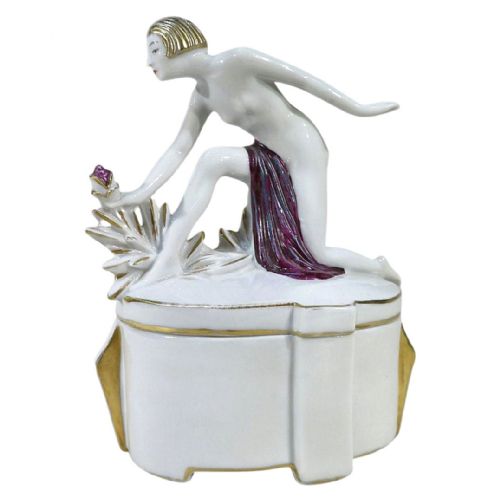


1930s Porcelain Vanity Figurine
These 1930s porcelain vanity figurines bring distinct Art Deco character to a dressing table through charming ceramic flapper girls and bathing belles.
1930s Porcelain Vanity Figurine
When you search for 1930s porcelain vanity figurine, you encounter powder boxes, powder jars, trinket boxes, and hatpin holders designed during the Art Deco period. These pieces frequently depict half doll flapper girls, bathing belles, pierrots, and ladies with puppy dogs.
Originating largely from European workshops in France, Germany, and Austria, these items served practical functions on dressing tables while displaying decorative figures. The most common forms on this page combine a functional container base with a sculpted ceramic female figure forming the lid or accent.
How they were made
These items rely on porcelain, ceramic, and earthenware bodies shaped into figural lids and container bowls. Artisans applied glaze and enamel to add colour and surface protection to the moulded figures.
1930s Porcelain Vanity Figurine Retail Price Guide 2026
Typical asking prices for 1930s porcelain vanity figurine among the pieces listed under this phrase on Sellingantiques today, from the lower quarter to the upper quarter. They describe what is for sale here now, not the wider market.
Object types include powder boxes, powder bowls, trinket boxes, powder jars, and hatpin holders from nineteen thirty.
What varies in quality
The standard of modelling in the porcelain and ceramic figures dictates much of the visual distinction across these pieces. Finely rendered facial expressions and detailed hand-painted enamel work separate superior examples from simpler production.
The preservation of original glaze finishes and gold leaf or gilt detailing influences the overall condition. Origin also plays a part, with specific output attributed to recognised French or Austrian ceramic centres holding distinct design merit.
The 1930s Porcelain Vanity Figurine Glossary
- Half doll
- A ceramic figure modelled from the waist up, frequently utilised as a tea cosy topper or the upper portion of a powder brush and vanity box lid.
- Flapper girl
- A cultural archetype of the 1920s and 1930s representing independent young women, frequently depicted in Art Deco ceramics with short hair and stylish dress.
- Bathing belle
- A popular sculptural subject in early twentieth-century ceramics, showing women in period swimwear for decorative trinket and powder jars.
- Hatpin holder
- A hollow ceramic cylinder designed to store long hatpins on a dressing table, often topped with a figural bust or head.
- Gilt
- A thin layer of gold leaf or gold paint applied to the surface of porcelain or ceramic pieces to highlight details and rims.
1930s Porcelain Vanity Figurine: Frequently Asked Questions
What is a porcelain vanity figurine?
A porcelain vanity figurine is a decorative ceramic piece from the Art Deco era that usually combines a figural top with a powder box or trinket jar base. These items were kept on dressing tables to store cosmetics, pins, and small personal accessories.
They often depict stylised figures such as flapper girls, bathing belles, and pierrots. The upper portion serves as a handle for the container beneath it.
Where were these pieces made?
These vanity items originate primarily from European ceramic and porcelain manufacturing centres active during the 1930s. France, Germany, and Austria produced notable examples found within this category.
Limoges in France is one specific geographic origin represented among the makers of these ceramic powder boxes. Each region contributed distinct modelling styles and glazing techniques.
How do I care for a vintage powder box?
Cleaning these porcelain and ceramic pieces requires gentle dusting with a soft, dry cloth. Moisture can damage exposed enamel and delicate gold leaf highlights over time.
Avoid submerging decorated lids in water or using abrasive cleaning agents. Storing them away from direct sunlight protects the painted surfaces from fading.