



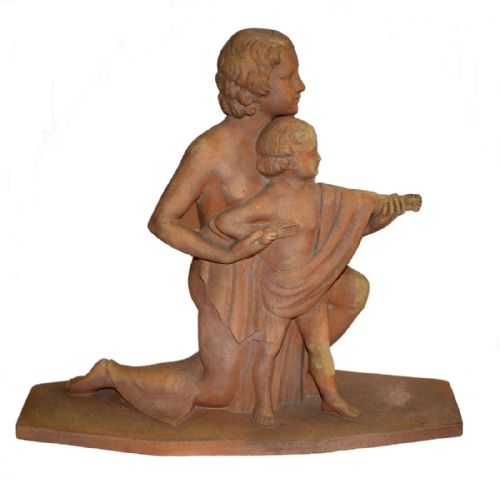
Art Deco Figurine Group
These art deco figurine group pieces capture the dynamic energy of the interwar years through striking multi-figure compositions that animate any room.
Art Deco Figurine Group
An art deco figurine group brings together multiple figures or animals within a single sculptural composition, defining the aesthetic of the interwar period. These pieces originate predominantly from the 1920 and 1930 decades, capturing the distinct modernist spirit of the era.
You will encounter subjects ranging from human pairs like dancers and musicians or mothers and children to animals including deer, stags, and birds. Sculptures and figurines span diverse object types, offering various scales for display.
The compositions rely on balanced arrangements of two or more subjects, whether human or animal. Each grouping demonstrates the characteristic streamlined geometry and theatrical posture associated with the style.
How they were made
Foundry workers cast metal versions in bronze or spelter, often applying patinated bronze finishes or cold paint to accentuate surface detail. Spelter served as an accessible alternative to solid bronze for many sculptural groups.
Ceramic workshops utilised hard-paste porcelain and terracotta, shaping figures before adding painted decoration and bisque finishes. Artisans mounted several stone compositions upon marble and onyx bases to provide stable foundations.
Three cold painted budgerigars perched together on a leafy branch offer a cheerful ornithological break from the human dancers.
What varies in quality
Signed works by recognised modellers demonstrate higher artistic ambition and more resolved compositions than anonymous factory pieces. The choice of base material, such as genuine marble or onyx rather than substituted mediums, elevates the presence of the group.
H. Bal·Chiparus·Karl Tutter·I. Rochard·B Rezl
The Art Deco Figurine Group Glossary
- Spelter
- A zinc alloy commonly used as a base metal for decorative sculptures and patinated to resemble bronze. It provides a lighter and more affordable alternative for casting complex multi-figure groups.
- Patinated Bronze
- A bronze sculpture treated with chemical solutions to produce a specific surface colour or aged finish. This technique highlights the contours and textures of the figures.
- Bisque
- Unglazed white porcelain that possesses a matte, stone-like texture resembling marble. It allows sculptural forms to display subtle modeling without the distraction of a shiny glaze.
- Hard-paste porcelain
- A durable ceramic material fired at high temperatures using kaolin and petuntse. It yields a dense, impermeable body capable of holding sharp details.
- Cold painted
- A method where paint is applied to metal surfaces after casting without subsequent firing. This decoration requires careful preservation to prevent flaking over time.
Art Deco Figurine Group: Frequently Asked Questions
What defines an art deco figurine group?
These sculptures feature two or more interconnected human or animal figures designed in the characteristic modernist style of the 1920 and 1930 decades.
They emphasise rhythmic lines, theatrical poses, and streamlined forms that reflect the design priorities of the interwar period.
What materials were used?
Maker workshops utilised a variety of mediums including bronze, spelter, terracotta, and hard-paste porcelain.
Many metal and ceramic sculptures were mounted securely onto bases of marble or onyx.
How do I display them?
Place these sculptural groups on sturdy surfaces like sideboards, mantels, or dedicated display tables where light can cross their surfaces.
Ensure they sit away from direct heat sources and high-traffic edges to protect delicate painted finishes and stone bases.
How can I tell periods apart?
Pieces originating from the 1920 decade often lean toward experimental modernist forms and theatrical character pairings.
Works from 1930 frequently display more streamlined, mass-produced commercial fluency in materials like spelter and porcelain.