

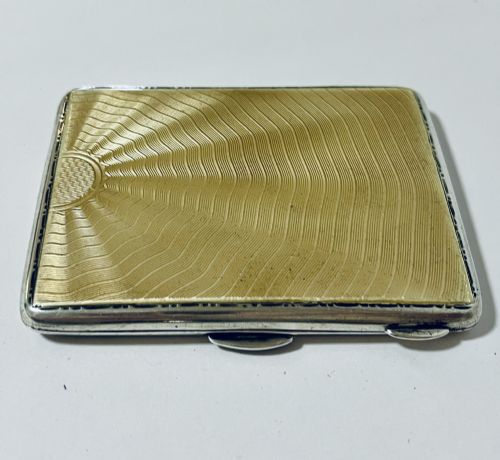


Art Deco Enamel Compact
When you handle an art deco enamel compact, you hold a tangible piece of twentieth-century glamour shaped by precision metalwork and vibrant colour.
Art Deco Enamel Compact
An art deco enamel compact is a pocket-sized vanity accessory designed for powder, rouge, or cigarettes, emerging primarily from the 1920s and 1930s. These pieces combine utilitarian function with decorative artistry, serving as both personal items and design statements of their era.
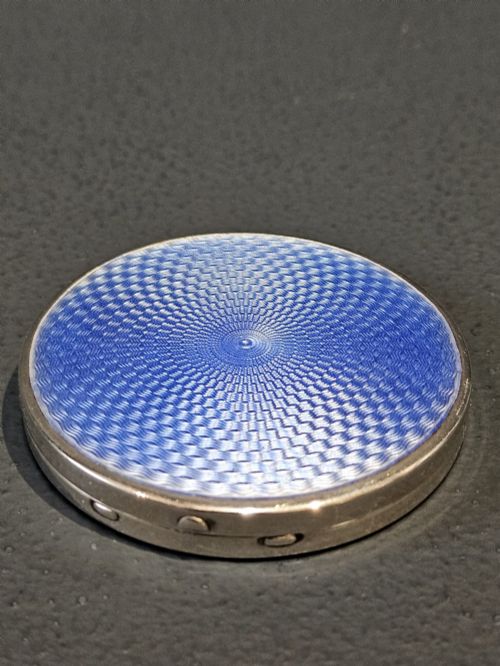
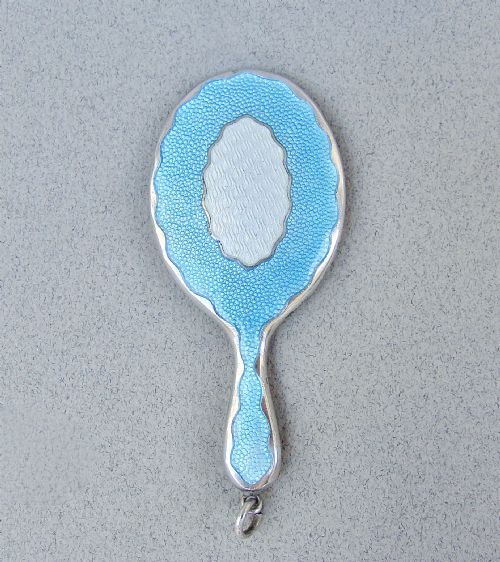
The versions most commonly met on this page are sterling silver or chrome cases decorated with translucent vitreous enamel over machine-turned metal bases. They appear alongside related vanity objects such as pill boxes, cigarette cases, and miniature purses.
Originating largely from British silversmiths in Birmingham and London, alongside continental European makers, these objects reflect the geometric lines and streamlined motifs characteristic of the period.
How they were made
Silversmiths and metalworkers formed the bodies of these compacts from sterling silver, silver-gilt, chrome, brass, or gilt metal, often employing machine stamping for structural shapes. Chrome and base metals provided sturdy alternatives for geometric designs, while sterling silver supplied a precious foundation for hallmarked pieces.
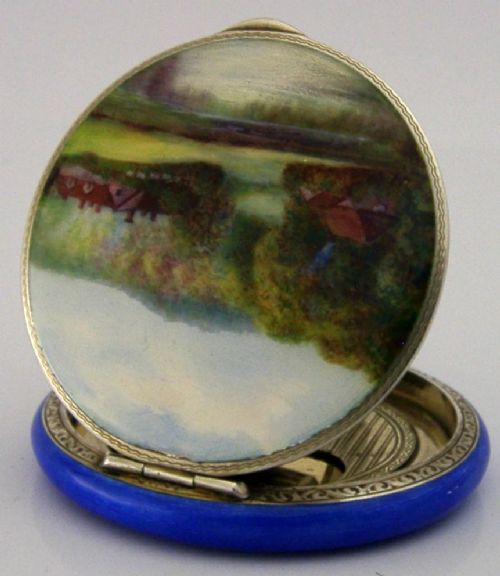
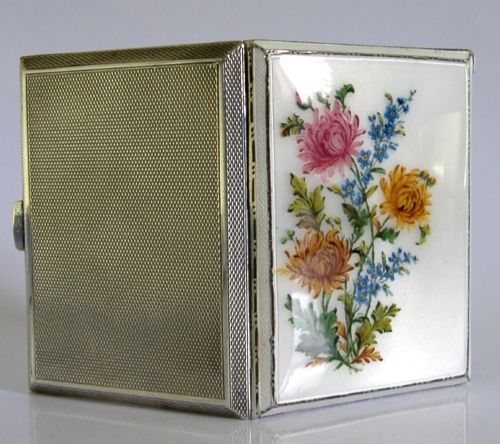
The surface decoration relied on guilloche enamel, a technique where a mechanical lathe engraved repeating patterns into the metal before vitreous enamel was applied in layers and fired. This translucent glass coating allowed the underlying engraved pattern to catch the light, frequently complemented by hand-painted floral details or applied marcasite decorations.
Art Deco Enamel Compact Retail Price Guide 2026
Typical asking prices for art deco enamel compact among the pieces listed under this phrase on Sellingantiques today, from the lower quarter to the upper quarter. They describe what is for sale here now, not the wider market.
Some compacts hide tiny spring-loaded mirrors that snap open like polite secrets.
What varies in quality
The distinction between standard and superior pieces rests on the complexity of the enamel work and the precision of the underlying guilloche engraving. Master smiths achieved an even, flawless distribution of vitreous enamel that adhered smoothly to the metal without pitting or clouding.
Maker attribution also dictates standing, with documented marks from established workshops commanding greater recognition than unmarked examples. The integration of functional elements, such as secure clasps, working hinges, fitted mirrors, and original suede linings, separates utilitarian survivals from exceptional collector pieces.
Henry Williamson·Henry Matthews·Henry Perkins and Sons·Richard Hudnut·Houbigant·Crisford and Norris·Joseph Gloster·Albert Carter·Deakin and Francis·Adie Brothers·The Goldsmiths and Silversmiths Company
The Art Deco Enamel Compact Glossary
- Guilloche
- A decorative technique where a mechanical lathe etches precise, intricate geometric patterns into a metal surface. This engraved layer sits beneath translucent enamel to create depth and movement.
- Vitreous enamel
- A material made by fusing powdered glass to a metal substrate at high temperatures. The resulting coating provides a hard, glossy, and chemically resistant coloured surface.
- Minauderie
- A small decorative evening bag or rigid case with compartments for cosmetics, cigarettes, and mirrors. These multi-functional pieces often utilise metal mesh or hard enamel shells.
- Silver-gilt
- Sterling silver that has been coated with a thin layer of gold. This process combines the structural integrity of silver with a warm golden finish.
- Hallmark
- An official stamp applied to precious metals indicating the standard of purity, the assay office, and the year of manufacture. These marks provide definitive evidence of origin and date.
Art Deco Enamel Compact: Frequently Asked Questions
Were these compacts used for powder or cigarettes?
Many examples served as powder compacts, containing fitted interior trays, powder sifters, and original mirrors for makeup application. Combination pieces also housed compartments for rouge, lipsticks, or coins.
Other matching formats functioned specifically as cigarette cases or integrated minauderies, combining powder storage with spaces for smoking accessories.
How can I date an art deco compact?
British silver pieces carry hallmarks that include a specific letter code for the year of manufacture and an anchor or leopard head for the assay office. These stamps offer precise chronological placement.
Pieces made from chrome or base metal rely on stylistic markers, such as streamline geometry and maker signatures, pointing generally to production across the 1920s and 1930s.
What is the difference between silver and chrome compacts?
Silver compacts are made from precious metal bearing official hallmarks and frequently feature delicate guilloche enamel work produced by traditional silversmiths. They represent a higher tier of craftsmanship.
Chrome and base metal alternatives emerged during the same decades to offer durable, industrial finishes suited to modern geometric designs and mass-market appeal.